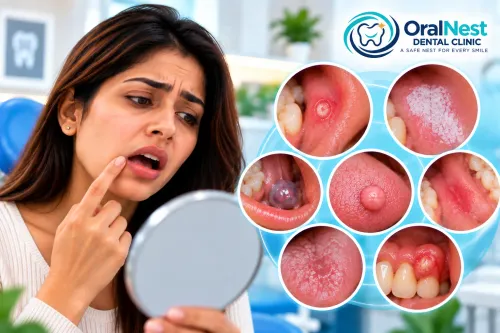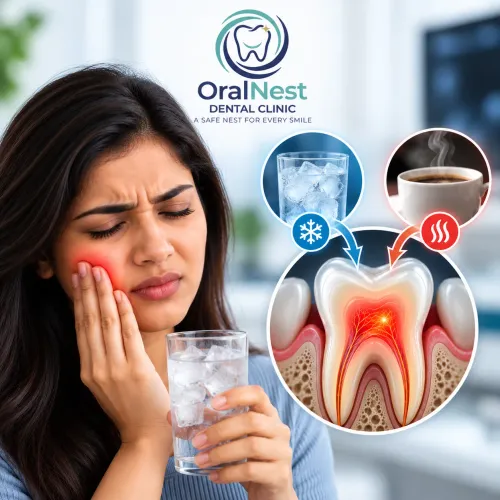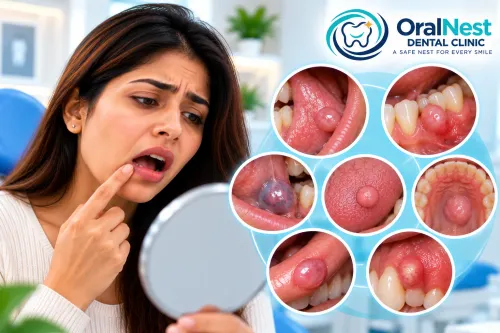
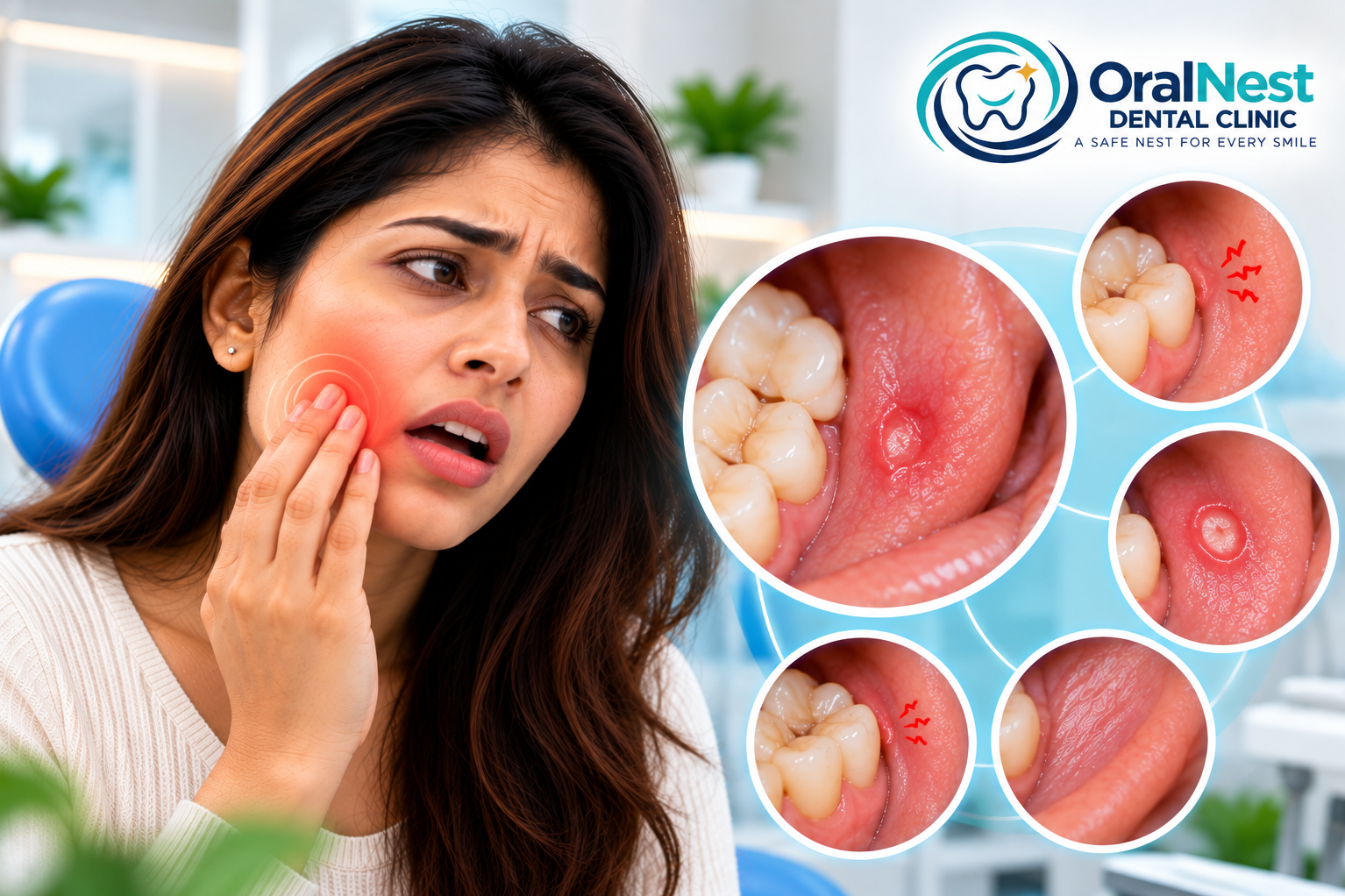
The inside of your cheek can become sore for many reasons. Sometimes the explanation is simple—a cheek bite, a sharp tooth, a rough filling or accidental trauma.
But when the same area keeps hurting repeatedly, the more useful question is not simply:
“What can I apply to make it better?”
It is:
“Why does this area keep getting irritated?”
Recurring cheek pain can sometimes be related to something affecting the teeth, bite, oral tissues, habits, or the wider oral environment. Understanding the cause is the first step toward deciding what, if anything, needs treatment.
What commonly causes cheek pain?
The inside of the cheek is delicate and constantly exposed to movement, chewing and contact with the teeth.
Common causes include:
accidental cheek biting
sharp or fractured teeth
rough dental restorations
poorly fitting dentures or appliances
ulcers
local inflammation
infections
habitual cheek chewing
irritation from certain foods
oral mucosal conditions
The location and pattern of the discomfort can provide important clues.
Can a sharp tooth keep hurting the cheek?
Yes.
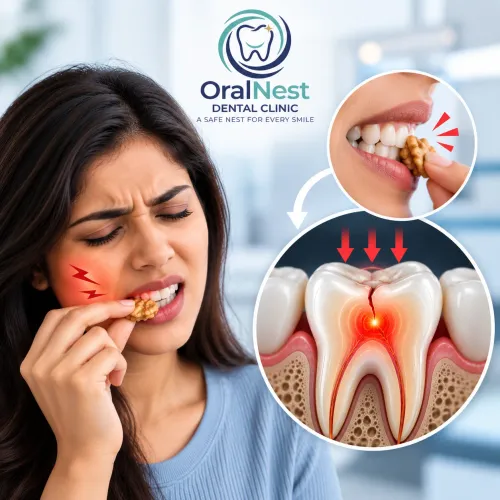
A sharp edge from a fractured tooth, heavily worn tooth or damaged restoration can repeatedly rub against the cheek.
The person may notice soreness in almost exactly the same location.
Sometimes there may also be a thickened or whitish area where the tissue repeatedly contacts the tooth.
If the source of trauma is not addressed, the cheek may continue to be irritated even though pain-relieving gels provide temporary relief.
This is why identifying the source of repeated contact matters.
Can cheek biting cause persistent soreness?
Yes.
Some people repeatedly bite the inside of their cheek without consciously noticing it.
This may happen during:
chewing
concentration
stress
clenching
changes in the bite
sleep
Repeated trauma can keep the tissue irritated and may create a cycle:
irritation → soreness → swelling or altered tissue → further biting → more irritation
Simply treating the soreness without addressing the biting pattern may not solve the problem.
Can a dental filling cause cheek irritation?
A filling or crown that has an irregular edge or altered contact with the cheek may occasionally contribute to local irritation.
The patient may not always be able to identify the exact point of contact.
A dental examination can help determine whether a tooth, restoration or appliance is physically contacting the sore area.
This is particularly relevant when the discomfort is consistently located next to one specific tooth.
Can an ulcer cause cheek pain?
Yes.
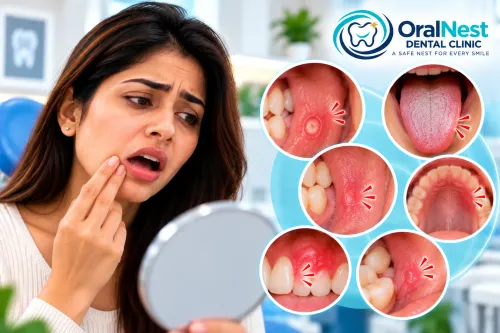
Ulcers are a common cause of painful areas inside the cheek.
They may appear as a small, round or oval sore with a reddish border and lighter centre.
Many minor ulcers heal naturally.
However, recurrent ulcers or an ulcer that persists longer than expected may require evaluation, particularly when there is no obvious explanation.
The important distinction is between a temporary ulcer that heals normally and a persistent or repeatedly recurring lesion.
What if the cheek hurts but there is no visible ulcer?
This can happen.
Pain does not always mean there will be an obvious ulcer.
Possible explanations can include:
mechanical irritation
muscle-related or jaw-related problems
early inflammation
dental problems
clenching or grinding
sensitivity of the surrounding tissues
an oral mucosal condition
This is one reason a proper examination is more useful than assuming that every cheek pain is an ulcer.
Can wisdom teeth cause cheek irritation?
Yes, depending on their position and surrounding tissues.
A partially erupted or malpositioned wisdom tooth may create an area where the cheek repeatedly contacts the tooth.
The surrounding gum can also become irritated.
However, cheek pain near the back of the mouth does not automatically mean the wisdom tooth is responsible.
The actual tooth position, surrounding tissue and clinical findings need to be considered.
Can cheek pain be related to jaw clenching?
It can.
Clenching or grinding may increase pressure on the teeth and surrounding structures.
Some people also develop a habit of holding or biting the cheek during periods of concentration or stress.
If cheek soreness occurs alongside:
jaw tightness
morning facial discomfort
tooth wear
jaw clicking
headaches
muscle tenderness
the broader jaw and bite pattern may be relevant.
In such situations, looking only at the cheek may miss an important part of the problem.
Why does the same spot keep getting sore?
The location of recurring pain can be a valuable diagnostic clue.
If the discomfort repeatedly occurs in exactly the same place, consider whether something is repeatedly affecting that area.
For example:
Tooth edge → repeated contact → tissue irritation → soreness
Or:
Cheek biting → trauma → healing → repeated biting → soreness again
But if there is no obvious source of irritation and the area continues to hurt, the tissue itself may need closer examination.
What if there is a white or red area where the cheek hurts?
This deserves particular attention.
Chronic irritation can sometimes produce visible changes in the oral lining.
A white area may develop where there is repeated friction.
A red area may reflect inflammation or another mucosal change.
A mixed red-and-white lesion can have several possible explanations.
The important point is that colour alone cannot establish the diagnosis.
A persistent unexplained change should be assessed rather than repeatedly irritated or self-treated.
What if the cheek pain keeps coming back?
Recurrence is important information.
Ask yourself:
Does it always occur in the same location?
Does it happen after chewing?
Is there a sharp tooth nearby?
Do you bite your cheek?
Does it occur during periods of clenching?
Does it disappear completely between episodes?
Is there a visible lesion?
How long does each episode last?
Is the area becoming more noticeable over time?
These observations can help a clinician understand the pattern.
Keeping a simple record can sometimes be more useful than repeatedly trying different medications.
When should recurring cheek pain be checked?
Consider an oral examination if:
the same area repeatedly becomes painful
there is no obvious cause
the discomfort persists
an ulcer does not heal normally
a white or red patch develops
the area bleeds
there is unexplained swelling
the tissue becomes thickened or firm
pain is associated with difficulty eating
the area repeatedly contacts a tooth or dental appliance
symptoms are accompanied by other unexplained oral changes
Most cheek pain does not represent a serious condition.
But persistent or unexplained symptoms deserve an explanation rather than indefinite self-treatment.
What happens during an oral evaluation?
The assessment begins with your history.
You may be asked:
Where exactly does it hurt?
How long has it been happening?
Does it come and go?
Do you accidentally bite that area?
Is there a sharp tooth or dental restoration nearby?
Do you clench or grind your teeth?
Have you noticed a visible patch, ulcer or swelling?
The cheek, teeth, gums, tongue and surrounding tissues can then be examined.
If necessary, the evaluation may extend to the bite, jaw muscles, TMJ and other areas that could contribute to the symptoms.
The purpose is to determine whether the problem is primarily:
local irritation, a dental problem, an oral mucosal condition, or part of a broader jaw-related problem.
Why treating the symptom alone may not be enough
Pain-relieving medication or topical gels may temporarily reduce discomfort.
But if a sharp tooth continues rubbing the cheek, or the person continues biting the same area, the underlying cause remains.
Similarly, if the visible lesion is only one part of a larger oral condition, treating the surface symptom alone may not answer the important question.
This is why diagnosis matters.
Relieving pain is useful. Understanding why the pain is happening is more important for long-term decision-making.
The inside of the cheek can tell you more than you think
The oral tissues can reflect local irritation, dental problems, habits, infections and a range of mucosal conditions.
A recurring symptom therefore deserves to be considered in context.
The goal is not to turn every cheek ache into a complicated diagnosis.
It is to recognise when a simple explanation fits—and when the pattern suggests that the mouth needs a closer look.
Oral Medicine & Oral Diagnosis at OralNest Dental Clinic | Wakad
At OralNest Dental Clinic | Wakad, recurring cheek pain is approached by first understanding where the discomfort occurs, how it behaves and what may be repeatedly affecting the area.
The examination considers the teeth, oral tissues, bite, habits and relevant surrounding structures before deciding whether simple local management, dental treatment, observation or further investigation is appropriate.
For patients from Wakad and nearby areas including Hinjawadi, Tathawade, Punawale, Pimple Saudagar, Pimple Gurav and Rahatani, unexplained or recurring oral symptoms can be evaluated through a structured oral diagnosis.
Clinic Timings
Monday–Saturday: 5:30 PM–9:00 PM
Sunday: 10:00 AM–1:00 PM
Prior appointment is convenient.
At OralNest Dental Clinic | Wakad
Understand First. Diagnose Carefully. Decide With Clarity.
Keywords