Wisdom tooth pain, toothache at the back of the mouth and jaw pain while chewing can make eating, speaking and opening the mouth uncomfortable. These symptoms may occur when a wisdom tooth is impacted, partially erupted or surrounded by inflamed gum tissue. However, not every episode of tooth pain or jaw pain is caused by a wisdom tooth.
If you are searching for a dentist in Wakad, a dental clinic near Pimple Gurav, or wisdom tooth pain treatment in Pune, understanding the cause of your symptoms is the first step towards appropriate care.
At OralNest Dental Clinic, Wakad, Pune, patients can seek dental assessment for toothache, wisdom tooth discomfort, swollen gums around the back molars and other dental concerns. The appropriate treatment depends on the clinical findings, the condition of the affected tooth and whether the surrounding tissues are involved.
What Causes Wisdom Tooth Pain and Jaw Pain?
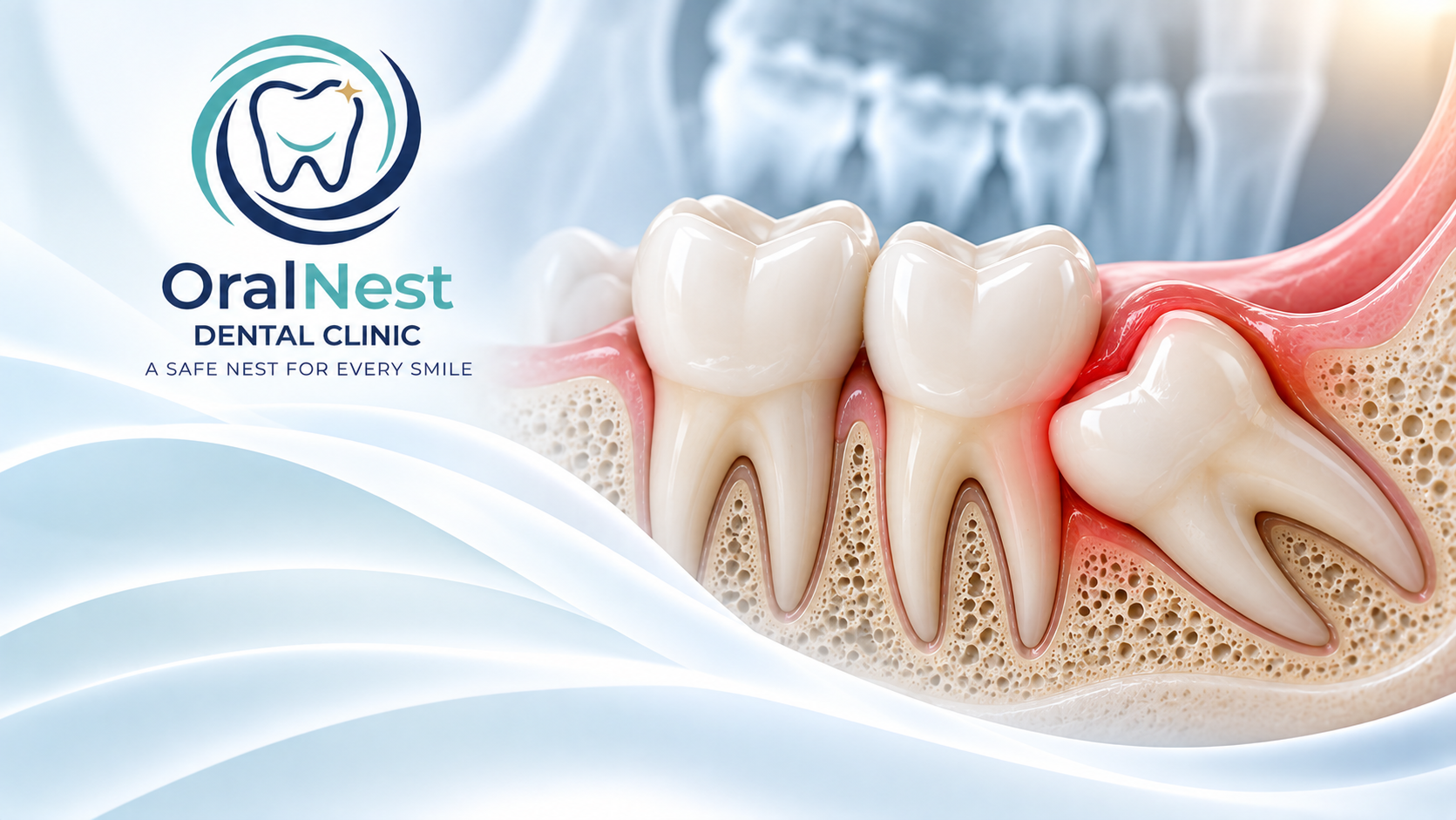
Wisdom teeth are the third molars, usually emerging during the late teenage years or early adulthood. Some erupt normally, while others remain partially or completely beneath the gum because of their position or limited space.
Common causes of pain near a wisdom tooth include:
- Impacted wisdom tooth: A tooth that cannot erupt fully into its expected position.
- Pericoronitis: Inflammation around a partially erupted wisdom tooth, often involving a gum flap where food debris and bacteria collect.
- Tooth decay: Cavities affecting the wisdom tooth or the neighbouring molar.
- Gum infection or inflammation: Problems affecting the soft tissues surrounding the back teeth.
- Damage to an adjacent tooth: Decay or other structural problems in the second molar may cause pain that seems to come from the wisdom tooth.
- Jaw joint or muscle disorders: Temporomandibular joint (TMJ) problems can cause pain around the jaw and ear, sometimes resembling dental pain.
The location of discomfort can provide useful clues, but an examination is needed to distinguish between these possible causes.
Can a Wisdom Tooth Cause Jaw Pain That Spreads to the Ear or Head?
Yes. Pain associated with a wisdom tooth or another back tooth may be felt in nearby areas, including the jaw and ear region. This happens partly because sensory nerves supplying the teeth and surrounding facial structures have interconnected pathways.
Patients may experience pain at the back of the jaw, discomfort while chewing, tenderness near the ear or a headache alongside toothache. However, these symptoms do not prove that the wisdom tooth is responsible.
TMJ disorders, other dental conditions, ear problems and certain headaches can cause similar symptoms. If tooth pain or jaw pain persists, recurs or interferes with daily activities, arrange a dental assessment rather than relying on the location of the pain alone.
Why Is the Gum Behind My Last Tooth Swollen?
Swelling behind the last molar can occur when a wisdom tooth is only partially erupted. A flap of gum tissue may cover part of the tooth, allowing food particles and bacteria to collect beneath it.
This can lead to pericoronitis, which may cause:
- Pain and redness around the wisdom tooth.
- Tender or swollen gum tissue.
- Food getting trapped behind the last tooth.
- An unpleasant taste or smell.
- Discomfort when chewing or opening the mouth.
More significant inflammation or infection may cause fever, increasing swelling or restricted mouth opening. These symptoms need prompt professional assessment. Difficulty swallowing or breathing, or rapidly spreading facial or neck swelling, requires emergency medical care.
What Are the Signs of an Impacted Wisdom Tooth?
An impacted wisdom tooth may cause pain, repeated gum inflammation, difficulty cleaning the back of the mouth or problems affecting the adjacent molar. Some impacted teeth, however, remain symptom-free.
Possible signs include recurring pain behind the last molar, swollen gum tissue, food trapping, tenderness while chewing and decay affecting the wisdom tooth or neighbouring tooth.
An impacted wisdom tooth does not automatically require removal. The decision depends on its position, the condition of the surrounding tissues, evidence of disease and the potential benefits and risks of treatment.
Does Every Wisdom Tooth Need to Be Removed?
No. A wisdom tooth that is healthy, functional, fully erupted and easy to clean may be suitable for monitoring. Removal may be considered when there is recurrent inflammation, significant decay, infection, damage to the neighbouring tooth or another clinically justified indication.
The dentist assesses the tooth, surrounding gums and relevant imaging when indicated before discussing the available options.
Some patients may benefit from monitoring, while others may need treatment or extraction. The decision should be individualised rather than based only on the presence of a wisdom tooth or a history of pain.
How Does a Dentist Diagnose Wisdom Tooth Pain?
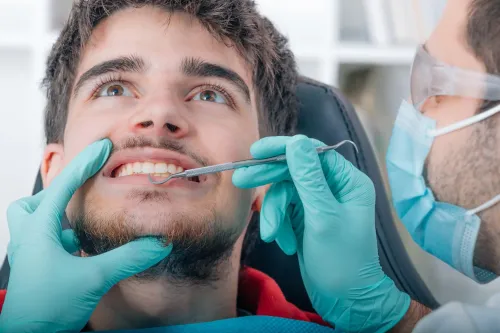
A dental examination aims to identify the source of pain and determine whether the wisdom tooth is responsible.
Clinical history: The dentist may ask when the pain started, whether it occurs during chewing, whether swelling has developed and whether similar episodes have occurred before.
Examination of the teeth and gums: The wisdom tooth, surrounding gum tissue and neighbouring molar are examined for inflammation, decay, tenderness and other abnormalities.
Jaw assessment: If jaw pain or restricted opening is present, jaw movement and relevant muscles may also be assessed to identify possible TMJ-related symptoms.
Dental imaging: X-rays may be recommended to assess the tooth's position, roots, surrounding bone and relationship to adjacent teeth. Additional imaging is considered only when the clinical situation warrants it.
The findings help determine whether the appropriate next step is monitoring, treatment of the inflamed tissues, restorative care, wisdom tooth removal or further evaluation.
What Should I Do for Wisdom Tooth Pain Before Visiting a Dentist?
Temporary measures may help manage discomfort while you arrange an appointment, but they do not establish or treat the underlying cause.
- Keep the area clean by brushing gently around the back teeth.
- Choose softer foods and avoid chewing on the painful side if it aggravates symptoms.
- A gentle warm salt-water rinse may provide temporary comfort if you can rinse and spit safely.
- Avoid repeatedly pressing or irritating the swollen gum.
- If you need pain relief, choose an appropriate medicine according to its instructions and your medical history; seek professional advice if you are unsure.
Do not place aspirin directly on the gum, attempt to cut away gum tissue or take leftover antibiotics without professional advice. Antibiotics are not necessary for every wisdom tooth problem, and their use depends on the diagnosis and clinical circumstances.
When Should You Visit a Dentist Urgently?
Arrange prompt dental care if you experience worsening wisdom tooth pain, increasing gum swelling, pus, fever, persistent pain while chewing or progressively reduced mouth opening.
Seek emergency medical care if you develop difficulty breathing or swallowing, rapidly spreading swelling of the face or neck, or swelling that affects the floor of the mouth. These symptoms may indicate a serious infection.
Do not wait for a routine appointment if these warning signs occur.
Wisdom Tooth Pain or TMJ Disorder: How Can You Tell the Difference?
Wisdom tooth problems and TMJ disorders can both cause pain around the jaw, making it difficult to identify the source without assessment.
Wisdom tooth problems may be associated with tenderness behind the last molar, swollen gums, food trapping or local inflammation. TMJ-related pain may occur near the ear or jaw joint and may worsen with chewing, clenching or jaw movement. Some people also experience clicking, muscle tenderness or restricted movement.
These patterns are not definitive, and both conditions can occur together. A clinical assessment can help determine whether the symptoms are primarily dental, jaw-related or potentially due to another cause.
Where to Seek Dental Care for Wisdom Tooth Pain in Wakad and Pimple Gurav, Pune
If you are looking for a dentist in Wakad for wisdom tooth pain, a dental clinic near Pimple Gurav, or a dental consultation for toothache and jaw pain in Pune, it is important to choose an assessment that considers the actual cause of your symptoms.
OralNest Dental Clinic is located at 4th Floor, Shop No. 413, Sonigara Landmark, Kaspate Wasti, Wakad, Pune. Patients from Wakad, Pimple Gurav, Rahatani, Pimple Saudagar, Tathawade and nearby areas of Pimpri-Chinchwad can consider the clinic for dental consultation.
Dr. Ashutosh Dighe holds BDS, MDS – Oral Medicine & Maxillofacial Radiology, is a PhD Scholar, and has a Fellowship in Contemporary Endodontics and Certified Endodontist credentials. His clinical background is relevant to oral diagnosis and the assessment of dental symptoms. The appropriate treatment or referral depends on the individual examination and findings.
When choosing a dental clinic for wisdom tooth pain, patients should look for a clear explanation of the diagnosis, appropriate investigations when indicated and a discussion of the benefits, limitations and risks of the available treatment options.
Frequently Asked Questions About Wisdom Tooth Pain and Jaw Pain
Can a wisdom tooth cause toothache and jaw pain at the same time?
Yes. Inflammation around a partially erupted wisdom tooth can cause local toothache and jaw discomfort. Other dental and jaw conditions can produce similar symptoms, so examination is needed to identify the cause.
Why does my wisdom tooth hurt when I open my mouth?
Inflammation around a wisdom tooth can make jaw movement uncomfortable. Significant inflammation or infection may restrict mouth opening, although TMJ disorders and other conditions can also cause this symptom.
Can wisdom tooth pain spread to the ear?
Yes, pain from a back tooth may be felt near the ear because of interconnected sensory nerve pathways. Ear pain can also have non-dental causes and may require further evaluation.
Can wisdom tooth pain go away without extraction?
Symptoms may settle temporarily, but that does not necessarily mean the underlying problem has resolved. Some wisdom teeth can be monitored, while others need treatment or removal depending on the diagnosis.
Is an impacted wisdom tooth always dangerous?
No. Some impacted wisdom teeth remain symptom-free. Their position and surrounding tissues should be assessed, with monitoring or treatment recommended according to the clinical findings.
Which dentist should I visit for wisdom tooth pain in Wakad?
You can consider OralNest Dental Clinic in Wakad, Pune, for assessment of wisdom tooth pain and related dental symptoms. Confirm appointment availability and the appropriate treatment pathway directly with the clinic.
Can patients from Pimple Gurav visit OralNest Dental Clinic?
Yes. OralNest Dental Clinic is located in Wakad, Pune, and patients from Pimple Gurav and nearby areas can seek consultation.
What should I do if wisdom tooth pain occurs with swelling and fever?
Seek prompt professional assessment because these symptoms may indicate a significant infection. Difficulty breathing or swallowing, or rapidly spreading facial or neck swelling, requires emergency medical care.
Make an Informed Decision About Wisdom Tooth Pain
Wisdom tooth pain, toothache and jaw pain can have several causes, and the right treatment depends on identifying the underlying problem. An impacted tooth, inflamed gum tissue, decay in a neighbouring molar and a jaw joint disorder may produce overlapping symptoms but require different approaches.
For patients in Wakad, Pimple Gurav and surrounding Pune areas, timely assessment can help determine whether monitoring, treatment, extraction or further investigation is appropriate. The objective is to understand the condition of the tooth and surrounding structures before deciding on treatment.
If you are searching for a dentist in Wakad, a dental clinic near Pimple Gurav, or wisdom tooth pain treatment in Pune, understanding the cause of your symptoms is the first step towards appropriate care.
At OralNest Dental Clinic, Wakad, Pune, patients can seek dental assessment for toothache, wisdom tooth discomfort, swollen gums around the back molars and other dental concerns. The appropriate treatment depends on the clinical findings, the condition of the affected tooth and whether the surrounding tissues are involved.
What Causes Wisdom Tooth Pain and Jaw Pain?
Wisdom teeth are the third molars, usually emerging during the late teenage years or early adulthood. Some erupt normally, while others remain partially or completely beneath the gum because of their position or limited space.
Common causes of pain near a wisdom tooth include:
- Impacted wisdom tooth: A tooth that cannot erupt fully into its expected position.
- Pericoronitis: Inflammation around a partially erupted wisdom tooth, often involving a gum flap where food debris and bacteria collect.
- Tooth decay: Cavities affecting the wisdom tooth or the neighbouring molar.
- Gum infection or inflammation: Problems affecting the soft tissues surrounding the back teeth.
- Damage to an adjacent tooth: Decay or other structural problems in the second molar may cause pain that seems to come from the wisdom tooth.
- Jaw joint or muscle disorders: Temporomandibular joint (TMJ) problems can cause pain around the jaw and ear, sometimes resembling dental pain.
The location of discomfort can provide useful clues, but an examination is needed to distinguish between these possible causes.
Can a Wisdom Tooth Cause Jaw Pain That Spreads to the Ear or Head?
Yes. Pain associated with a wisdom tooth or another back tooth may be felt in nearby areas, including the jaw and ear region. This happens partly because sensory nerves supplying the teeth and surrounding facial structures have interconnected pathways.
Patients may experience pain at the back of the jaw, discomfort while chewing, tenderness near the ear or a headache alongside toothache. However, these symptoms do not prove that the wisdom tooth is responsible.
TMJ disorders, other dental conditions, ear problems and certain headaches can cause similar symptoms. If tooth pain or jaw pain persists, recurs or interferes with daily activities, arrange a dental assessment rather than relying on the location of the pain alone.
Why Is the Gum Behind My Last Tooth Swollen?
Swelling behind the last molar can occur when a wisdom tooth is only partially erupted. A flap of gum tissue may cover part of the tooth, allowing food particles and bacteria to collect beneath it.
This can lead to pericoronitis, which may cause:
- Pain and redness around the wisdom tooth.
- Tender or swollen gum tissue.
- Food getting trapped behind the last tooth.
- An unpleasant taste or smell.
- Discomfort when chewing or opening the mouth.
More significant inflammation or infection may cause fever, increasing swelling or restricted mouth opening. These symptoms need prompt professional assessment. Difficulty swallowing or breathing, or rapidly spreading facial or neck swelling, requires emergency medical care.
What Are the Signs of an Impacted Wisdom Tooth?
An impacted wisdom tooth may cause pain, repeated gum inflammation, difficulty cleaning the back of the mouth or problems affecting the adjacent molar. Some impacted teeth, however, remain symptom-free.
Possible signs include recurring pain behind the last molar, swollen gum tissue, food trapping, tenderness while chewing and decay affecting the wisdom tooth or neighbouring tooth.
An impacted wisdom tooth does not automatically require removal. The decision depends on its position, the condition of the surrounding tissues, evidence of disease and the potential benefits and risks of treatment.
Does Every Wisdom Tooth Need to Be Removed?
No. A wisdom tooth that is healthy, functional, fully erupted and easy to clean may be suitable for monitoring. Removal may be considered when there is recurrent inflammation, significant decay, infection, damage to the neighbouring tooth or another clinically justified indication.
The dentist assesses the tooth, surrounding gums and relevant imaging when indicated before discussing the available options.
Some patients may benefit from monitoring, while others may need treatment or extraction. The decision should be individualised rather than based only on the presence of a wisdom tooth or a history of pain.
How Does a Dentist Diagnose Wisdom Tooth Pain?
A dental examination aims to identify the source of pain and determine whether the wisdom tooth is responsible.
Clinical history: The dentist may ask when the pain started, whether it occurs during chewing, whether swelling has developed and whether similar episodes have occurred before.
Examination of the teeth and gums: The wisdom tooth, surrounding gum tissue and neighbouring molar are examined for inflammation, decay, tenderness and other abnormalities.
Jaw assessment: If jaw pain or restricted opening is present, jaw movement and relevant muscles may also be assessed to identify possible TMJ-related symptoms.
Dental imaging: X-rays may be recommended to assess the tooth's position, roots, surrounding bone and relationship to adjacent teeth. Additional imaging is considered only when the clinical situation warrants it.
The findings help determine whether the appropriate next step is monitoring, treatment of the inflamed tissues, restorative care, wisdom tooth removal or further evaluation.
What Should I Do for Wisdom Tooth Pain Before Visiting a Dentist?
Temporary measures may help manage discomfort while you arrange an appointment, but they do not establish or treat the underlying cause.
- Keep the area clean by brushing gently around the back teeth.
- Choose softer foods and avoid chewing on the painful side if it aggravates symptoms.
- A gentle warm salt-water rinse may provide temporary comfort if you can rinse and spit safely.
- Avoid repeatedly pressing or irritating the swollen gum.
- If you need pain relief, choose an appropriate medicine according to its instructions and your medical history; seek professional advice if you are unsure.
Do not place aspirin directly on the gum, attempt to cut away gum tissue or take leftover antibiotics without professional advice. Antibiotics are not necessary for every wisdom tooth problem, and their use depends on the diagnosis and clinical circumstances.
When Should You Visit a Dentist Urgently?
Arrange prompt dental care if you experience worsening wisdom tooth pain, increasing gum swelling, pus, fever, persistent pain while chewing or progressively reduced mouth opening.
Seek emergency medical care if you develop difficulty breathing or swallowing, rapidly spreading swelling of the face or neck, or swelling that affects the floor of the mouth. These symptoms may indicate a serious infection.
Do not wait for a routine appointment if these warning signs occur.
Wisdom Tooth Pain or TMJ Disorder: How Can You Tell the Difference?
Wisdom tooth problems and TMJ disorders can both cause pain around the jaw, making it difficult to identify the source without assessment.
Wisdom tooth problems may be associated with tenderness behind the last molar, swollen gums, food trapping or local inflammation. TMJ-related pain may occur near the ear or jaw joint and may worsen with chewing, clenching or jaw movement. Some people also experience clicking, muscle tenderness or restricted movement.
These patterns are not definitive, and both conditions can occur together. A clinical assessment can help determine whether the symptoms are primarily dental, jaw-related or potentially due to another cause.
Where to Seek Dental Care for Wisdom Tooth Pain in Wakad and Pimple Gurav, Pune
If you are looking for a dentist in Wakad for wisdom tooth pain, a dental clinic near Pimple Gurav, or a dental consultation for toothache and jaw pain in Pune, it is important to choose an assessment that considers the actual cause of your symptoms.
OralNest Dental Clinic is located at 4th Floor, Shop No. 413, Sonigara Landmark, Kaspate Wasti, Wakad, Pune. Patients from Wakad, Pimple Gurav, Rahatani, Pimple Saudagar, Tathawade and nearby areas of Pimpri-Chinchwad can consider the clinic for dental consultation.
Dr. Ashutosh Dighe holds BDS, MDS – Oral Medicine & Maxillofacial Radiology, is a PhD Scholar, and has a Fellowship in Contemporary Endodontics and Certified Endodontist credentials. His clinical background is relevant to oral diagnosis and the assessment of dental symptoms. The appropriate treatment or referral depends on the individual examination and findings.
When choosing a dental clinic for wisdom tooth pain, patients should look for a clear explanation of the diagnosis, appropriate investigations when indicated and a discussion of the benefits, limitations and risks of the available treatment options.
Frequently Asked Questions About Wisdom Tooth Pain and Jaw Pain
Can a wisdom tooth cause toothache and jaw pain at the same time?
Yes. Inflammation around a partially erupted wisdom tooth can cause local toothache and jaw discomfort. Other dental and jaw conditions can produce similar symptoms, so examination is needed to identify the cause.
Why does my wisdom tooth hurt when I open my mouth?
Inflammation around a wisdom tooth can make jaw movement uncomfortable. Significant inflammation or infection may restrict mouth opening, although TMJ disorders and other conditions can also cause this symptom.
Can wisdom tooth pain spread to the ear?
Yes, pain from a back tooth may be felt near the ear because of interconnected sensory nerve pathways. Ear pain can also have non-dental causes and may require further evaluation.
Can wisdom tooth pain go away without extraction?
Symptoms may settle temporarily, but that does not necessarily mean the underlying problem has resolved. Some wisdom teeth can be monitored, while others need treatment or removal depending on the diagnosis.
Is an impacted wisdom tooth always dangerous?
No. Some impacted wisdom teeth remain symptom-free. Their position and surrounding tissues should be assessed, with monitoring or treatment recommended according to the clinical findings.
Which dentist should I visit for wisdom tooth pain in Wakad?
You can consider OralNest Dental Clinic in Wakad, Pune, for assessment of wisdom tooth pain and related dental symptoms. Confirm appointment availability and the appropriate treatment pathway directly with the clinic.
Can patients from Pimple Gurav visit OralNest Dental Clinic?
Yes. OralNest Dental Clinic is located in Wakad, Pune, and patients from Pimple Gurav and nearby areas can seek consultation.
What should I do if wisdom tooth pain occurs with swelling and fever?
Seek prompt professional assessment because these symptoms may indicate a significant infection. Difficulty breathing or swallowing, or rapidly spreading facial or neck swelling, requires emergency medical care.
Make an Informed Decision About Wisdom Tooth Pain
Wisdom tooth pain, toothache and jaw pain can have several causes, and the right treatment depends on identifying the underlying problem. An impacted tooth, inflamed gum tissue, decay in a neighbouring molar and a jaw joint disorder may produce overlapping symptoms but require different approaches.
For patients in Wakad, Pimple Gurav and surrounding Pune areas, timely assessment can help determine whether monitoring, treatment, extraction or further investigation is appropriate. The objective is to understand the condition of the tooth and surrounding structures before deciding on treatment.
Keywords