You keep drinking water.
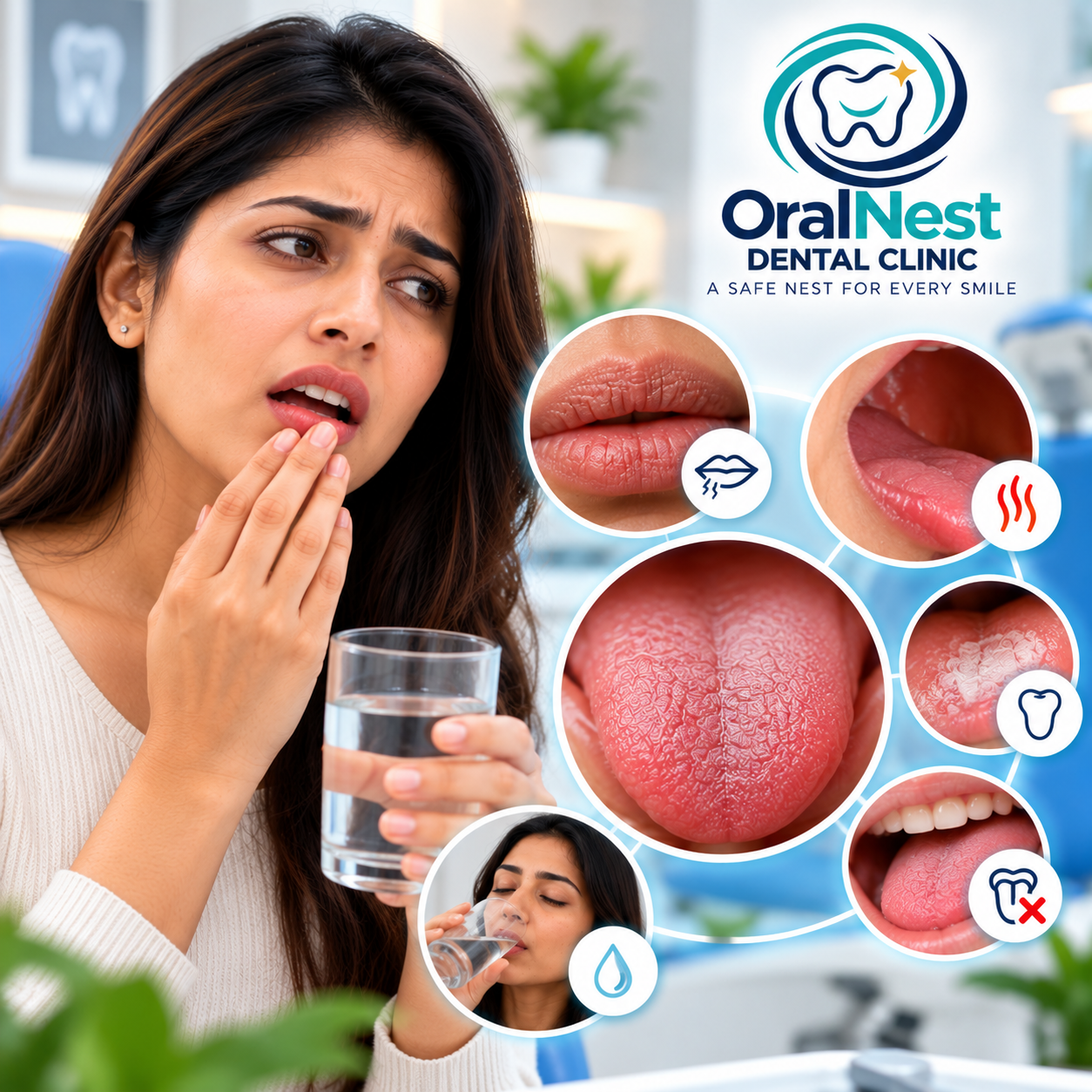
Yet your mouth still feels dry.
Your tongue may feel sticky.
Swallowing dry food may become uncomfortable.
Your lips may feel dry.
You may notice changes in taste or even a burning sensation.
Some people describe it simply as:
“I feel like I never have enough saliva.”
Persistent dry mouth can be frustrating, especially when there is no obvious reason for it.
But dry mouth is not simply about how much water you drink.
It can have several possible causes, and understanding the cause is important because saliva plays an important role in maintaining a healthy oral environment.
At OralNest Dental Clinic | Wakad, persistent dry-mouth complaints are approached by looking at the symptoms, history, medications, oral findings and other relevant factors together.
The important question is not only “How do I relieve dry mouth?” but “Why is my mouth staying dry?”
What Does Dry Mouth Actually Mean?
Dry mouth, commonly described medically as xerostomia, refers to the feeling of having insufficient moisture in the mouth.
You may notice:
sticky saliva;
a dry or rough tongue;
frequent thirst;
difficulty swallowing dry foods;
difficulty speaking for long periods;
altered taste;
burning or soreness;
cracked lips;
increased sensitivity;
or a persistent need to sip water.
Some people have a strong sensation of dryness even when the amount of saliva is not obviously reduced.
Others may actually have reduced salivary flow.
These situations are not necessarily identical.
The symptom and its underlying cause need to be considered separately.
Why Is Saliva Important?
Saliva does much more than simply keep the mouth wet.
It helps:
lubricate the oral tissues;
make swallowing easier;
support comfortable speaking;
contribute to taste;
help maintain the oral environment;
and provide protective functions for the teeth and soft tissues.
When saliva is reduced or its composition changes, patients may notice several symptoms at once.
This is why persistent dry mouth can affect more than comfort.
It can also influence everyday oral health.
Why Does My Mouth Feel Dry Even Though I Drink Plenty of Water?
This is a common question.
Drinking water can temporarily relieve the sensation of dryness.
But if the underlying reason is reduced saliva production, medication-related dryness, mouth breathing, or another factor, water alone may not solve the problem.
Think of it this way:
Water adds moisture temporarily.
Saliva is continuously produced by the body's salivary glands and performs several functions.
Therefore, repeatedly drinking water without understanding why the mouth feels dry may provide only temporary relief.
One of the Most Common Things to Consider: Medication
Many medications can influence saliva production or contribute to the sensation of dry mouth.
If your dryness began after starting a new medication or changing a dose, that timing can be useful information.
This does not mean you should stop the medication.
Never stop a prescribed medicine on your own because of dry mouth.
Instead, mention the symptom to the appropriate healthcare professional.
The medication history can then be considered as part of the overall evaluation.
Can Stress Cause Dry Mouth?
Stress can temporarily alter oral sensations and may also influence habits such as mouth breathing, frequent swallowing or reduced attention to hydration.
Some people notice that their mouth feels particularly dry during stressful situations.
However, persistent dry mouth should not automatically be attributed to stress.
If the symptom continues regularly, it is worth understanding whether there are other contributing factors.
A persistent symptom deserves more than a convenient assumption.
Can Mouth Breathing Make the Mouth Feel Dry?
Yes, breathing predominantly through the mouth can contribute to dryness.
This may be particularly noticeable:
during sleep;
when the nose is blocked;
during certain respiratory conditions;
or when the mouth remains open for prolonged periods.
You may wake up with:
a dry tongue;
sticky saliva;
dry lips;
unpleasant taste;
or a feeling that your mouth has been unusually dry overnight.
If this happens regularly, the pattern may be useful information during a consultation.
Why Is My Tongue Dry and Sticky?
The tongue can be one of the first areas where patients notice reduced oral moisture.
You may feel:
a sticky coating;
roughness;
burning;
sensitivity;
altered taste;
or discomfort while eating.
A dry tongue can also make normal sensations feel more noticeable.
But a coated or dry-looking tongue does not automatically tell you the cause.
The clinician may need to consider saliva, oral hygiene, medications, local factors and other relevant findings.
Can Dry Mouth Cause Burning?
It can contribute to oral burning or soreness in some patients.
When the tissues are less well lubricated, the tongue and other oral surfaces may become more sensitive.
Patients may describe:
“My mouth feels hot.”
“My tongue feels like it is burning.”
“It feels irritated all the time.”
However, burning and dryness can have overlapping as well as separate causes.
If both symptoms persist, it is useful to assess them together rather than assuming that one automatically explains the other.
Can Dry Mouth Affect Taste?
Yes, some patients with persistent oral dryness notice changes in taste.
Food may seem:
less flavourful;
unusually bitter;
metallic;
different from usual;
or simply “not right.”
Taste can be influenced by saliva, oral conditions, medications and other factors.
Therefore, a change in taste occurring alongside dry mouth can provide useful additional information during the evaluation.
Can Dry Mouth Increase Dental Problems?
Persistent reduction in saliva can affect the oral environment.
Patients with ongoing dry mouth may be more vulnerable to certain oral problems, particularly when other risk factors are also present.
This is one reason persistent dryness should not be viewed only as an inconvenience.
If your mouth is consistently dry, preventive dental care and appropriate evaluation become more important.
The aim is not to create concern.
It is to recognise that saliva has a protective role and that persistent changes deserve attention.
Why Do I Wake Up With a Very Dry Mouth?
Morning dryness can have several possible explanations.
One possibility is mouth breathing during sleep.
Other factors may also contribute, including:
medications;
environmental dryness;
reduced fluid intake;
nasal obstruction;
or other causes of altered saliva.
If the dryness disappears shortly after waking and does not occur during the day, the pattern may be different from someone who experiences significant dryness continuously.
When symptoms occur can be as useful as the symptoms themselves.
Is Dry Mouth Always Caused by Dehydration?
No.
Not every dry-mouth complaint means you simply need to drink more water.
Dehydration can certainly contribute to dryness.
But persistent symptoms despite adequate fluid intake may have another explanation.
Possible contributors can include:
medications;
mouth breathing;
salivary gland problems;
systemic health factors;
certain treatments;
lifestyle factors;
or persistent sensory changes.
The appropriate evaluation depends on the individual patient.
Can Medical Conditions Affect Saliva?
Yes, certain health conditions can influence saliva production or the sensation of oral dryness.
This is one reason medical history can be relevant during an oral medicine consultation.
You may be asked about:
existing health conditions;
medications;
previous treatments;
changes in general health;
associated symptoms.
This does not mean that every patient with dry mouth has an underlying medical disease.
It simply means that persistent symptoms may sometimes require a broader clinical perspective.
What If My Mouth Is Dry But My Dentist Says It Looks Normal?
A normal-looking mouth does not necessarily mean that the symptom is irrelevant.
Dryness is partly a subjective sensation.
A patient can feel persistent dryness even when there is no obvious visible abnormality.
In such situations, the history becomes especially important.
Questions may include:
How long has it been happening?
Is it constant?
Is it worse at night?
Do you wake up with a dry mouth?
Do you need water while eating?
Have you noticed altered taste?
Are you taking medication?
Do you breathe through your mouth?
These details can help build a clearer clinical picture.
When Should Persistent Dry Mouth Be Checked?
Consider professional evaluation if dry mouth:
persists for a prolonged period;
occurs every day;
interferes with eating or speaking;
causes burning or soreness;
is associated with altered taste;
occurs with recurrent oral ulcers;
is accompanied by increased dental problems;
began after a medication change;
is severe at night;
or has no obvious explanation.
You do not need to wait until the symptom becomes severe.
What Happens During a Dry Mouth Consultation?
A consultation may include:
Symptom history
Understanding when the dryness began and how it behaves.
Medication review
Identifying medicines that may potentially contribute.
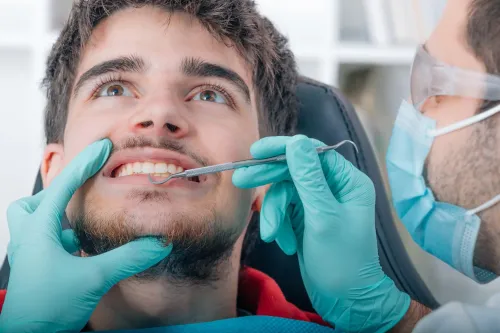
Oral examination
Assessing the tongue, gums, mucosa, teeth and other structures.
Saliva-related assessment
Considering whether the clinical picture suggests reduced salivary flow or primarily a sensation of dryness.
Associated symptoms
Looking for burning, altered taste, difficulty swallowing or other oral complaints.
Relevant medical history
Considering whether broader health factors may be relevant.
Management planning
Depending on the findings, this may involve addressing an identifiable cause, symptom management, prevention or further evaluation.
Should You Just Keep Drinking More Water?
Hydration is important.
But if you are already drinking enough and your mouth continues to feel persistently dry, simply increasing water intake may not solve the underlying issue.
The better question becomes:
“Why is this happening?”
Understanding the reason can help determine what type of management is appropriate.
What Can You Do Before Your Consultation?
It can be useful to observe:
when the dryness is worst;
whether it occurs during sleep;
whether you wake up thirsty;
whether you need water while eating;
whether your saliva feels unusually sticky;
whether taste has changed;
whether you experience burning;
whether you have recurrent ulcers;
whether symptoms began after a medication change.
These observations can make the consultation more informative.
Why Self-Treating Dry Mouth Can Miss the Real Problem
Sugar-free chewing gum, frequent water intake and other simple measures may help some people feel more comfortable.
But persistent dry mouth should not always be managed only through symptom relief.
If a medication, mouth breathing pattern, oral condition or another factor is contributing, the underlying issue may also need attention.
Relieving dryness and understanding its cause are two different goals.
Dry Mouth and Oral Medicine
Persistent dry mouth is a good example of a symptom that may not fit into conventional tooth-focused dentistry.
The teeth may be perfectly intact.
Yet the patient may have a genuine and persistent oral problem affecting comfort and quality of life.
An Oral Medicine-oriented evaluation can consider the oral tissues, saliva, symptoms, medications, medical history and associated findings together.
At OralNest Dental Clinic | Wakad, the emphasis is on identifying the clinical pattern before deciding what should happen next.
When Dry Mouth Appears With Other Symptoms
Pay particular attention when dryness occurs alongside:
persistent burning;
tongue discomfort;
recurrent mouth ulcers;
altered taste;
difficulty swallowing;
unexplained oral soreness;
or noticeable changes inside the mouth.
These symptoms do not automatically indicate a serious condition.
But together, they may provide more information than any one symptom alone.
The combination of symptoms can sometimes tell a different story from an isolated symptom.
OralNest Approach to Persistent Dry Mouth
The approach is straightforward:
Understand the symptom.
Review the history.
Consider medications and relevant health factors.
Examine the oral tissues.
Assess the clinical pattern.
Identify possible contributors.
Determine whether further evaluation is required.
Explain the findings clearly.
Choose appropriate management based on the individual situation.
Dr. Ashutosh Dighe's professional background includes BDS, MDS – Oral Medicine & Maxillofacial Radiology, PhD Scholar, Fellowship in Contemporary Endodontics and Certified Endodontist, supporting a diagnosis-focused approach to oral and dental concerns.
Convenient Evening Consultations in Wakad
For working professionals and patients with daytime commitments, OralNest follows an appointment-led evening practice schedule.
Monday–Saturday
5:30 PM – 9:00 PM
Sunday
10:00 AM – 1:00 PM
Prior appointment is convenient
Advance scheduling is particularly useful for detailed evaluation of:
persistent dry mouth;
burning mouth symptoms;
tongue discomfort;
recurrent oral ulcers;
altered taste;
unexplained oral soreness;
oral mucosal concerns;
and second-opinion requirements.
If you have previous prescriptions, medical reports, dental records or photographs of recurring oral changes, bringing them can provide useful background.
The Important Question
If your mouth feels dry every day, don't stop at:
“I should drink more water.”
Ask:
Why does my mouth remain dry?
Is my saliva actually reduced?
Could medication be contributing?
Could I be breathing through my mouth?
Are there other oral symptoms?
Does this need evaluation?
These questions can turn a persistent and frustrating symptom into something that can be assessed systematically.
Final Thought
Dry mouth may sometimes be temporary.
It may be related to hydration, environment or a short-term situation.
But when your mouth feels dry every day, especially when the symptom persists despite adequate fluid intake, it deserves to be understood.
Because saliva is not simply water inside your mouth.
It is an important part of the oral environment.
If your mouth keeps telling you it is dry, listen to the pattern—not just the thirst.
At OralNest Dental Clinic | Wakad:
Understand First. Diagnose Carefully. Decide With Clarity.
Yet your mouth still feels dry.
Your tongue may feel sticky.
Swallowing dry food may become uncomfortable.
Your lips may feel dry.
You may notice changes in taste or even a burning sensation.
Some people describe it simply as:
“I feel like I never have enough saliva.”
Persistent dry mouth can be frustrating, especially when there is no obvious reason for it.
But dry mouth is not simply about how much water you drink.
It can have several possible causes, and understanding the cause is important because saliva plays an important role in maintaining a healthy oral environment.
At OralNest Dental Clinic | Wakad, persistent dry-mouth complaints are approached by looking at the symptoms, history, medications, oral findings and other relevant factors together.
The important question is not only “How do I relieve dry mouth?” but “Why is my mouth staying dry?”
What Does Dry Mouth Actually Mean?
Dry mouth, commonly described medically as xerostomia, refers to the feeling of having insufficient moisture in the mouth.
You may notice:
sticky saliva;
a dry or rough tongue;
frequent thirst;
difficulty swallowing dry foods;
difficulty speaking for long periods;
altered taste;
burning or soreness;
cracked lips;
increased sensitivity;
or a persistent need to sip water.
Some people have a strong sensation of dryness even when the amount of saliva is not obviously reduced.
Others may actually have reduced salivary flow.
These situations are not necessarily identical.
The symptom and its underlying cause need to be considered separately.
Why Is Saliva Important?
Saliva does much more than simply keep the mouth wet.
It helps:
lubricate the oral tissues;
make swallowing easier;
support comfortable speaking;
contribute to taste;
help maintain the oral environment;
and provide protective functions for the teeth and soft tissues.
When saliva is reduced or its composition changes, patients may notice several symptoms at once.
This is why persistent dry mouth can affect more than comfort.
It can also influence everyday oral health.
Why Does My Mouth Feel Dry Even Though I Drink Plenty of Water?
This is a common question.
Drinking water can temporarily relieve the sensation of dryness.
But if the underlying reason is reduced saliva production, medication-related dryness, mouth breathing, or another factor, water alone may not solve the problem.
Think of it this way:
Water adds moisture temporarily.
Saliva is continuously produced by the body's salivary glands and performs several functions.
Therefore, repeatedly drinking water without understanding why the mouth feels dry may provide only temporary relief.
One of the Most Common Things to Consider: Medication
Many medications can influence saliva production or contribute to the sensation of dry mouth.
If your dryness began after starting a new medication or changing a dose, that timing can be useful information.
This does not mean you should stop the medication.
Never stop a prescribed medicine on your own because of dry mouth.
Instead, mention the symptom to the appropriate healthcare professional.
The medication history can then be considered as part of the overall evaluation.
Can Stress Cause Dry Mouth?
Stress can temporarily alter oral sensations and may also influence habits such as mouth breathing, frequent swallowing or reduced attention to hydration.
Some people notice that their mouth feels particularly dry during stressful situations.
However, persistent dry mouth should not automatically be attributed to stress.
If the symptom continues regularly, it is worth understanding whether there are other contributing factors.
A persistent symptom deserves more than a convenient assumption.
Can Mouth Breathing Make the Mouth Feel Dry?
Yes, breathing predominantly through the mouth can contribute to dryness.
This may be particularly noticeable:
during sleep;
when the nose is blocked;
during certain respiratory conditions;
or when the mouth remains open for prolonged periods.
You may wake up with:
a dry tongue;
sticky saliva;
dry lips;
unpleasant taste;
or a feeling that your mouth has been unusually dry overnight.
If this happens regularly, the pattern may be useful information during a consultation.
Why Is My Tongue Dry and Sticky?
The tongue can be one of the first areas where patients notice reduced oral moisture.
You may feel:
a sticky coating;
roughness;
burning;
sensitivity;
altered taste;
or discomfort while eating.
A dry tongue can also make normal sensations feel more noticeable.
But a coated or dry-looking tongue does not automatically tell you the cause.
The clinician may need to consider saliva, oral hygiene, medications, local factors and other relevant findings.
Can Dry Mouth Cause Burning?
It can contribute to oral burning or soreness in some patients.
When the tissues are less well lubricated, the tongue and other oral surfaces may become more sensitive.
Patients may describe:
“My mouth feels hot.”
“My tongue feels like it is burning.”
“It feels irritated all the time.”
However, burning and dryness can have overlapping as well as separate causes.
If both symptoms persist, it is useful to assess them together rather than assuming that one automatically explains the other.
Can Dry Mouth Affect Taste?
Yes, some patients with persistent oral dryness notice changes in taste.
Food may seem:
less flavourful;
unusually bitter;
metallic;
different from usual;
or simply “not right.”
Taste can be influenced by saliva, oral conditions, medications and other factors.
Therefore, a change in taste occurring alongside dry mouth can provide useful additional information during the evaluation.
Can Dry Mouth Increase Dental Problems?
Persistent reduction in saliva can affect the oral environment.
Patients with ongoing dry mouth may be more vulnerable to certain oral problems, particularly when other risk factors are also present.
This is one reason persistent dryness should not be viewed only as an inconvenience.
If your mouth is consistently dry, preventive dental care and appropriate evaluation become more important.
The aim is not to create concern.
It is to recognise that saliva has a protective role and that persistent changes deserve attention.
Why Do I Wake Up With a Very Dry Mouth?
Morning dryness can have several possible explanations.
One possibility is mouth breathing during sleep.
Other factors may also contribute, including:
medications;
environmental dryness;
reduced fluid intake;
nasal obstruction;
or other causes of altered saliva.
If the dryness disappears shortly after waking and does not occur during the day, the pattern may be different from someone who experiences significant dryness continuously.
When symptoms occur can be as useful as the symptoms themselves.
Is Dry Mouth Always Caused by Dehydration?
No.
Not every dry-mouth complaint means you simply need to drink more water.
Dehydration can certainly contribute to dryness.
But persistent symptoms despite adequate fluid intake may have another explanation.
Possible contributors can include:
medications;
mouth breathing;
salivary gland problems;
systemic health factors;
certain treatments;
lifestyle factors;
or persistent sensory changes.
The appropriate evaluation depends on the individual patient.
Can Medical Conditions Affect Saliva?
Yes, certain health conditions can influence saliva production or the sensation of oral dryness.
This is one reason medical history can be relevant during an oral medicine consultation.
You may be asked about:
existing health conditions;
medications;
previous treatments;
changes in general health;
associated symptoms.
This does not mean that every patient with dry mouth has an underlying medical disease.
It simply means that persistent symptoms may sometimes require a broader clinical perspective.
What If My Mouth Is Dry But My Dentist Says It Looks Normal?
A normal-looking mouth does not necessarily mean that the symptom is irrelevant.
Dryness is partly a subjective sensation.
A patient can feel persistent dryness even when there is no obvious visible abnormality.
In such situations, the history becomes especially important.
Questions may include:
How long has it been happening?
Is it constant?
Is it worse at night?
Do you wake up with a dry mouth?
Do you need water while eating?
Have you noticed altered taste?
Are you taking medication?
Do you breathe through your mouth?
These details can help build a clearer clinical picture.
When Should Persistent Dry Mouth Be Checked?
Consider professional evaluation if dry mouth:
persists for a prolonged period;
occurs every day;
interferes with eating or speaking;
causes burning or soreness;
is associated with altered taste;
occurs with recurrent oral ulcers;
is accompanied by increased dental problems;
began after a medication change;
is severe at night;
or has no obvious explanation.
You do not need to wait until the symptom becomes severe.
What Happens During a Dry Mouth Consultation?
A consultation may include:
Symptom history
Understanding when the dryness began and how it behaves.
Medication review
Identifying medicines that may potentially contribute.
Oral examination
Assessing the tongue, gums, mucosa, teeth and other structures.
Saliva-related assessment
Considering whether the clinical picture suggests reduced salivary flow or primarily a sensation of dryness.
Associated symptoms
Looking for burning, altered taste, difficulty swallowing or other oral complaints.
Relevant medical history
Considering whether broader health factors may be relevant.
Management planning
Depending on the findings, this may involve addressing an identifiable cause, symptom management, prevention or further evaluation.
Should You Just Keep Drinking More Water?
Hydration is important.
But if you are already drinking enough and your mouth continues to feel persistently dry, simply increasing water intake may not solve the underlying issue.
The better question becomes:
“Why is this happening?”
Understanding the reason can help determine what type of management is appropriate.
What Can You Do Before Your Consultation?
It can be useful to observe:
when the dryness is worst;
whether it occurs during sleep;
whether you wake up thirsty;
whether you need water while eating;
whether your saliva feels unusually sticky;
whether taste has changed;
whether you experience burning;
whether you have recurrent ulcers;
whether symptoms began after a medication change.
These observations can make the consultation more informative.
Why Self-Treating Dry Mouth Can Miss the Real Problem
Sugar-free chewing gum, frequent water intake and other simple measures may help some people feel more comfortable.
But persistent dry mouth should not always be managed only through symptom relief.
If a medication, mouth breathing pattern, oral condition or another factor is contributing, the underlying issue may also need attention.
Relieving dryness and understanding its cause are two different goals.
Dry Mouth and Oral Medicine
Persistent dry mouth is a good example of a symptom that may not fit into conventional tooth-focused dentistry.
The teeth may be perfectly intact.
Yet the patient may have a genuine and persistent oral problem affecting comfort and quality of life.
An Oral Medicine-oriented evaluation can consider the oral tissues, saliva, symptoms, medications, medical history and associated findings together.
At OralNest Dental Clinic | Wakad, the emphasis is on identifying the clinical pattern before deciding what should happen next.
When Dry Mouth Appears With Other Symptoms
Pay particular attention when dryness occurs alongside:
persistent burning;
tongue discomfort;
recurrent mouth ulcers;
altered taste;
difficulty swallowing;
unexplained oral soreness;
or noticeable changes inside the mouth.
These symptoms do not automatically indicate a serious condition.
But together, they may provide more information than any one symptom alone.
The combination of symptoms can sometimes tell a different story from an isolated symptom.
OralNest Approach to Persistent Dry Mouth
The approach is straightforward:
Understand the symptom.
Review the history.
Consider medications and relevant health factors.
Examine the oral tissues.
Assess the clinical pattern.
Identify possible contributors.
Determine whether further evaluation is required.
Explain the findings clearly.
Choose appropriate management based on the individual situation.
Dr. Ashutosh Dighe's professional background includes BDS, MDS – Oral Medicine & Maxillofacial Radiology, PhD Scholar, Fellowship in Contemporary Endodontics and Certified Endodontist, supporting a diagnosis-focused approach to oral and dental concerns.
Convenient Evening Consultations in Wakad
For working professionals and patients with daytime commitments, OralNest follows an appointment-led evening practice schedule.
Monday–Saturday
5:30 PM – 9:00 PM
Sunday
10:00 AM – 1:00 PM
Prior appointment is convenient
Advance scheduling is particularly useful for detailed evaluation of:
persistent dry mouth;
burning mouth symptoms;
tongue discomfort;
recurrent oral ulcers;
altered taste;
unexplained oral soreness;
oral mucosal concerns;
and second-opinion requirements.
If you have previous prescriptions, medical reports, dental records or photographs of recurring oral changes, bringing them can provide useful background.
The Important Question
If your mouth feels dry every day, don't stop at:
“I should drink more water.”
Ask:
Why does my mouth remain dry?
Is my saliva actually reduced?
Could medication be contributing?
Could I be breathing through my mouth?
Are there other oral symptoms?
Does this need evaluation?
These questions can turn a persistent and frustrating symptom into something that can be assessed systematically.
Final Thought
Dry mouth may sometimes be temporary.
It may be related to hydration, environment or a short-term situation.
But when your mouth feels dry every day, especially when the symptom persists despite adequate fluid intake, it deserves to be understood.
Because saliva is not simply water inside your mouth.
It is an important part of the oral environment.
If your mouth keeps telling you it is dry, listen to the pattern—not just the thirst.
At OralNest Dental Clinic | Wakad:
Understand First. Diagnose Carefully. Decide With Clarity.
Keywords