
Why Is My Wisdom Tooth Hurting? Common Causes of Wisdom Tooth Pain
Pain at the back of the mouth is one of the most common reasons people seek advice about their wisdom teeth. It may begin as mild discomfort while chewing and gradually become more noticeable, or it may appear suddenly with swelling, gum tenderness or difficulty opening the mouth.
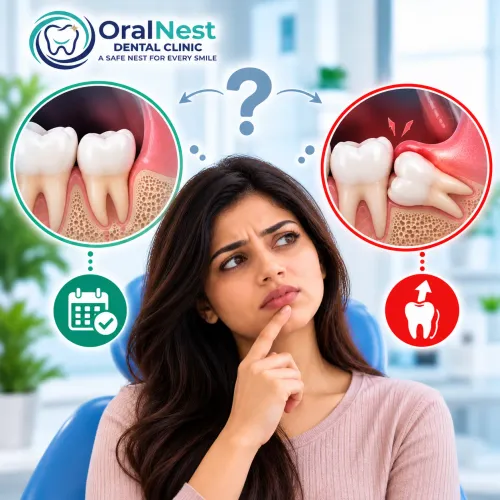
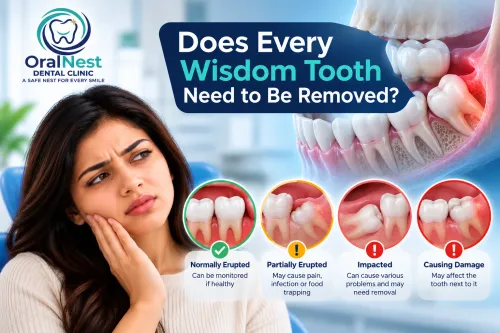
But wisdom tooth pain does not always mean that the tooth needs to be removed.
There can be several reasons why a wisdom tooth hurts, including eruption, gum inflammation, food accumulation, decay, infection or an impacted tooth. Sometimes, pain that feels like it is coming from the wisdom tooth may actually originate from the neighbouring molar or another oral structure.
This is why understanding the cause of the pain is the first step.
At OralNest Dental Clinic in Wakad, wisdom tooth concerns are approached by assessing the symptoms, examining the affected area and using appropriate dental imaging when required. Once the cause and condition of the tooth are understood, the appropriate treatment can be discussed. When wisdom tooth removal is clinically necessary, the procedure is performed at the clinic.
What Causes Wisdom Tooth Pain?
Wisdom tooth pain can occur for different reasons. The most common causes include:
* Partial eruption of the wisdom tooth
* Inflammation of the surrounding gum
* Food getting trapped around the tooth
* Impacted wisdom tooth
* Dental decay
* Infection
* An abnormal position of the tooth
* Pressure or irritation around the neighbouring tooth
* Difficulty maintaining oral hygiene around the tooth
* Problems involving the surrounding tissues
The symptoms may appear similar, but the underlying cause can be different. A proper examination helps distinguish between them.
1. Pain During Wisdom Tooth Eruption
Wisdom teeth are usually the last permanent teeth to erupt. When they begin appearing in the mouth, the surrounding gum can become irritated.
If there is adequate space, the tooth may gradually erupt into a functional position. During eruption, some people experience temporary discomfort or tenderness at the back of the jaw.
You may notice:
* Mild pain
* Gum tenderness
* Sensitivity while chewing
* Slight swelling
* Difficulty cleaning the area
If the discomfort is persistent or keeps returning, the tooth should be examined to determine whether there is another underlying problem.
2. Gum Inflammation Around a Partially Erupted Wisdom Tooth
A wisdom tooth that has only partially emerged can create a small area between the tooth and surrounding gum.
Food debris and bacteria can accumulate in this area, making it difficult to keep clean.
This can cause inflammation around the tooth, commonly known as pericoronitis.
Possible symptoms include:
* Pain around the back tooth
* Red or swollen gum
* Bad taste
* Unpleasant mouth odour
* Pain while chewing
* Difficulty opening the mouth
* Swelling around the jaw
If episodes of inflammation repeatedly occur, the tooth should be evaluated to understand why the problem is recurring and whether further treatment is necessary.
3. Food Getting Trapped Around the Wisdom Tooth
The position of a wisdom tooth can sometimes make cleaning difficult.
A partially erupted or tilted wisdom tooth may create spaces where food particles become trapped. This can irritate the gum and increase the accumulation of bacteria.
Over time, this may contribute to:
* Gum inflammation
* Bad breath
* Tooth decay
* Recurrent discomfort
* Infection
If food consistently gets trapped around the same wisdom tooth, it is worth having the area examined.
4. An Impacted Wisdom Tooth
An impacted wisdom tooth is a tooth that has not erupted normally into the mouth.
It may remain under the gum or bone, or it may be positioned at an angle because there is insufficient space for normal eruption.
An impacted tooth can sometimes remain without symptoms. In other cases, it may contribute to pain, gum inflammation, food trapping or problems affecting the adjacent tooth.
Because the position of an impacted tooth cannot always be understood by looking inside the mouth, dental imaging can be important during evaluation.
5. Decay in the Wisdom Tooth
Wisdom teeth can develop cavities like any other tooth.
Their location at the back of the mouth can make brushing and cleaning more difficult, especially when the tooth is partially erupted or positioned awkwardly.
Decay may cause:
* Sensitivity to hot or cold
* Pain while chewing
* Food getting trapped
* Intermittent toothache
* Persistent pain
* Infection if the decay progresses
Whether the tooth can be maintained or whether removal is more appropriate depends on its condition, position and overall prognosis.
6. Infection Around the Wisdom Tooth
Infection can produce more significant symptoms.
A problematic wisdom tooth may be associated with:
* Increasing pain
* Gum swelling
* Facial swelling
* Pus or discharge
* Bad taste
* Difficulty opening the mouth
* Pain while swallowing
* Fever in some cases
An infection should be assessed rather than managed only by waiting for the pain to disappear.
The appropriate treatment depends on the source and severity of the infection and the condition of the tooth.
7. The Wisdom Tooth May Be Positioned Abnormally
Not every wisdom tooth erupts straight.
A tooth may be tilted toward the neighbouring molar or positioned in another direction within the jaw.
An abnormal position can make cleaning difficult and may increase the possibility of food accumulation, decay or problems affecting the adjacent tooth.
A dental X-ray can help show the position of the tooth and its relationship with surrounding structures.
8. Your Pain May Not Actually Be From the Wisdom Tooth
This is an important point.
Pain felt near the back of the jaw does not always originate from the wisdom tooth.
The source may sometimes be:
* The second molar
* Another decayed tooth
* Gum tissues
* A dental infection
* Jaw muscles
* The temporomandibular joint
* Another oral condition
Because several structures are located close together, identifying the true source of pain is important before deciding on treatment.
How Is Wisdom Tooth Pain Diagnosed?
Diagnosis generally begins with understanding your symptoms and their pattern.
A dental evaluation may consider:
* When the pain started
* Whether it is constant or intermittent
* Whether chewing increases the pain
* Whether there has been swelling
* Whether similar episodes occurred previously
* Whether there is difficulty opening the mouth
* Whether food gets trapped around the tooth
* Whether the tooth is partially visible
The dentist then examines the wisdom tooth and surrounding tissues.
When required, dental imaging is used to understand the position of the tooth and the structures that cannot be evaluated adequately through a routine visual examination.
Why Is an X-Ray Useful?
A wisdom tooth can have a complex position within the jaw, particularly when it is impacted.
An X-ray can help assess:
* Direction of eruption
* Depth of the tooth
* Root development and shape
* Relationship with the neighbouring tooth
* Surrounding bone
* Anatomical structures near the tooth
* Changes around the tooth
This information can help determine whether the symptoms are related to the wisdom tooth and what treatment may be appropriate.
Does Wisdom Tooth Pain Mean I Need Extraction?
Not necessarily.
Pain is a symptom. It is not, by itself, a diagnosis or an automatic indication for extraction.
Depending on the findings, management may include monitoring, treating the underlying dental problem, managing inflammation or infection, or removing the wisdom tooth when it is causing or is likely to cause significant problems.
The decision should be based on the condition and position of the tooth rather than simply on the fact that it is a wisdom tooth.
When Is Wisdom Tooth Removal Considered?
Removal may be considered when a wisdom tooth is associated with problems such as:
* Repeated infection or inflammation
* Significant decay
* An impacted tooth causing problems
* Damage or risk to the adjacent tooth
* Persistent symptoms
* Difficulty maintaining adequate hygiene
* Certain cystic or pathological changes
* A tooth position that makes future problems more likely
The exact recommendation depends on the findings of the examination and appropriate imaging.
At OralNest Dental Clinic, the aim is to first understand the problem and then recommend removal when it is clinically appropriate.
What If the Pain Goes Away?
Pain disappearing does not necessarily mean that the underlying issue has been resolved.
For example, inflammation around a partially erupted wisdom tooth can settle and later return. Similarly, symptoms from decay or another dental problem can fluctuate.
If the same wisdom tooth repeatedly becomes painful, swollen or uncomfortable, an evaluation can help identify the reason for the recurring episodes.
When Should You Get Your Wisdom Tooth Checked?
A dental evaluation is advisable if you experience:
* Repeated pain at the back of your mouth
* Swelling around a wisdom tooth
* Gum tenderness
* Food repeatedly getting trapped
* Bad taste or unpleasant odour
* Pain while chewing
* Difficulty opening your mouth
* A partially erupted wisdom tooth
* Tooth sensitivity or decay
* Repeated episodes of inflammation
More significant swelling, difficulty swallowing or difficulty breathing requires prompt professional attention.
Wisdom Tooth Evaluation and Treatment in Wakad
If you live in Wakad or nearby areas such as Hinjawadi, Baner, Balewadi, Pimple Saudagar, Punawale, Tathawade, Ravet, Pimple Gurav, Rahatani or other parts of Pimpri-Chinchwad, persistent wisdom tooth symptoms should not simply be ignored.
At OralNest Dental Clinic in Wakad, the approach begins with understanding the cause of the problem. Clinical examination and appropriate dental imaging help assess the wisdom tooth and surrounding structures.
Once the diagnosis is established, the treatment options can be explained clearly. If wisdom tooth removal is indicated, the procedure can be carried out at OralNest Dental Clinic.
The objective is simple: diagnose the problem accurately, explain what is happening and recommend the appropriate treatment based on the individual condition of the tooth.
Frequently Asked Questions
Why does my wisdom tooth hurt suddenly?
Sudden pain may be caused by gum inflammation, infection, decay, food trapping, eruption or an impacted wisdom tooth. An examination is needed to identify the actual cause.
Can wisdom tooth pain go away on its own?
It can sometimes improve temporarily, especially when inflammation settles. However, recurring pain may indicate an underlying problem that requires evaluation.
Does wisdom tooth pain always mean infection?
No. Wisdom tooth pain can have several causes, including eruption, gum irritation, decay, impaction and food accumulation.
How do I know if my wisdom tooth is impacted?
An impacted wisdom tooth is usually confirmed through clinical examination and dental imaging. Symptoms alone cannot reliably determine the exact position of the tooth.
Should I remove my wisdom tooth if it hurts?
Not automatically. The cause of pain and the condition and position of the tooth should be evaluated first. Removal may be recommended when the tooth is causing or is likely to cause significant problems.
Why does my wisdom tooth hurt when I chew?
Pain during chewing can occur because of inflamed gum tissue, decay, infection or pressure around a partially erupted or impacted tooth.
When should I see a dentist for wisdom tooth pain?
You should consider an evaluation if pain persists, repeatedly returns, is accompanied by swelling or affects chewing or mouth opening.
Final Takeaway
Wisdom tooth pain can have many causes, and identifying the cause is more important than assuming that every painful wisdom tooth needs to be removed.
A wisdom tooth may be painful because it is erupting, partially covered by gum, impacted, difficult to clean, decayed or infected. In some cases, the pain may even originate from a neighbouring tooth or another oral structure.
A proper clinical evaluation, supported by dental imaging when required, can help determine what is actually happening.
At OralNest Dental Clinic in Wakad, wisdom tooth concerns are approached with diagnosis first and treatment based on the clinical findings. When removal is necessary, wisdom tooth extraction is performed at the clinic.
Understanding the problem first helps ensure that the treatment decision is made for the right reason.
Keywords