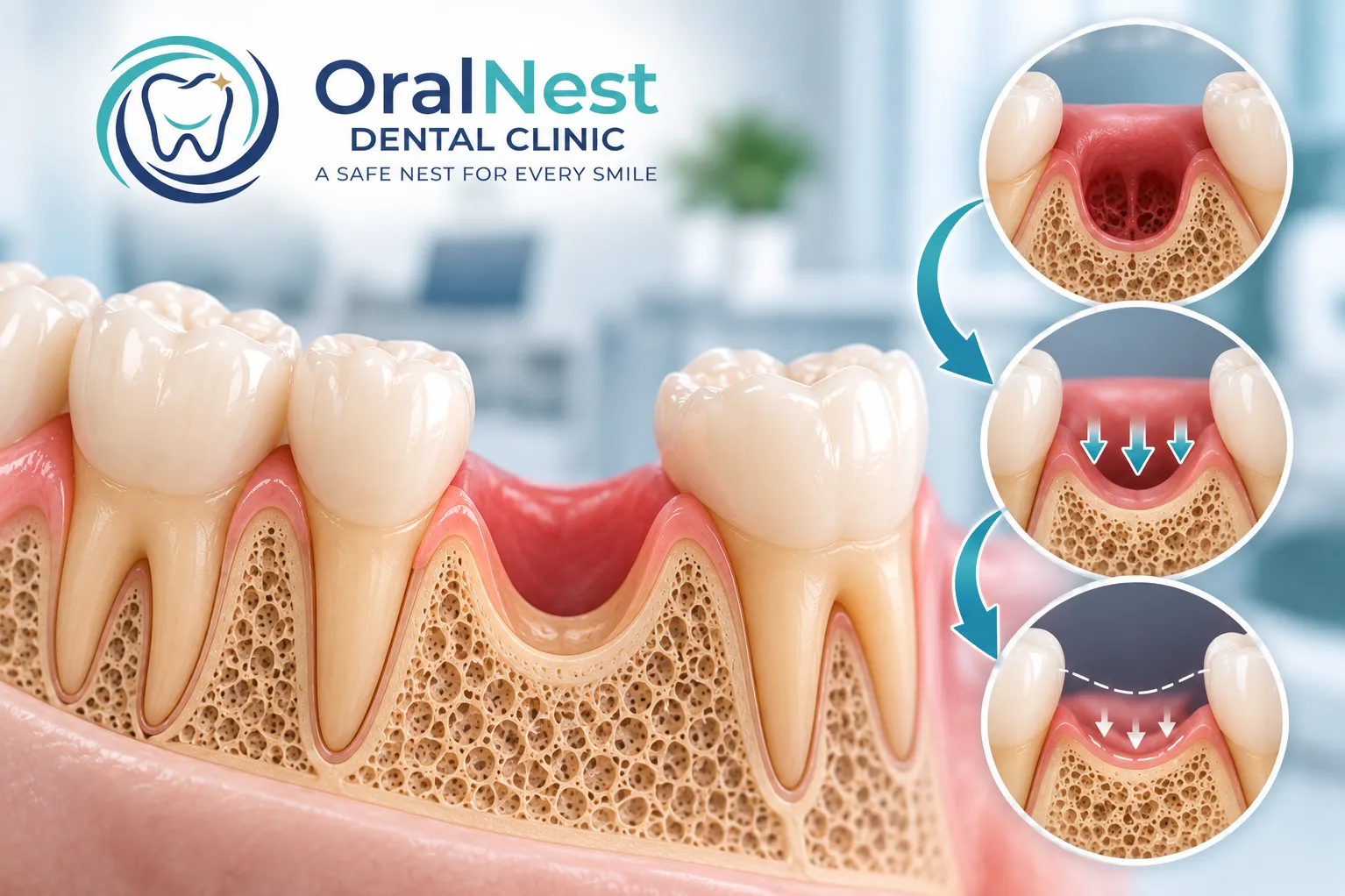
When a tooth is lost, the visible gap is only one part of the change. Beneath the gum, the jawbone that once supported the tooth also begins to remodel.
A natural tooth continuously stimulates the surrounding bone through normal chewing forces. Once the tooth is gone, that stimulation changes, and the bone in the area may gradually reduce in volume. This process is known as alveolar bone resorption.
The amount of bone change is not the same for everyone. It can depend on the location of the missing tooth, the condition of the gums and bone, the reason for tooth loss, and how much time has passed.
This matters because the bone and surrounding tissues are part of the foundation that supports future dental treatment. A long-standing missing tooth may therefore require a different evaluation from a recently lost tooth.
Bone loss does not mean that treatment is impossible. It simply means that the condition of the site should be understood before deciding how to replace the tooth.
If you have a missing tooth, the useful question is not only “How do I fill the gap?” but also “What has happened beneath the gap?”
Content Written & Clinically Reviewed by
Dr. Ashutosh Dighe
BDS | MDS – Oral Medicine & Maxillofacial Radiology | PhD Scholar | Fellowship in Contemporary Endodontics | Certified Endodontist
OralNest DENTAL CLINIC
A SAFE NEST FOR EVERY SMILE
A natural tooth continuously stimulates the surrounding bone through normal chewing forces. Once the tooth is gone, that stimulation changes, and the bone in the area may gradually reduce in volume. This process is known as alveolar bone resorption.
The amount of bone change is not the same for everyone. It can depend on the location of the missing tooth, the condition of the gums and bone, the reason for tooth loss, and how much time has passed.
This matters because the bone and surrounding tissues are part of the foundation that supports future dental treatment. A long-standing missing tooth may therefore require a different evaluation from a recently lost tooth.
Bone loss does not mean that treatment is impossible. It simply means that the condition of the site should be understood before deciding how to replace the tooth.
If you have a missing tooth, the useful question is not only “How do I fill the gap?” but also “What has happened beneath the gap?”
Content Written & Clinically Reviewed by
Dr. Ashutosh Dighe
BDS | MDS – Oral Medicine & Maxillofacial Radiology | PhD Scholar | Fellowship in Contemporary Endodontics | Certified Endodontist
OralNest DENTAL CLINIC
A SAFE NEST FOR EVERY SMILE
Keywords