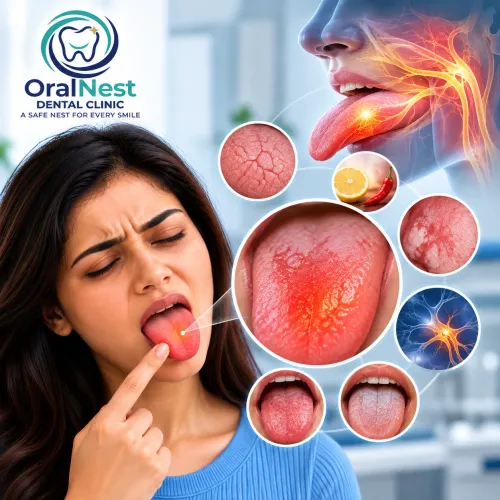

A mouth ulcer that appears occasionally may heal on its own, but when the same problem keeps returning, it is worth understanding why. Recurrent ulcers can be associated with local irritation, accidental biting, stress, nutritional factors, certain medications, systemic conditions or other oral factors.
The location, size, appearance, duration and frequency of the ulcers can provide important clues. It is also useful to notice whether they occur after specific foods, dental irritation, illness or other triggers.
Most recurrent mouth ulcers are not serious, but persistent, unusually large, frequently recurring or slow-healing ulcers should be evaluated rather than repeatedly treated without identifying the cause.
A proper oral examination helps determine whether the ulcer is simply recurrent irritation or whether further evaluation may be appropriate.
If your mouth ulcer keeps coming back, the important question is not only “How can I make it heal?” but also “Why does it keep returning?”
Understanding the pattern and possible cause is the first step toward appropriate management of recurrent mouth ulcers.
Keywords