What to Eat After Wisdom Tooth Removal? A Simple Guide for Recovery
Choosing the right foods after wisdom tooth removal can make recovery more comfortable and help protect the healing extraction site. In the first few days, the goal is to choose foods that are soft, easy to swallow and unlikely to disturb the blood clot.
What can you eat after wisdom tooth removal?
During the initial recovery period, patients can consider soft foods such as curd, yogurt, mashed potatoes, soft rice, khichdi, dal, porridge, scrambled eggs and well-cooked vegetables. Smooth foods can be useful when chewing is uncomfortable. As healing progresses, normal foods can usually be introduced gradually according to comfort and your dentist’s instructions.
What foods should you avoid?
Avoid very hot foods and drinks immediately after extraction. Hard, crunchy, sticky or spicy foods can irritate the area or become trapped near the socket. Seeds and small food particles may also be difficult to clean around the healing site. Avoid using a straw because suction can interfere with the blood clot.
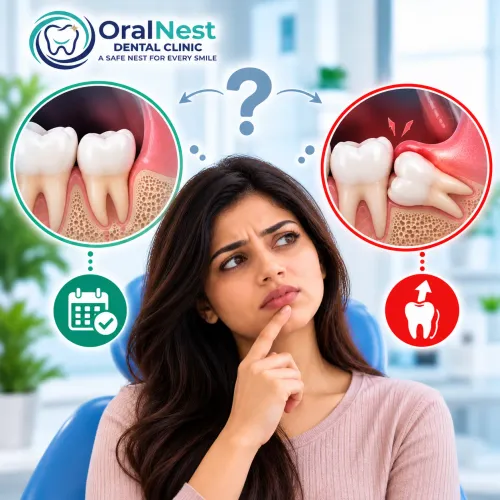
Do not rush back to a normal diet simply because the pain has reduced. The appropriate recovery period can vary depending on whether the wisdom tooth was fully erupted, partially impacted or surgically removed.
When should you contact a dentist?
Persistent bleeding, severe or increasing pain, significant swelling, fever, unpleasant discharge or difficulty swallowing should be assessed by a dental professional. A sudden increase in pain several days after extraction may also require evaluation.
At OralNest Dental Clinic | Wakad, wisdom tooth treatment follows a diagnosis-first approach. Clinical examination and appropriate imaging help determine the condition of the tooth before treatment is recommended. When extraction or surgical removal is indicated, the procedure is performed at the clinic, followed by individualized aftercare guidance.
Frequently Asked Questions
Can I eat normally after wisdom tooth removal?
It is usually better to begin with soft foods and gradually return to your regular diet as healing and comfort allow.
Can I drink milk after wisdom tooth extraction?
Milk and dairy foods may be suitable for many patients unless your dentist has advised otherwise.
Can I eat rice after wisdom tooth removal?
Soft, well-cooked rice may be comfortable, but avoid allowing food particles to accumulate around the extraction site.
How long should I eat soft food?
The duration varies with the complexity of the extraction and individual healing. Follow the instructions provided after your procedure.
For wisdom tooth evaluation and treatment in Wakad and nearby areas including Hinjawadi, Baner, Balewadi, Tathawade and Pimpri-Chinchwad, OralNest Dental Clinic provides clinical assessment, wisdom tooth extraction and surgical removal when indicated.
Keywords