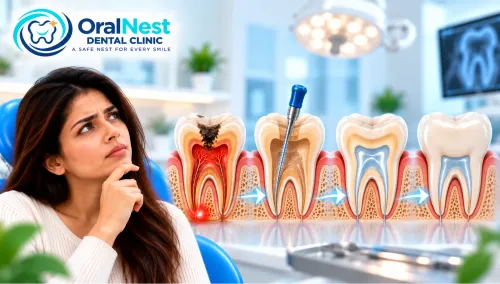
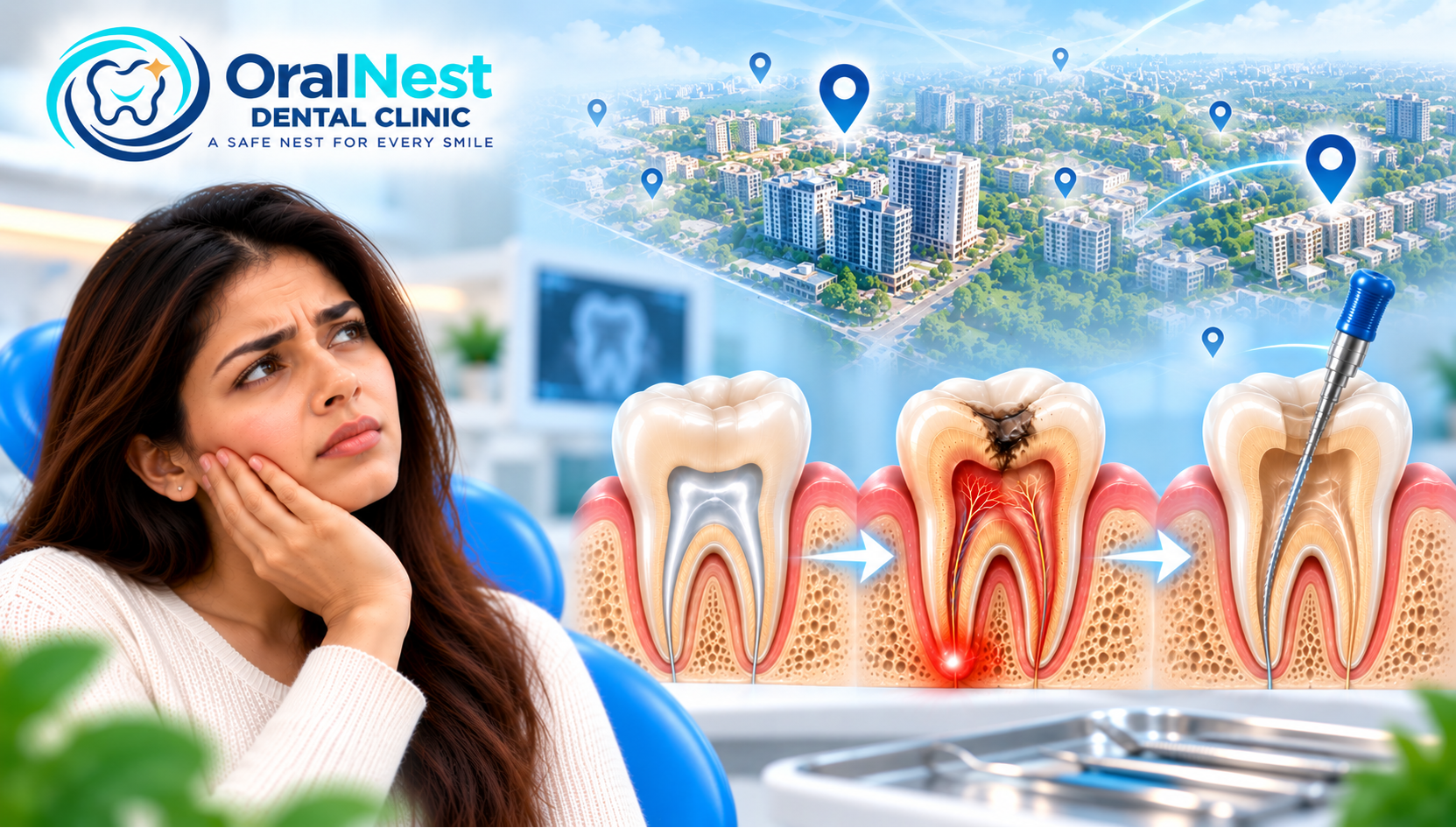
A root canal is performed to remove infection from inside a tooth, clean the root canal system, and seal it so the tooth can heal and function again. In many cases, root canal treatment provides long-term tooth preservation. However, like any biological treatment, it does not guarantee that a tooth can never develop problems again.
So if a tooth that has already undergone root canal treatment starts hurting again, the first question should not automatically be “Do I need another root canal?”
The more important question is:
Why is the tooth hurting again?
That distinction matters.
Is Pain After a Root Canal Always a Sign of Failure?
No.
Some tenderness or sensitivity for a few days after root canal treatment can occur while the tissues around the tooth heal. The American Association of Endodontists recommends evaluation when pain is severe, persists beyond the expected healing period, worsens, or when symptoms that existed before treatment return.
A tooth that becomes painful months or years later is a different situation.
It deserves proper assessment rather than assuming that the original treatment has simply “failed.”
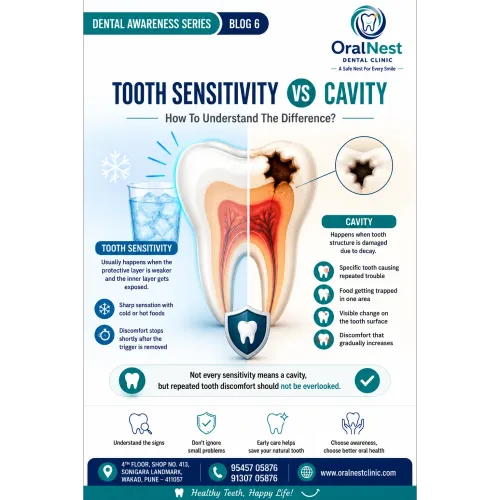
Why Can a Root-Canal-Treated Tooth Hurt Again?
Several possibilities need to be considered.
1. Infection may still be present
Root canal systems are not simple straight tubes. They can contain narrow, curved, branching or otherwise complex anatomy.
If an area of the canal system was not adequately cleaned or sealed, microorganisms may persist and contribute to continuing disease. AAE standards identify incomplete treatment and missed canals among recognised causes of persistent disease after root canal treatment.
2. A previously untreated canal may have been missed
Some teeth have anatomical variations that are difficult to identify.
A tooth may appear to have received a complete root canal on a conventional radiograph while an additional canal remains untreated.
This is one reason why diagnosis and imaging are important when evaluating a previously treated tooth.
3. The tooth may have developed new infection
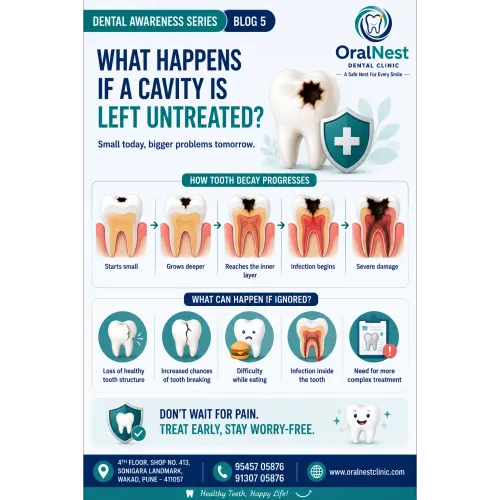
Even after successful treatment, a tooth can develop a new problem later.
Deep decay, a loose or broken restoration, leakage around a restoration, or new trauma can allow bacteria to enter again.
In other words, a previously treated tooth is not permanently protected from future dental disease.
4. The tooth may have a crack or fracture
Not every painful root-canal-treated tooth has an endodontic infection.
A crack or vertical root fracture can produce symptoms that require a completely different treatment decision. The AAE identifies vertical root fracture as one of the factors that can complicate prognosis in previously treated teeth.
This is why simply repeating a root canal without understanding the cause of pain may not solve the underlying problem.
5. The restoration may be part of the problem
Root canal treatment is only one part of preserving a tooth.
The tooth also needs an appropriate definitive restoration to protect it and prevent leakage or fracture. AAE guidance notes that breakdown of the crown or its seal can contribute to reinfection.
So when a root-canal-treated tooth becomes symptomatic, the evaluation should include both the endodontic treatment and the restoration.
What If the Tooth Was Treated Somewhere Else?
This is a common situation.
A patient may come to a dental clinic in Wakad, Kaspate Wasti, Bhumkar Chowk, Shankar Kalat Nagar, Datta Mandir Road or around the Wakad–Hinjawadi corridor with an old root-canal-treated tooth that has started hurting again.
Similarly, patients travelling from Pimple Gurav, Pawan Nagar, Jawakar Nagar, Bhalekar Nagar, Defence Area, Prabhat Nagar, Kashid Park, New Sangvi or nearby Pimple Saudagar and Sangvi may already have previous dental treatment records.
The previous treatment should not simply be labelled as “wrong.”
Instead, the tooth needs to be evaluated in its current clinical and radiographic condition.
The useful questions are:
What was the original diagnosis?
Which tooth was treated?
How was it restored afterward?
Are all canals adequately treated?
Is there evidence of persistent or new infection?
Is there a crack or fracture?
Is the tooth structurally restorable?
Could the symptoms be coming from another tooth or another source?
Does a Failed Root Canal Always Mean Extraction?
No.
Persistent disease after root canal treatment does not automatically mean that the tooth must be removed. AAE standards specifically note that clinical assessment and appropriate imaging can help identify the reason for persistent disease, and some cases can be managed with retreatment or other endodontic procedures.
Depending on the findings, possible options may include:
monitoring in selected situations
nonsurgical root canal retreatment
endodontic surgery in appropriate cases
restoration-related treatment
extraction when the tooth cannot be predictably preserved
The correct option depends on why the tooth is failing and whether the tooth remains structurally and biologically suitable for preservation.
What Happens During Evaluation of a Previously Treated Tooth?
A proper assessment may include:
Clinical examination
The tooth, gums, bite and surrounding tissues are examined.
Review of previous treatment
Existing dental records and previous radiographs can provide valuable information.
Dental imaging
Radiographs help assess the roots, surrounding bone and previous root canal treatment. In selected complex cases, additional imaging may be considered.
Assessment of restorability
A tooth may have technically treatable canals but still have an unfavourable structural prognosis.
Differential diagnosis
The symptoms may originate from the treated tooth, another tooth, the supporting tissues, or a non-dental source.
This is why “pain after root canal” is a symptom, not a diagnosis.
Can a Root Canal Be Retreated?
Yes, in appropriately selected cases.
During nonsurgical retreatment, the previous root filling materials are removed, the canal system is reassessed, untreated or inadequately treated areas may be identified, and the canals are cleaned, shaped and sealed again. The tooth then requires appropriate definitive restoration.
Retreatment can be more technically demanding than initial treatment because the clinician may need to work through existing restorative materials and identify previously untreated anatomy or procedural complications.
That is why the decision should be based on the cause of the original problem and the current prognosis, rather than simply repeating the previous procedure.
When Should You Get a Previously Root-Canal-Treated Tooth Checked?
Consider evaluation if you notice:
pain when biting
recurring toothache
swelling or a gum boil
tenderness around the tooth
persistent or worsening symptoms
a broken or loose crown/filling
symptoms returning after a period of comfort
unexplained discomfort from a tooth treated months or years earlier
Severe pain, swelling or returning symptoms should not simply be ignored.
The Role of Diagnosis in Root Canal Retreatment
At OralNest Dental Clinic | Wakad, previously root-canal-treated teeth are approached as a diagnostic problem first.
Dr. Ashutosh Dighe — BDS, MDS in Oral Medicine & Maxillofacial Radiology, PhD Scholar, Fellowship in Contemporary Endodontics, Certified Endodontist — evaluates the clinical findings, symptoms and available imaging to understand the possible source of the problem.
The objective is not simply to decide between “retreatment” and “extraction.”
It is to understand:
What happened?
Why is the tooth symptomatic?
Can the cause be corrected?
Can the tooth be predictably preserved?
That distinction becomes particularly important in complex or previously treated teeth.
A Root Canal Can Fail — But Pain Does Not Automatically Mean Failure
A previously treated tooth that hurts again deserves an explanation.
Sometimes the discomfort is part of normal healing. Sometimes there is persistent infection. Sometimes new decay or leakage has occurred. Sometimes an untreated canal, crack, fracture or another dental problem is responsible.
The treatment decision should follow the diagnosis.
A painful root-canal-treated tooth should not automatically be extracted — and it should not automatically be retreated either.
It should first be understood.
At OralNest Dental Clinic | Wakad:
Understand First. Diagnose Carefully. Decide With Clarity.
Clinic: Mon–Sat, 5:30 PM–9:00 PM | Sun, 10:00 AM–1:00 PM
Prior appointment is convenient.
Recommended publishing time: 7:00 PM IST
Next: BLOG 37 — Why Does a Root-Canal-Treated Tooth Hurt When I Bite? Understanding Post-Treatment Pain
REWRITE IT AGAIN WAKAD & PIMPLE GURAV AND THERE MICRO AREAS (SEO+GEO+AEO)
BLOG 36 — 06/11/2026
Can a Root Canal Fail? Why Does a Root-Canal-Treated Tooth Sometimes Hurt Again?
If a tooth that had a root canal years ago starts hurting again, it is natural to wonder: “Did my root canal fail?”
Not necessarily.
A root-canal-treated tooth can sometimes become painful or diseased months or even years after treatment. The important point is that pain is a symptom, not a diagnosis. The cause needs to be identified before deciding whether the tooth needs retreatment, another procedure, restoration, monitoring, or extraction.
For patients looking for root canal treatment or root canal retreatment in Wakad, Kaspate Wasti, Bhumkar Chowk, Shankar Kalat Nagar, Vishnu Dev Nagar, Datta Mandir Road, Dange Chowk, Mankar Chowk and the Wakad–Hinjawadi area, understanding this distinction can prevent unnecessary treatment decisions.
It is equally relevant for patients from Pimple Gurav, Pawan Nagar, Jawakar Nagar, Bhalekar Nagar, Defence Area, Prabhat Nagar, Kashid Park, Shivramnagar, Vinayak Nagar, Jai Bhavani Nagar, Kate Puram and New Sangvi, as well as nearby Pimple Saudagar, Rahatani, Sangvi and surrounding Pimpri-Chinchwad areas.
Why Can a Root-Canal-Treated Tooth Hurt Again?
There is no single reason.
1. A canal may have remained untreated
Root canal anatomy can be complex. Narrow, curved or additional canals may sometimes be difficult to identify during the original treatment.
If part of the canal system remains untreated, microorganisms can persist and contribute to continuing disease. Missed canals and incomplete treatment are recognised causes of persistent endodontic disease.
2. The original infection may not have healed as expected
Even after appropriate treatment, healing does not always occur as expected.
A previously treated tooth may continue to show disease or become symptomatic later. The appropriate response is to investigate why healing has not occurred, rather than automatically assuming that the tooth must be removed.
3. A new infection may have developed
A successfully treated tooth can develop a new problem.
New decay, a leaking restoration, or a loose, cracked or broken crown can allow bacteria to enter the tooth again.
This is why the final restoration is an important part of root canal treatment, not merely an aesthetic finishing step.
4. The tooth may have cracked or fractured
Sometimes the source of pain is not persistent infection at all.
A crack or fracture can produce symptoms in a previously treated tooth and may significantly change the treatment decision. In such cases, repeating the root canal without identifying the fracture may not address the real problem.
5. The pain may not actually be coming from that tooth
This is an important but often overlooked possibility.
A neighbouring tooth, periodontal problem, bite-related issue or another condition can sometimes produce pain that the patient associates with the previously treated tooth.
That is why “this tooth hurts” does not automatically mean “this root canal has failed.”
Does Pain Mean I Need a Second Root Canal?
Not automatically.
The first step is diagnosis.
A previously treated tooth may require:
observation in selected situations
nonsurgical root canal retreatment
endodontic surgery in appropriate cases
restorative treatment
treatment of another dental cause
extraction when the tooth cannot be predictably preserved
The American Association of Endodontists notes that persistent disease following root canal treatment does not by itself necessitate extraction; clinical assessment and appropriate imaging can help determine the cause.
That is an important distinction for anyone searching for root canal retreatment in Wakad or Pimple Gurav.
What Does a Root Canal Retreatment Actually Involve?
Retreatment is not simply “doing the same root canal again.”
The tooth is reopened and the previous root-filling material is removed as needed. The canal system is then reassessed for missed anatomy, persistent infection or other problems. The canals can then be cleaned, shaped and sealed again when retreatment is appropriate. A definitive restoration is subsequently needed to protect the tooth.
In some cases, previous posts, restorative materials, altered anatomy or procedural complications can make retreatment considerably more complex.
Therefore, the important question is not:
“Can we repeat the root canal?”
It is:
“Is retreatment appropriate, technically feasible and likely to address the actual cause?”
What Does the Evaluation of a Previously Treated Tooth Look At?
A careful evaluation may consider several factors together.
Clinical examination
The tooth, surrounding tissues, gum condition and bite are assessed.
Previous treatment
Existing radiographs, treatment records and information about the previous crown or restoration can be useful.
Dental imaging
Radiographs help assess the roots and surrounding bone. In selected complex cases, additional three-dimensional imaging may provide information that conventional radiographs cannot show clearly.
Canal anatomy
The clinician may look for missed canals, unusual anatomy or areas that were inadequately treated.
Restoration
The quality and integrity of the crown or filling matter because leakage can contribute to reinfection.
Structural condition
A tooth must also be assessed for cracks, fractures and remaining tooth structure.
Overall prognosis
The final question is whether the tooth can be predictably preserved.
When Should You Get a Previously Root-Canal-Treated Tooth Checked?
Do not ignore symptoms such as:
pain while biting
recurring toothache
swelling near the tooth
a gum boil or drainage
tenderness around the tooth
symptoms returning after months or years
a loose or broken crown
new decay around a previously treated tooth
persistent or worsening discomfort
Mild tenderness for a few days can occur after a recent root canal as the surrounding tissues heal. Severe, worsening or persistent symptoms—or the return of symptoms that existed before treatment—should be evaluated.
Can a Previously Failed Root Canal Still Be Saved?
Sometimes, yes.
The possibility depends on the reason for the problem and the condition of the tooth.
A tooth with a missed canal or inadequate previous treatment may have a different treatment pathway from a tooth with a vertical root fracture or severe structural damage.
This is why “failed root canal” is not the end of the diagnostic process.
It is the beginning of another question:
What caused the problem, and is the tooth still predictably restorable?
Root Canal Retreatment in Wakad & Pimple Gurav: Why Diagnosis Matters
Patients from Kaspate Wasti, Wakad Chowk, Bhumkar Chowk, Shankar Kalat Nagar, Vishnu Dev Nagar, Dange Chowk, Mankar Chowk and the Wakad–Hinjawadi corridor may encounter different opinions about a previously treated tooth.
The same is true for patients travelling from Pimple Gurav, Pawan Nagar, Jawakar Nagar, Bhalekar Nagar, Defence Area, Prabhat Nagar, Kashid Park, Shivramnagar, Vinayak Nagar, Jai Bhavani Nagar, Jai Bhavani Nagar, Kate Puram and New Sangvi, or nearby Pimple Saudagar, Rahatani and Sangvi.
The important thing is not which procedure sounds more advanced.
The important thing is understanding what is actually happening inside and around the tooth.
At OralNest Dental Clinic | Wakad, Dr. Ashutosh Dighe — BDS, MDS in Oral Medicine & Maxillofacial Radiology, PhD Scholar, Fellowship in Contemporary Endodontics, Certified Endodontist — approaches complex dental problems through clinical assessment, diagnosis and appropriate imaging before treatment decisions are made.
For a previously root-canal-treated tooth, that means looking beyond the symptom and asking:
Is there persistent infection?
Is there missed anatomy?
Is there leakage?
Is the tooth fractured?
Is the restoration failing?
Or is the pain coming from somewhere else?
The Simple Answer
Can a root canal fail?
Yes, a previously treated tooth can sometimes develop persistent or new disease.
Does pain automatically mean the root canal failed?
No. Pain needs a diagnosis.
Does a failed root canal automatically mean extraction?
No. Some teeth can be managed with retreatment or other endodontic procedures, depending on the cause and the condition of the tooth.
What should you do if an old root-canal-treated tooth starts hurting?
Have the tooth properly evaluated before deciding on retreatment or extraction.
At OralNest Dental Clinic | Wakad
Understand First. Diagnose Carefully. Decide With Clarity.
For patients in Wakad, Kaspate Wasti, Bhumkar Chowk, Shankar Kalat Nagar, Vishnu Dev Nagar, Datta Mandir Road, Dange Chowk, Mankar Chowk, Hinjawadi and nearby areas, as well as Pimple Gurav, Pawan Nagar, Jawakar Nagar, Bhalekar Nagar, Defence Area, Prabhat Nagar, Kashid Park, Shivramnagar, Vinayak Nagar, Kate Puram, New Sangvi, Pimple Saudagar, Rahatani and Sangvi, a painful root-canal-treated tooth deserves a diagnosis—not an assumption.
Clinic: Mon–Sat 5:30 PM–9:00 PM | Sun 10:00 AM–1:00 PM
Prior appointment is convenient.
Keywords