Understanding Bad Breath
Brushing regularly does not always prevent bad breath. Persistent mouth odor, also called halitosis, can have several causes, and simply brushing more often may not address the underlying reason.
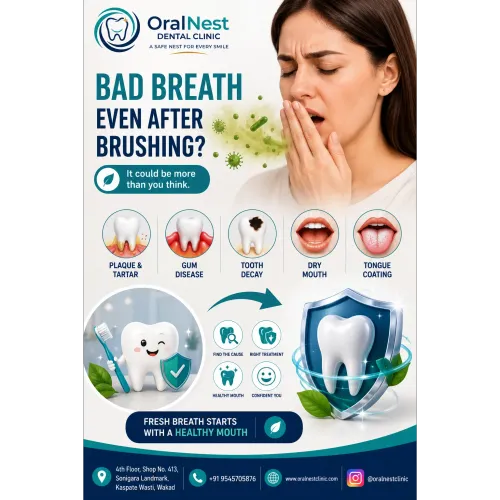
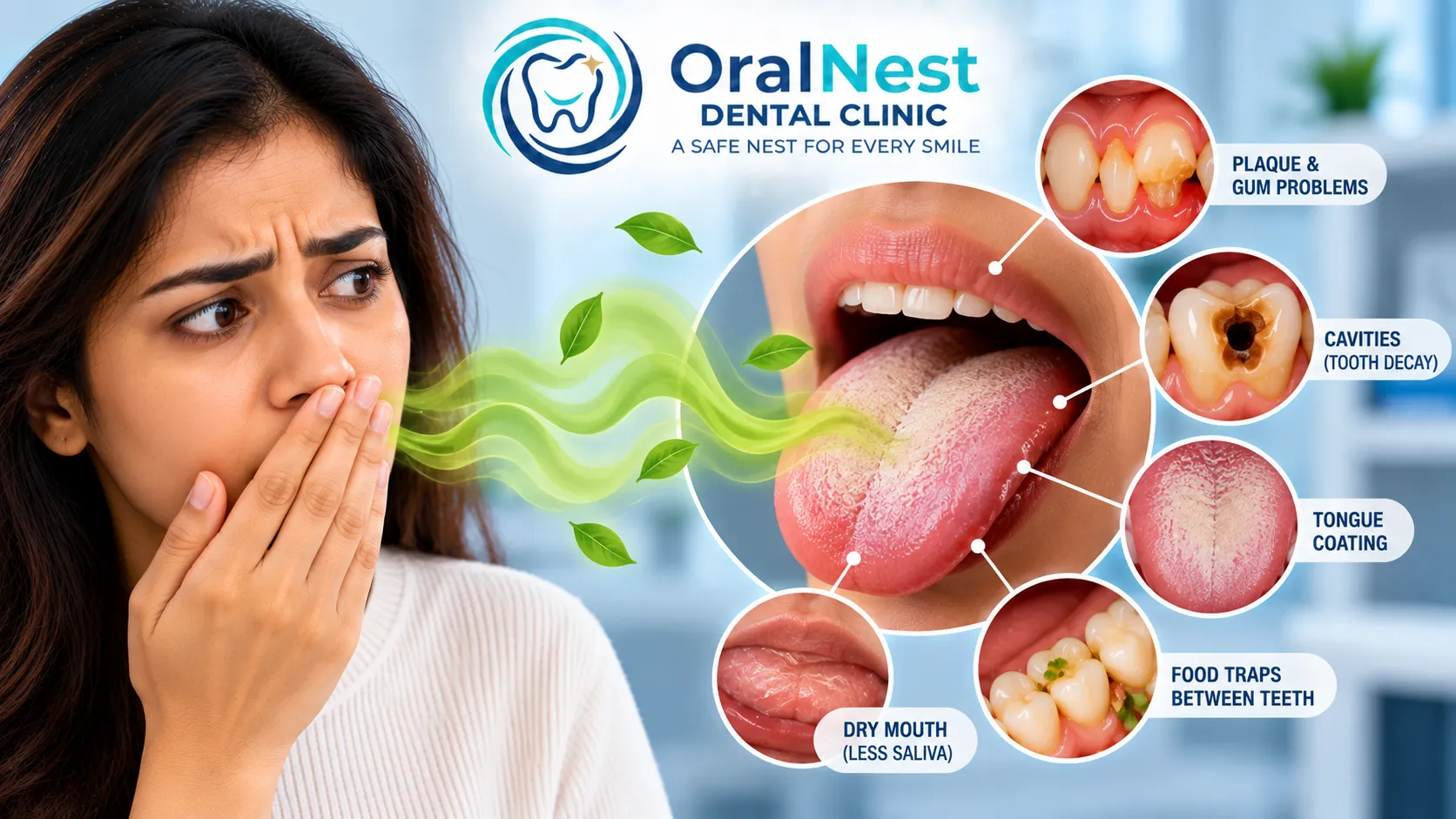
Odor can develop from bacteria and coating on the tongue, plaque around the teeth and gums, trapped food, cavities, gum disease or reduced saliva. Smoking, certain foods and some medications can also contribute.
One important clue is how quickly the odor returns after brushing. If it repeatedly comes back despite good oral hygiene, the problem may require more than simply changing toothpaste or using a mouthwash.
Bad breath is therefore not always a sign of poor hygiene. In some people, it can be an indication of an underlying oral condition that needs attention.
The useful question is not just “How can I hide the smell?” but “Why is the odor developing in the first place?”
Understanding the cause is the first step toward managing persistent bad breath effectively.
Content Written & Clinically Reviewed by
Dr. Ashutosh Dighe
BDS | MDS – Oral Medicine & Maxillofacial Radiology | PhD Scholar | Fellowship in Contemporary Endodontics | Certified Endodontist
OralNest DENTAL CLINIC
A SAFE NEST FOR EVERY SMILE
Brushing regularly does not always prevent bad breath. Persistent mouth odor, also called halitosis, can have several causes, and simply brushing more often may not address the underlying reason.
Odor can develop from bacteria and coating on the tongue, plaque around the teeth and gums, trapped food, cavities, gum disease or reduced saliva. Smoking, certain foods and some medications can also contribute.
One important clue is how quickly the odor returns after brushing. If it repeatedly comes back despite good oral hygiene, the problem may require more than simply changing toothpaste or using a mouthwash.
Bad breath is therefore not always a sign of poor hygiene. In some people, it can be an indication of an underlying oral condition that needs attention.
The useful question is not just “How can I hide the smell?” but “Why is the odor developing in the first place?”
Understanding the cause is the first step toward managing persistent bad breath effectively.
Content Written & Clinically Reviewed by
Dr. Ashutosh Dighe
BDS | MDS – Oral Medicine & Maxillofacial Radiology | PhD Scholar | Fellowship in Contemporary Endodontics | Certified Endodontist
OralNest DENTAL CLINIC
A SAFE NEST FOR EVERY SMILE
Keywords