Jaw pain can be surprisingly confusing. It may appear while chewing, opening the mouth, waking up in the morning, or even when you are not using your jaw. Some people feel the pain directly near the ear; others notice discomfort in the cheek, temple, neck, or face.
The important question is: what is actually causing the pain?
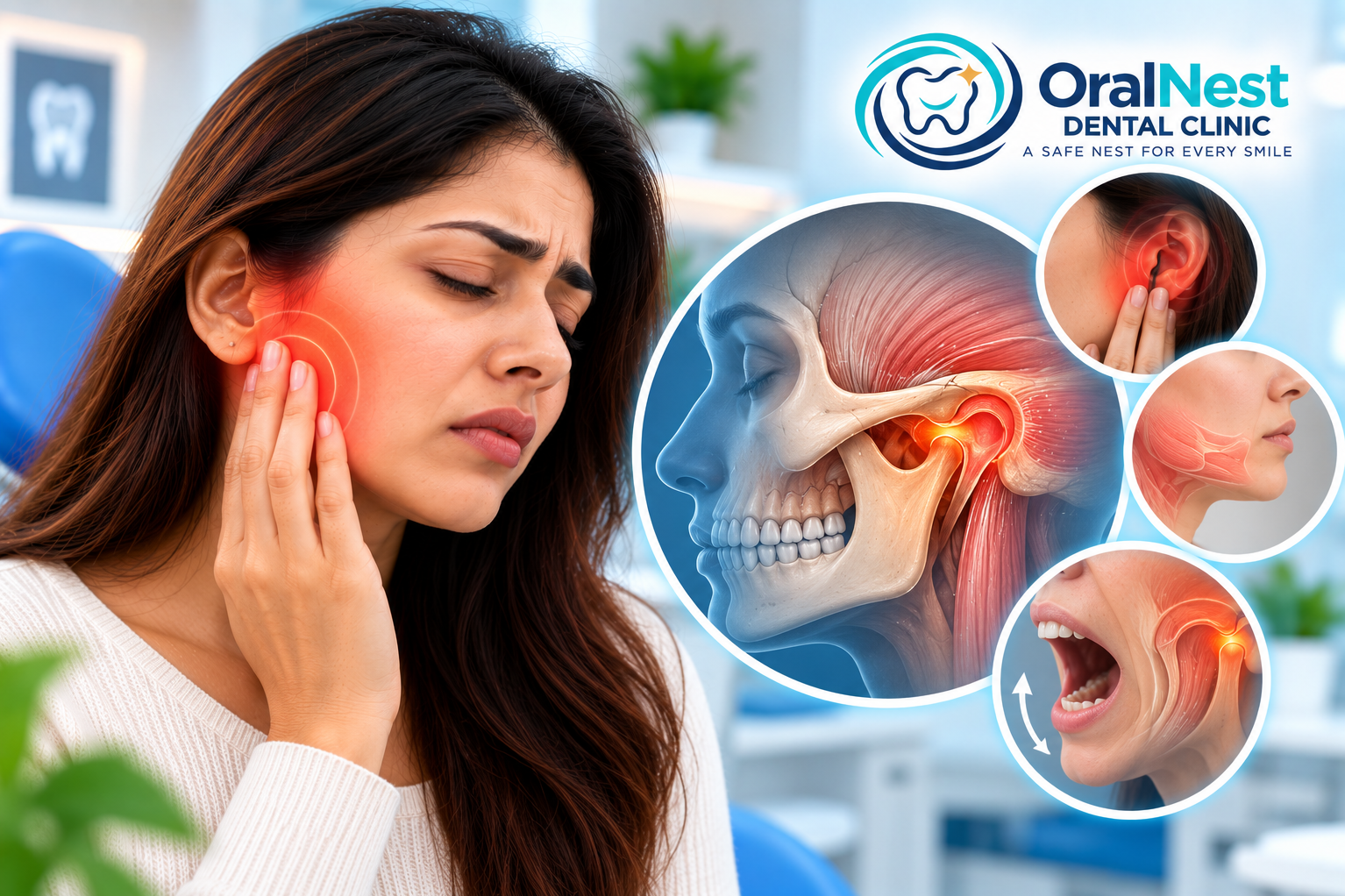
Jaw pain can come from the temporomandibular joint (TMJ), the muscles used for chewing, teeth, gums, previous dental treatment, trauma, or other conditions. Temporomandibular disorders (TMDs) themselves include several different joint and muscle-related conditions, so “TMJ pain” is not one single diagnosis.
What can jaw pain feel like?
Patients may describe:
Pain in front of the ear
Tenderness around the jaw or cheek
Pain while chewing
Jaw stiffness or fatigue
Difficulty opening the mouth fully
Pain that spreads toward the temple, face, or neck
Pain associated with clicking or locking
Morning jaw soreness, sometimes associated with clenching or grinding
However, pain alone does not establish a TMJ diagnosis. The location, timing, triggers, jaw movement, dental findings, and associated symptoms all matter.
Why can diagnosis be difficult?
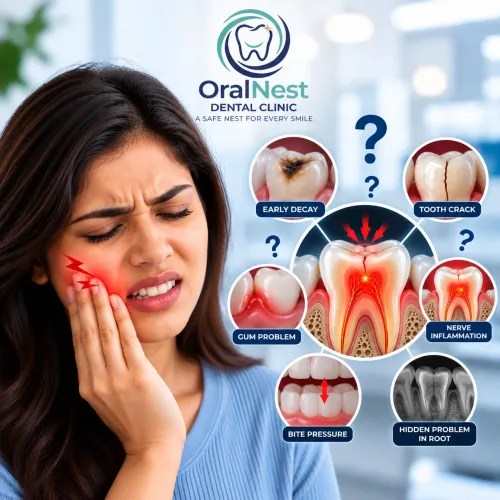
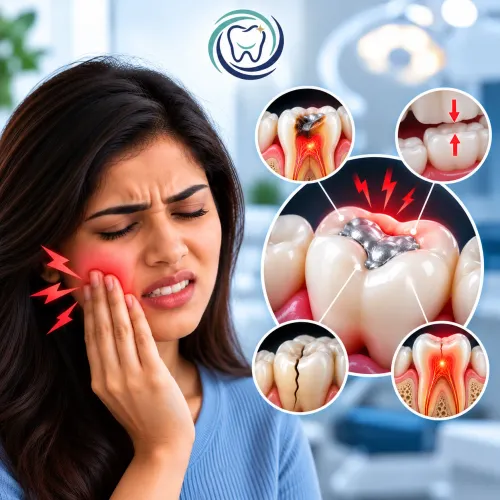
Several conditions can produce similar symptoms. A tooth problem may sometimes be felt as facial or jaw pain, while muscle-related pain can spread beyond the area where it originates. TMDs can involve the joint, chewing muscles, or both.
This is why treating “jaw pain” without first understanding its source may not address the actual problem.
When should jaw pain be evaluated?
Consider a dental evaluation if the pain is persistent, recurrent, worsening, associated with restricted jaw movement, locking, painful clicking, difficulty chewing, swelling, or unexplained changes in how your teeth meet.
A proper evaluation generally begins with a detailed history and examination of the jaw, face, muscles, teeth, and surrounding structures. Imaging may be considered when clinical findings indicate that it could provide useful information.
How Dr. Ashutosh Dighe approaches jaw pain
At OralNest Dental Clinic | Wakad, Dr. Ashutosh Dighe, BDS, MDS – Oral Medicine & Maxillofacial Radiology, PhD Scholar, Fellowship in Contemporary Endodontics, and Certified Endodontist, approaches jaw and orofacial pain through clinical assessment and diagnosis rather than assuming every symptom represents the same TMJ condition.
The objective is to understand where the pain is coming from, what may be contributing to it, and whether further investigation is necessary before discussing treatment.
Not every jaw pain needs extensive treatment. Many TMD symptoms can improve with conservative measures, and current guidance generally supports starting with simpler, reversible approaches when appropriate.
Jaw pain is a symptom — not a diagnosis
If your jaw hurts, the most useful first question may not be “Which treatment should I take?”
It may be:
“What is causing my jaw pain?”
Understanding that difference can prevent unnecessary treatment and help you make a more informed decision about what comes next.
At OralNest Dental Clinic | Wakad
Understand First. Diagnose Carefully. Decide With Clarity.
Mon–Sat: 5:30 PM–9:00 PM
Sunday: 10:00 AM–1:00 PM
Prior appointment is convenient.
Keywords