What Happens When You Lose a Tooth? Understanding the Changes You May Not See
A missing tooth may seem like a small problem—especially when there is no pain. But the space left behind is not biologically inactive.
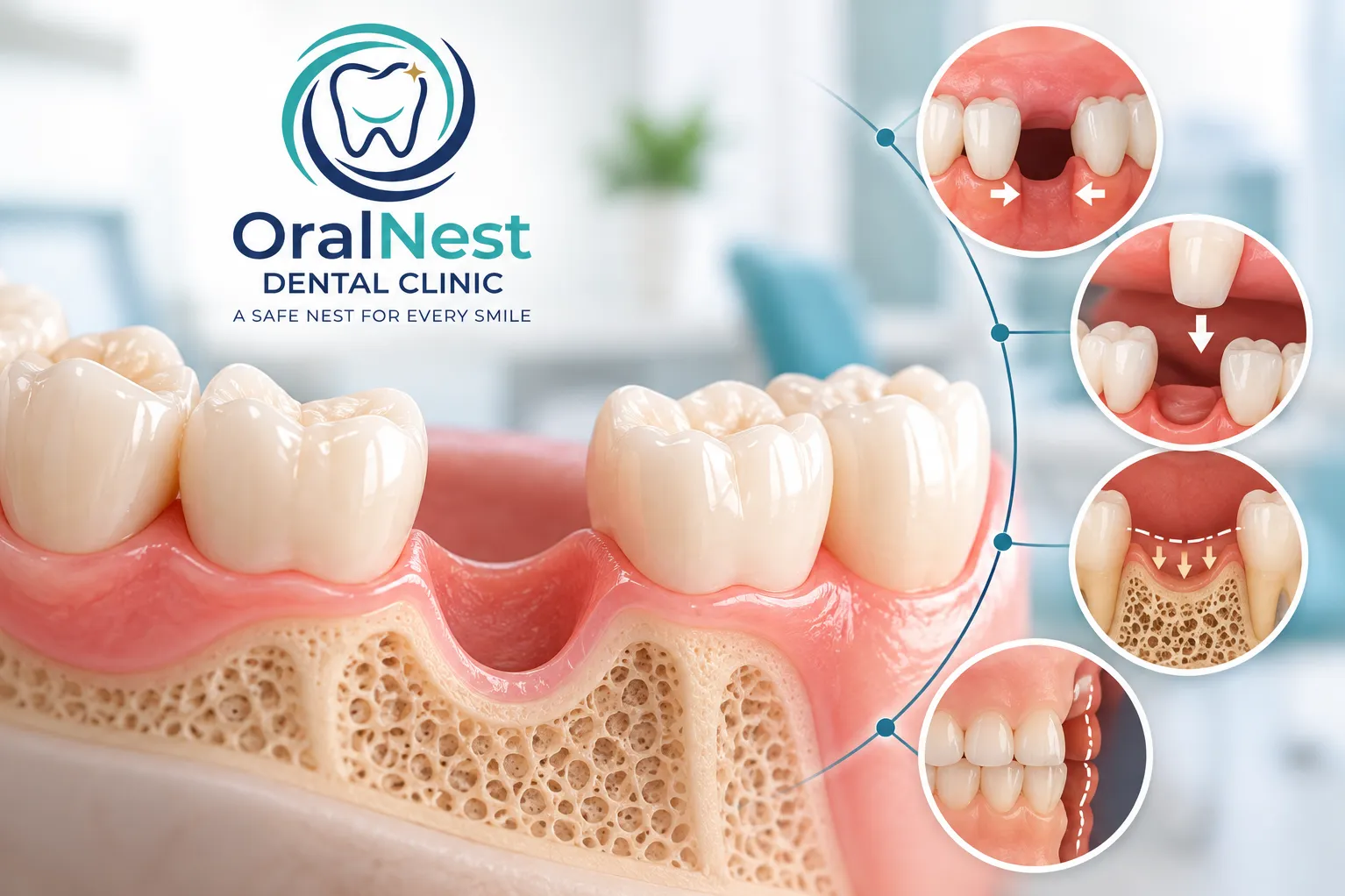
After tooth loss, the bone that once supported the tooth begins to remodel and can gradually reduce in volume. The neighbouring teeth may also change their position, while the opposing tooth can sometimes move into the empty space. These changes are not identical in every person and depend on factors such as the location of the missing tooth, bite, gum health and the condition of surrounding teeth.
A missing tooth can also affect chewing efficiency and, particularly when several teeth are missing, may influence oral function and quality of life.
So, does every missing tooth need immediate replacement? Not necessarily. The right decision depends on an individual clinical assessment—not simply on the presence of a gap.
If you have a missing tooth, the important first step is understanding what is happening in your particular mouth and whether the space is affecting function, bite, bone or neighbouring teeth.
Content Written & Clinically Reviewed by
Dr. Ashutosh Dighe
BDS | MDS – Oral Medicine & Maxillofacial Radiology | PhD Scholar | Fellowship in Contemporary Endodontics | Certified Endodontist
A missing tooth may seem like a small problem—especially when there is no pain. But the space left behind is not biologically inactive.
After tooth loss, the bone that once supported the tooth begins to remodel and can gradually reduce in volume. The neighbouring teeth may also change their position, while the opposing tooth can sometimes move into the empty space. These changes are not identical in every person and depend on factors such as the location of the missing tooth, bite, gum health and the condition of surrounding teeth.
A missing tooth can also affect chewing efficiency and, particularly when several teeth are missing, may influence oral function and quality of life.
So, does every missing tooth need immediate replacement? Not necessarily. The right decision depends on an individual clinical assessment—not simply on the presence of a gap.
If you have a missing tooth, the important first step is understanding what is happening in your particular mouth and whether the space is affecting function, bite, bone or neighbouring teeth.
Content Written & Clinically Reviewed by
Dr. Ashutosh Dighe
BDS | MDS – Oral Medicine & Maxillofacial Radiology | PhD Scholar | Fellowship in Contemporary Endodontics | Certified Endodontist
Keywords