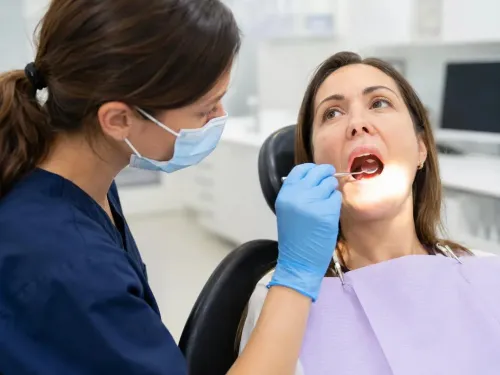
A dental visit should not feel like simply walking into a clinic, describing a problem and being given a procedure.
For many patients, the difficult part is not the treatment itself.
It is understanding:
What is wrong?
Why is it happening?
Do I actually need treatment?
What are my options?
What happens if I wait?
What should I expect after treatment?
At OralNest Dental Clinic | Wakad, we believe a patient's journey should provide clarity at every important stage.
Our approach can be understood as:
Concern → Consultation → Evaluation → Diagnosis → Discussion → Decision → Treatment → Follow-Up
Each stage has a purpose.
1. It Begins With a Concern
Every patient's journey begins differently.
You may have:
tooth pain;
sensitivity;
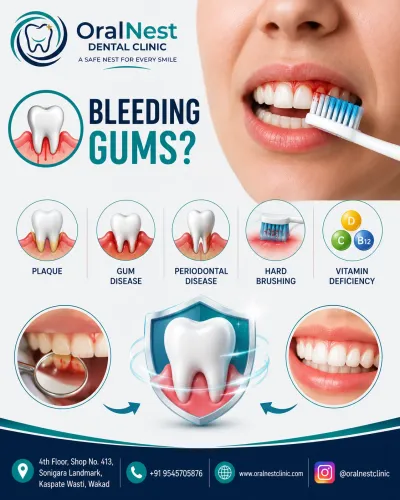
bleeding gums;
a broken tooth;
a recurring mouth ulcer;
jaw clicking;
difficulty opening your mouth;
wisdom tooth discomfort;
a missing tooth;
a cosmetic concern;
or uncertainty about a treatment already recommended elsewhere.
Sometimes the concern is obvious.
Sometimes it is difficult to describe.
You may simply feel that:
“Something doesn't feel right.”
That is enough reason to seek appropriate dental advice when the problem persists, recurs or concerns you.
You do not need to know the diagnosis before making a consultation.
Understanding the problem is part of the consultation.
2. The Consultation Begins With Listening
The first step is understanding your concern from your perspective.
When did it begin?
Has it happened before?
Is it getting worse?
What triggers it?
Does it affect eating, sleeping or daily activities?
Have you already taken medication?
Have you had previous dental treatment?
Were you given another diagnosis?
These details can provide important clues.
A patient's description of symptoms can sometimes reveal patterns that may not be obvious from a quick examination alone.
That is why listening is not separate from diagnosis.
Listening is one of the first steps in diagnosis.
3. Clinical Evaluation
After understanding the concern, the relevant area can be examined.
Depending on the problem, this may involve assessment of:
teeth;
gums;
oral mucosa;
jaw joints;
chewing muscles;
bite and function;
surrounding structures;
previously treated teeth;
missing-tooth areas.
The examination is guided by the patient's complaint.
A person with tooth pain does not necessarily need the same evaluation as someone with jaw pain or an oral lesion.
The evaluation should be appropriate to the question being asked.
4. Diagnostic Imaging When Required
Sometimes the clinical examination provides sufficient information.
Sometimes imaging is useful or necessary.
Dental radiographs and other appropriate diagnostic imaging can help reveal information that cannot be adequately assessed by looking inside the mouth alone.
Depending on the situation, imaging may help evaluate:
roots;
canals;
surrounding bone;
impacted wisdom teeth;
infection-related changes;
previously treated teeth;
missing-tooth areas;
anatomical relationships.
But an image should never be considered in isolation.
The patient's symptoms, clinical findings and imaging need to make sense together.
That connection is an important part of meaningful diagnosis.
5. Understanding the Diagnosis
Once the relevant information has been collected, the next step is understanding what it means.
A patient should not simply leave with a procedure name.
You should be able to understand:
What is the problem?
What is likely causing it?
How significant is it?
Does it require treatment?
Does it need further investigation?
Can it be monitored?
What are the available options?
A clear diagnosis helps turn uncertainty into a more structured decision.
6. Discussing Treatment Options
Treatment is not necessarily a single predetermined path.
Depending on the diagnosis, there may be:
one appropriate treatment;
several reasonable options;
a need for further investigation;
an option to monitor;
or a situation where immediate treatment is not required.
For example, a missing tooth may potentially be managed through different tooth-replacement approaches.
A wisdom tooth may need removal or may be monitored depending on its condition.
A damaged tooth may have different restorative possibilities depending on how much healthy structure remains.
A painful tooth may or may not require root canal treatment.
The appropriate decision depends on the individual clinical situation.
7. Understanding Why a Treatment Is Recommended
One of the most important parts of the OralNest patient journey is understanding the reason behind the recommendation.
A patient should be able to ask:
Why this treatment?
Why now?
What is the goal?
What alternatives exist?
What happens if I wait?
What happens after treatment?
These are reasonable questions.
Good communication should make the treatment plan easier to understand rather than make the patient feel pressured to accept it.
8. Making the Decision
Once the diagnosis and options are understood, a treatment decision can be made.
Sometimes the decision is straightforward.
Sometimes it requires careful consideration.
This is particularly true when the treatment is complex or irreversible.
Examples include:
tooth extraction;
root canal treatment;
dental implant treatment;
extensive restorative treatment;
wisdom tooth surgery;
full-mouth rehabilitation.
The objective is not simply to choose the quickest procedure.
It is to choose an approach that is appropriate for the patient's diagnosis, condition, expectations and long-term dental needs.
9. Treatment
Once the treatment plan has been decided, treatment can proceed according to the clinical requirements of the case.
The treatment itself may be simple or complex.
For some patients, one appointment may be sufficient.
For others, multiple stages may be required.
The number of visits should depend on the treatment and clinical situation rather than on an artificial promise that every procedure can be completed in the same amount of time.
The right treatment schedule is the one appropriate for the individual case.
10. What Happens After Treatment Matters Too
The patient journey does not necessarily end when the procedure is completed.
Depending on the treatment, follow-up may involve:
monitoring healing;
checking symptoms;
assessing function;
evaluating a restoration;
reviewing oral hygiene;
planning maintenance;
assessing long-term stability.
For example, a root-canal-treated tooth may require appropriate final restoration.
An implant requires ongoing maintenance.
A TMJ problem may require monitoring of symptoms and function.
A complex rehabilitation plan may involve several stages of review.
The appropriate follow-up depends on the treatment.
The Patient Remains Part of the Process
Dental treatment should not feel like something that simply happens to a patient.
Patients should understand what is happening and why.
This is especially important when there are multiple options.
You should feel comfortable asking questions such as:
“Can this tooth be saved?”
“Do I definitely need a root canal?”
“Why is extraction being recommended?”
“Can this wisdom tooth be monitored?”
“What are my options for replacing this missing tooth?”
“Why am I having jaw pain?”
“Do I need another opinion?”
These questions can lead to a better understanding of the situation.
When a Second Opinion Becomes Part of the Journey
Sometimes a patient arrives at OralNest after already receiving a diagnosis or treatment recommendation elsewhere.
That does not automatically mean the earlier recommendation was incorrect.
Dental problems can sometimes have more than one reasonable treatment approach.
A second opinion can help you understand:
whether the diagnosis is clear;
why a treatment has been recommended;
whether alternatives exist;
whether further diagnostic information would be useful;
what the implications of delaying treatment may be.
The purpose of a second opinion should be clarity and informed decision-making, not simply finding a different answer.
A Patient Journey Can Begin Without Knowing What Treatment You Need
This is important.
You do not need to arrive saying:
“I need a root canal.”
You can simply say:
“My tooth has been hurting for two weeks.”
You do not need to know whether your jaw problem is TMJ-related.
You can say:
“My jaw clicks and sometimes hurts when I chew.”
You do not need to know what an oral lesion is.
You can say:
“This ulcer keeps coming back.”
The purpose of a dental consultation is partly to help determine what these symptoms may mean.
OralNest: A Diagnosis-Focused Patient Journey
At OralNest Dental Clinic | Wakad, the patient journey is built around a simple principle:
The treatment should follow the understanding of the problem.
That means:
Listen to the concern.
↓
Evaluate appropriately.
↓
Use relevant diagnostic information.
↓
Understand the diagnosis.
↓
Explain the options.
↓
Decide together on the appropriate approach.
↓
Carry out the planned treatment.
↓
Follow up when required.
This approach is particularly relevant to patients seeking evaluation for oral medicine concerns, TMJ and orofacial pain, root canal problems, wisdom teeth, dental implants, complex dental conditions and second opinions.
Convenient Evening Appointments
For working professionals and patients with busy daytime schedules, planned evening consultations can make dental care easier to fit into everyday life.
Monday–Saturday
5:30 PM – 9:00 PM
Sunday
10:00 AM – 1:00 PM
Prior appointment is convenient
Advance scheduling is especially useful for detailed consultations, second opinions and treatment planning.
If you already have previous X-rays, scans, prescriptions, treatment reports or dental records, bringing them to the consultation can help provide useful background.
What Should You Bring to Your Consultation?
If available, consider bringing:
previous dental X-rays;
CT scans or other relevant imaging;
previous treatment reports;
prescriptions;
details of previous dental procedures;
information about recurring symptoms;
questions you want answered.
You do not need to organise everything perfectly.
The important thing is to provide whatever relevant information you already have.
What Should You Expect From Your First Visit?
Your first consultation should help establish:
What is happening?
Understanding your concern.
Why might it be happening?
Considering the possible causes.
What does the examination show?
Identifying relevant clinical findings.
Is additional evaluation needed?
Determining whether further diagnostic information is useful.
What are your options?
Understanding treatment, monitoring or further evaluation.
What should happen next?
Creating a logical next step based on the clinical situation.
The objective is not necessarily to complete treatment on the first visit.
Sometimes the most valuable outcome of the first visit is simply clarity.
The OralNest Patient Journey in One Line
From “Something is wrong” to “Now I understand what to do.”
That is the purpose of a patient-centred dental journey.
At OralNest Dental Clinic | Wakad, we believe that patients deserve more than a procedure.
They deserve to understand their problem, their options and the reasoning behind their treatment plan.
Understand First. Decide Carefully. Treat Precisely.
For many patients, the difficult part is not the treatment itself.
It is understanding:
What is wrong?
Why is it happening?
Do I actually need treatment?
What are my options?
What happens if I wait?
What should I expect after treatment?
At OralNest Dental Clinic | Wakad, we believe a patient's journey should provide clarity at every important stage.
Our approach can be understood as:
Concern → Consultation → Evaluation → Diagnosis → Discussion → Decision → Treatment → Follow-Up
Each stage has a purpose.
1. It Begins With a Concern
Every patient's journey begins differently.
You may have:
tooth pain;
sensitivity;
bleeding gums;
a broken tooth;
a recurring mouth ulcer;
jaw clicking;
difficulty opening your mouth;
wisdom tooth discomfort;
a missing tooth;
a cosmetic concern;
or uncertainty about a treatment already recommended elsewhere.
Sometimes the concern is obvious.
Sometimes it is difficult to describe.
You may simply feel that:
“Something doesn't feel right.”
That is enough reason to seek appropriate dental advice when the problem persists, recurs or concerns you.
You do not need to know the diagnosis before making a consultation.
Understanding the problem is part of the consultation.
2. The Consultation Begins With Listening
The first step is understanding your concern from your perspective.
When did it begin?
Has it happened before?
Is it getting worse?
What triggers it?
Does it affect eating, sleeping or daily activities?
Have you already taken medication?
Have you had previous dental treatment?
Were you given another diagnosis?
These details can provide important clues.
A patient's description of symptoms can sometimes reveal patterns that may not be obvious from a quick examination alone.
That is why listening is not separate from diagnosis.
Listening is one of the first steps in diagnosis.
3. Clinical Evaluation
After understanding the concern, the relevant area can be examined.
Depending on the problem, this may involve assessment of:
teeth;
gums;
oral mucosa;
jaw joints;
chewing muscles;
bite and function;
surrounding structures;
previously treated teeth;
missing-tooth areas.
The examination is guided by the patient's complaint.
A person with tooth pain does not necessarily need the same evaluation as someone with jaw pain or an oral lesion.
The evaluation should be appropriate to the question being asked.
4. Diagnostic Imaging When Required
Sometimes the clinical examination provides sufficient information.
Sometimes imaging is useful or necessary.
Dental radiographs and other appropriate diagnostic imaging can help reveal information that cannot be adequately assessed by looking inside the mouth alone.
Depending on the situation, imaging may help evaluate:
roots;
canals;
surrounding bone;
impacted wisdom teeth;
infection-related changes;
previously treated teeth;
missing-tooth areas;
anatomical relationships.
But an image should never be considered in isolation.
The patient's symptoms, clinical findings and imaging need to make sense together.
That connection is an important part of meaningful diagnosis.
5. Understanding the Diagnosis
Once the relevant information has been collected, the next step is understanding what it means.
A patient should not simply leave with a procedure name.
You should be able to understand:
What is the problem?
What is likely causing it?
How significant is it?
Does it require treatment?
Does it need further investigation?
Can it be monitored?
What are the available options?
A clear diagnosis helps turn uncertainty into a more structured decision.
6. Discussing Treatment Options
Treatment is not necessarily a single predetermined path.
Depending on the diagnosis, there may be:
one appropriate treatment;
several reasonable options;
a need for further investigation;
an option to monitor;
or a situation where immediate treatment is not required.
For example, a missing tooth may potentially be managed through different tooth-replacement approaches.
A wisdom tooth may need removal or may be monitored depending on its condition.
A damaged tooth may have different restorative possibilities depending on how much healthy structure remains.
A painful tooth may or may not require root canal treatment.
The appropriate decision depends on the individual clinical situation.
7. Understanding Why a Treatment Is Recommended
One of the most important parts of the OralNest patient journey is understanding the reason behind the recommendation.
A patient should be able to ask:
Why this treatment?
Why now?
What is the goal?
What alternatives exist?
What happens if I wait?
What happens after treatment?
These are reasonable questions.
Good communication should make the treatment plan easier to understand rather than make the patient feel pressured to accept it.
8. Making the Decision
Once the diagnosis and options are understood, a treatment decision can be made.
Sometimes the decision is straightforward.
Sometimes it requires careful consideration.
This is particularly true when the treatment is complex or irreversible.
Examples include:
tooth extraction;
root canal treatment;
dental implant treatment;
extensive restorative treatment;
wisdom tooth surgery;
full-mouth rehabilitation.
The objective is not simply to choose the quickest procedure.
It is to choose an approach that is appropriate for the patient's diagnosis, condition, expectations and long-term dental needs.
9. Treatment
Once the treatment plan has been decided, treatment can proceed according to the clinical requirements of the case.
The treatment itself may be simple or complex.
For some patients, one appointment may be sufficient.
For others, multiple stages may be required.
The number of visits should depend on the treatment and clinical situation rather than on an artificial promise that every procedure can be completed in the same amount of time.
The right treatment schedule is the one appropriate for the individual case.
10. What Happens After Treatment Matters Too
The patient journey does not necessarily end when the procedure is completed.
Depending on the treatment, follow-up may involve:
monitoring healing;
checking symptoms;
assessing function;
evaluating a restoration;
reviewing oral hygiene;
planning maintenance;
assessing long-term stability.
For example, a root-canal-treated tooth may require appropriate final restoration.
An implant requires ongoing maintenance.
A TMJ problem may require monitoring of symptoms and function.
A complex rehabilitation plan may involve several stages of review.
The appropriate follow-up depends on the treatment.
The Patient Remains Part of the Process
Dental treatment should not feel like something that simply happens to a patient.
Patients should understand what is happening and why.
This is especially important when there are multiple options.
You should feel comfortable asking questions such as:
“Can this tooth be saved?”
“Do I definitely need a root canal?”
“Why is extraction being recommended?”
“Can this wisdom tooth be monitored?”
“What are my options for replacing this missing tooth?”
“Why am I having jaw pain?”
“Do I need another opinion?”
These questions can lead to a better understanding of the situation.
When a Second Opinion Becomes Part of the Journey
Sometimes a patient arrives at OralNest after already receiving a diagnosis or treatment recommendation elsewhere.
That does not automatically mean the earlier recommendation was incorrect.
Dental problems can sometimes have more than one reasonable treatment approach.
A second opinion can help you understand:
whether the diagnosis is clear;
why a treatment has been recommended;
whether alternatives exist;
whether further diagnostic information would be useful;
what the implications of delaying treatment may be.
The purpose of a second opinion should be clarity and informed decision-making, not simply finding a different answer.
A Patient Journey Can Begin Without Knowing What Treatment You Need
This is important.
You do not need to arrive saying:
“I need a root canal.”
You can simply say:
“My tooth has been hurting for two weeks.”
You do not need to know whether your jaw problem is TMJ-related.
You can say:
“My jaw clicks and sometimes hurts when I chew.”
You do not need to know what an oral lesion is.
You can say:
“This ulcer keeps coming back.”
The purpose of a dental consultation is partly to help determine what these symptoms may mean.
OralNest: A Diagnosis-Focused Patient Journey
At OralNest Dental Clinic | Wakad, the patient journey is built around a simple principle:
The treatment should follow the understanding of the problem.
That means:
Listen to the concern.
↓
Evaluate appropriately.
↓
Use relevant diagnostic information.
↓
Understand the diagnosis.
↓
Explain the options.
↓
Decide together on the appropriate approach.
↓
Carry out the planned treatment.
↓
Follow up when required.
This approach is particularly relevant to patients seeking evaluation for oral medicine concerns, TMJ and orofacial pain, root canal problems, wisdom teeth, dental implants, complex dental conditions and second opinions.
Convenient Evening Appointments
For working professionals and patients with busy daytime schedules, planned evening consultations can make dental care easier to fit into everyday life.
Monday–Saturday
5:30 PM – 9:00 PM
Sunday
10:00 AM – 1:00 PM
Prior appointment is convenient
Advance scheduling is especially useful for detailed consultations, second opinions and treatment planning.
If you already have previous X-rays, scans, prescriptions, treatment reports or dental records, bringing them to the consultation can help provide useful background.
What Should You Bring to Your Consultation?
If available, consider bringing:
previous dental X-rays;
CT scans or other relevant imaging;
previous treatment reports;
prescriptions;
details of previous dental procedures;
information about recurring symptoms;
questions you want answered.
You do not need to organise everything perfectly.
The important thing is to provide whatever relevant information you already have.
What Should You Expect From Your First Visit?
Your first consultation should help establish:
What is happening?
Understanding your concern.
Why might it be happening?
Considering the possible causes.
What does the examination show?
Identifying relevant clinical findings.
Is additional evaluation needed?
Determining whether further diagnostic information is useful.
What are your options?
Understanding treatment, monitoring or further evaluation.
What should happen next?
Creating a logical next step based on the clinical situation.
The objective is not necessarily to complete treatment on the first visit.
Sometimes the most valuable outcome of the first visit is simply clarity.
The OralNest Patient Journey in One Line
From “Something is wrong” to “Now I understand what to do.”
That is the purpose of a patient-centred dental journey.
At OralNest Dental Clinic | Wakad, we believe that patients deserve more than a procedure.
They deserve to understand their problem, their options and the reasoning behind their treatment plan.
Understand First. Decide Carefully. Treat Precisely.
Keywords