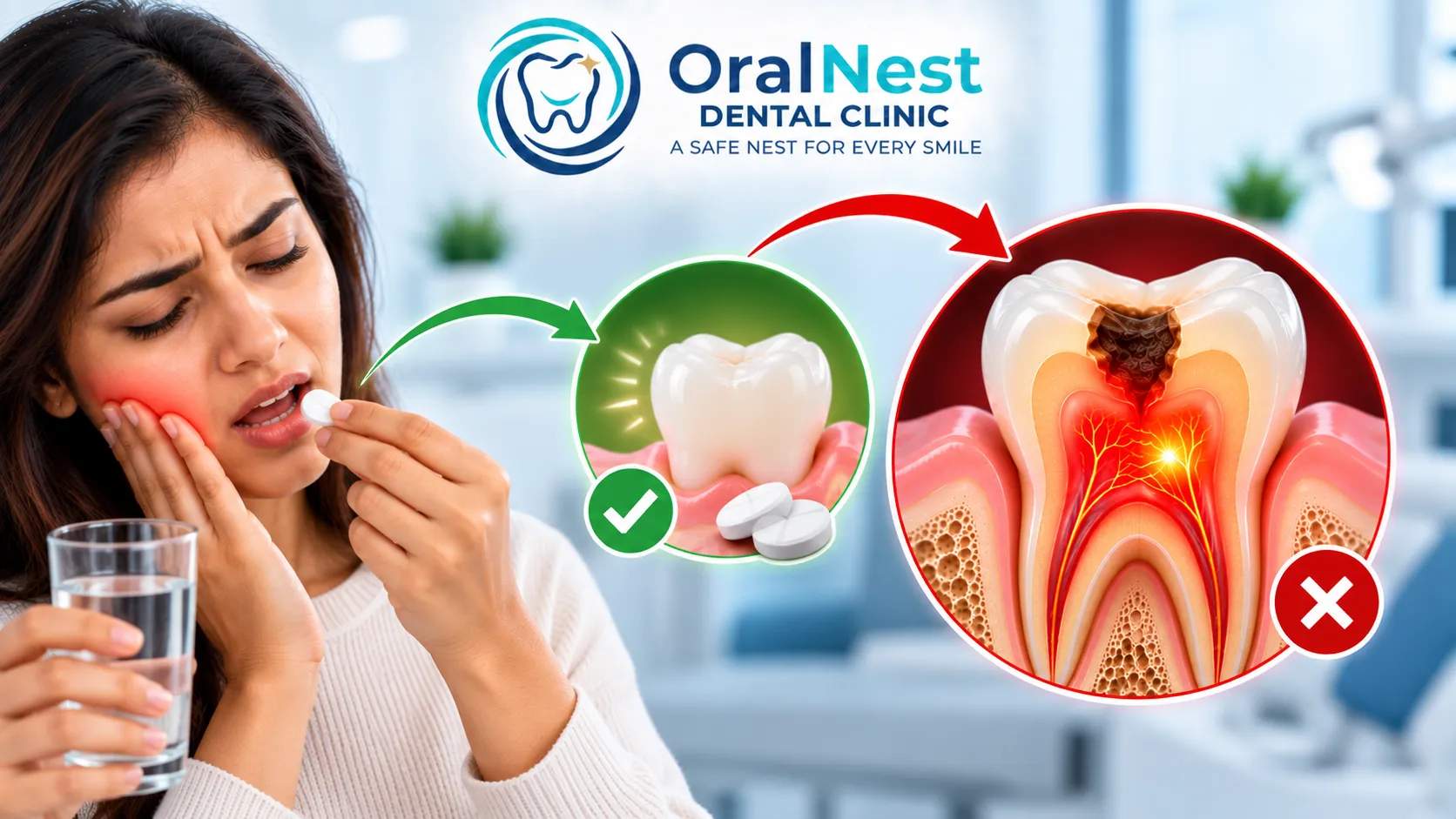
When a toothache improves after taking a painkiller, it is easy to assume that the problem has been solved. But relief from pain is not the same as treatment of its cause.
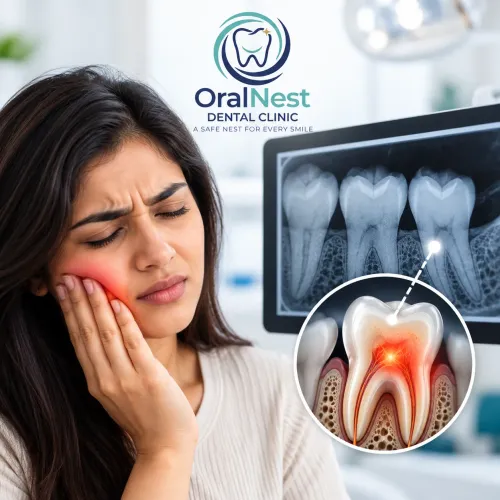
Painkillers can reduce discomfort while an underlying dental problem may still be present. Tooth decay, inflammation of the dental pulp, a cracked tooth, gum disease or an infection can continue even when the pain temporarily becomes manageable.
This is why a tooth that feels better the next morning should not automatically be considered healthy—especially if the pain was severe, repeatedly returned, occurred without a trigger, or was accompanied by swelling or pain while biting.
Medication may have an important role in managing symptoms when appropriately advised, but it does not replace a dental examination when the underlying cause needs to be identified.
The better question after pain relief is not “Why does it hurt less?” but “What caused it to hurt in the first place?”
Understanding and treating the cause is what helps protect the tooth—not simply silencing the symptom.
Content Written & Clinically Reviewed by
Dr. Ashutosh Dighe
BDS | MDS – Oral Medicine & Maxillofacial Radiology | PhD Scholar | Fellowship in Contemporary Endodontics | Certified Endodontist
OralNest DENTAL CLINIC
A SAFE NEST FOR EVERY SMILE
Painkillers can reduce discomfort while an underlying dental problem may still be present. Tooth decay, inflammation of the dental pulp, a cracked tooth, gum disease or an infection can continue even when the pain temporarily becomes manageable.
This is why a tooth that feels better the next morning should not automatically be considered healthy—especially if the pain was severe, repeatedly returned, occurred without a trigger, or was accompanied by swelling or pain while biting.
Medication may have an important role in managing symptoms when appropriately advised, but it does not replace a dental examination when the underlying cause needs to be identified.
The better question after pain relief is not “Why does it hurt less?” but “What caused it to hurt in the first place?”
Understanding and treating the cause is what helps protect the tooth—not simply silencing the symptom.
Content Written & Clinically Reviewed by
Dr. Ashutosh Dighe
BDS | MDS – Oral Medicine & Maxillofacial Radiology | PhD Scholar | Fellowship in Contemporary Endodontics | Certified Endodontist
OralNest DENTAL CLINIC
A SAFE NEST FOR EVERY SMILE
Keywords