Why Understanding the Problem Comes Before Choosing the Treatment
A dental problem does not always come with a clear answer.
A tooth may hurt, but the cause may not be obvious.
A jaw may click, but treatment may not always be necessary.
A mouth ulcer may appear simple, yet repeated or persistent lesions may deserve closer evaluation.
A tooth may be badly damaged, but the decision between saving it and removing it may depend on several clinical factors.
This is why at OralNest Dental Clinic | Wakad, we believe that good dental care should begin with one fundamental step:
Understand the problem before deciding how to treat it.
Our approach is built around diagnosis, clinical evaluation and individualised treatment planning rather than automatically matching a symptom to a procedure.
What Does “Diagnosis First” Actually Mean?
Diagnosis-first care means asking the right questions before deciding what should be done.
When you visit with a dental concern, the objective is to understand:
What is causing the problem?
Which tooth, tissue, joint or oral structure is involved?
How advanced is the condition?
Is treatment actually required?
Is immediate treatment necessary?
Can the affected tooth or structure be preserved?
Are there alternative approaches?
What are the consequences of delaying treatment?
What should happen after treatment?
Only after these questions are considered can an appropriate treatment plan be developed.
The procedure is therefore the result of the diagnosis—not the starting point.
One Symptom Can Have Several Causes
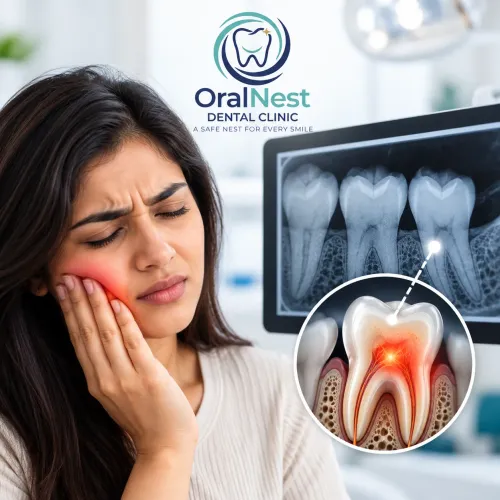
Consider something as common as tooth pain.
A patient may describe:
“My tooth hurts when I drink something cold.”
That symptom alone does not automatically mean a root canal is required.
The discomfort could potentially be associated with tooth sensitivity, decay, exposed dentin, a restoration, pulp inflammation or another dental condition.
Similarly:
“My jaw clicks.”
This does not automatically mean that the jaw joint requires treatment.
Or:
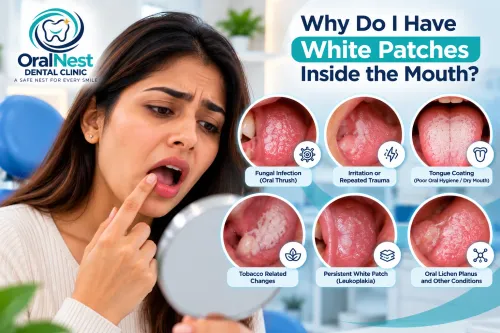
“I have a mouth ulcer.”
A single temporary ulcer and a recurrent or persistent oral lesion may require very different approaches to evaluation.
The important point is simple:
Symptoms provide clues. Diagnosis provides direction.
Why Clinical Examination Matters
Online information can help patients understand possibilities, but it cannot replace an individual clinical assessment.
A dental evaluation allows the clinician to consider findings that cannot be reliably determined from a search query alone.
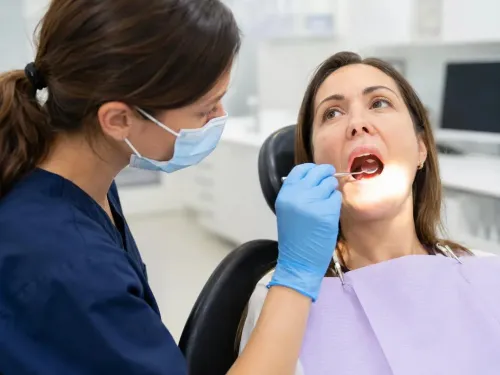
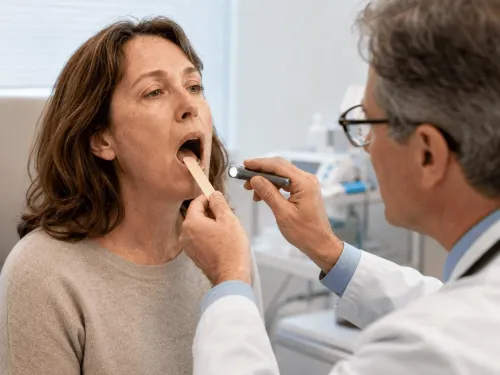
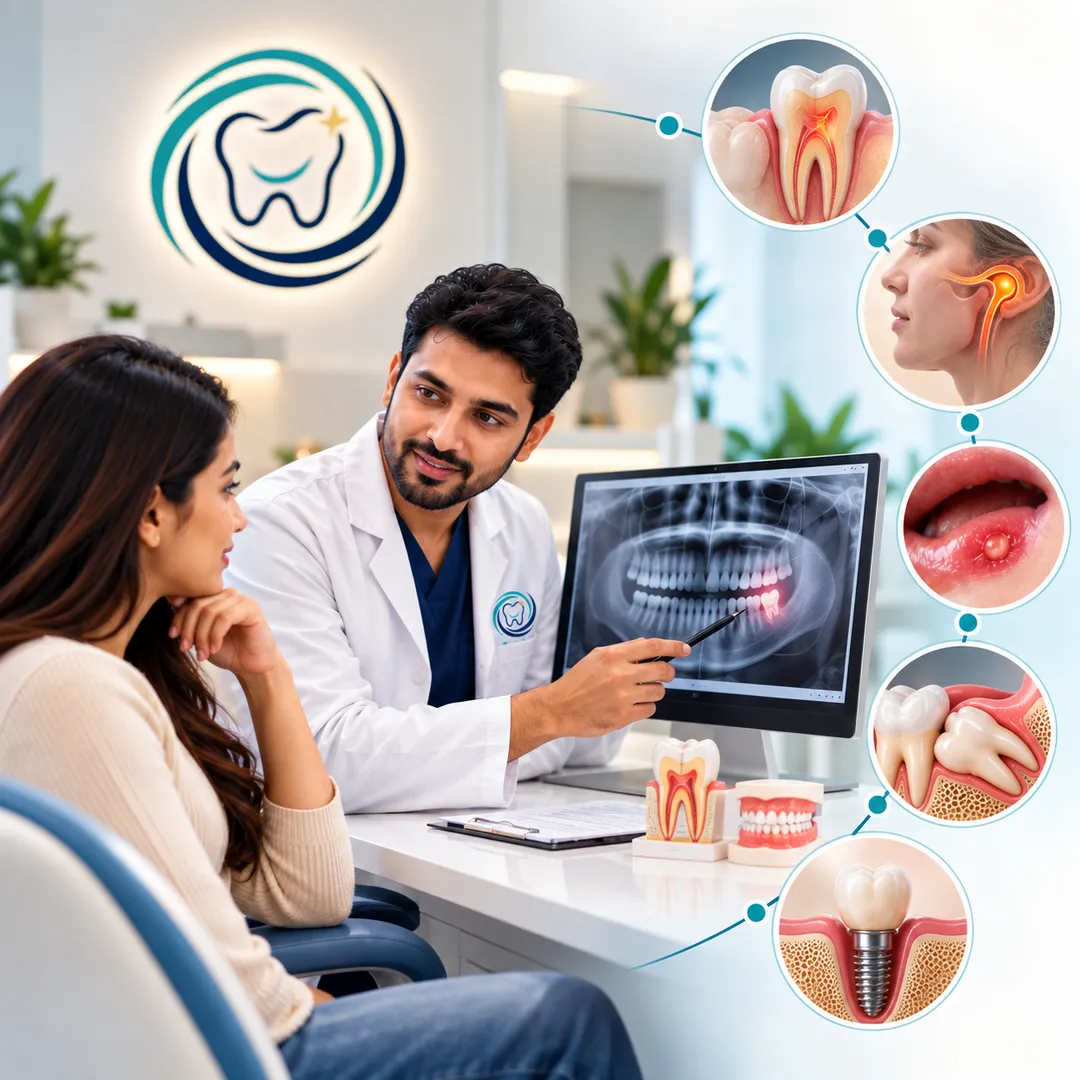
Depending on the complaint, evaluation may involve:
detailed history of the problem;
clinical examination;
assessment of the affected tooth or oral tissues;
evaluation of surrounding structures;
relevant radiographic or diagnostic imaging;
review of previous dental treatment;
assessment of symptoms and their pattern;
consideration of possible alternative causes.
Not every patient needs every investigation.
The purpose of examination and imaging is to obtain the information that is relevant to the clinical question.
Diagnosis Can Change the Treatment Decision
This is one of the most important reasons diagnosis matters.
A patient may arrive thinking:
“I probably need a root canal.”
After evaluation, the appropriate treatment could be something different.
Another patient may arrive expecting an extraction.
The evaluation may show that the tooth has a reasonable possibility of being preserved.
Someone with jaw pain may assume the problem is coming from a tooth.
The evaluation may point toward a TMJ or orofacial pain-related cause.
Someone with a persistent oral lesion may assume it is simply another ulcer.
A closer assessment may indicate that further investigation is appropriate.
Therefore, diagnosis does more than give a name to a condition.
It changes the decision-making process.
The OralNest Clinical Sequence
At OralNest, we look at dental care as a connected process:
Understand
Listen to the patient's concern and understand the symptoms.
↓
Evaluate
Perform an appropriate clinical assessment and relevant diagnostic evaluation.
↓
Diagnose
Determine the most likely underlying condition based on the available findings.
↓
Discuss
Explain what has been found and what it means.
↓
Decide
Consider the appropriate treatment or monitoring approach.
↓
Treat
Proceed with the planned treatment when treatment is indicated.
↓
Follow Up
Assess healing, function and ongoing oral health as appropriate.
This sequence helps keep the patient involved in the decision rather than making the procedure the centre of the consultation.
Not Every Dental Problem Needs Immediate Treatment
Good dental care does not necessarily mean doing something immediately.
In some situations, observation may be reasonable.
In others, preventive care may be sufficient.
Some conditions require treatment promptly.
Others require further investigation before a treatment decision can be made.
The correct approach depends on the diagnosis and individual circumstances.
This is why a consultation should answer not only:
“What treatment can be done?”
but also:
“Does treatment need to be done now, and why?”
Understanding Your Options Matters
When treatment is recommended, patients should understand what the treatment is intended to achieve.
For example, depending on the clinical situation, a patient may need to understand the difference between:
restoring a tooth and replacing it;
monitoring a wisdom tooth and removing it;
root canal treatment and extraction;
an implant and other tooth-replacement options;
treating a symptom and addressing its underlying cause.
A well-explained treatment plan allows patients to participate meaningfully in their own dental decisions.
A Specialist-Led Approach to Complex Problems
Some dental concerns are straightforward.
Others are not.
Oral medicine, oral mucosal conditions, TMJ disorders, orofacial pain, complex tooth pain and endodontic problems can sometimes require a more detailed diagnostic perspective.
Dr. Ashutosh Dighe's clinical background includes BDS, MDS in Oral Medicine & Maxillofacial Radiology, PhD Scholar, along with a Fellowship in Contemporary Endodontics and Certified Endodontist training.
This combination supports a clinical approach that places particular importance on diagnosis, radiological evaluation, treatment planning and preservation of natural teeth where appropriate.
The objective is not to make every dental problem complicated.
It is to recognise when a problem needs deeper evaluation and when a straightforward approach is sufficient.
Convenient Evening Dental Appointments in Wakad
For many working professionals, particularly people with demanding daytime schedules, finding time for a dental consultation can itself become a challenge.
OralNest follows an appointment-led evening practice model designed to make planned dental consultations more convenient.
Monday–Saturday
5:30 PM – 9:00 PM
Sunday
10:00 AM – 1:00 PM
Prior appointment is convenient
Scheduling an appointment in advance allows the consultation to be planned around your concern and helps avoid unnecessary waiting.
For patients coming after work, travelling from nearby areas such as Hinjawadi, Tathawade, Pimple Saudagar, Pimple Gurav, Rahatani and other parts of Pimpri-Chinchwad, a planned evening consultation can be particularly convenient.
Why Appointment-Based Care Can Be Useful
A planned appointment gives patients an opportunity to come prepared with:
previous dental reports;
X-rays or scans;
previous treatment details;
medication information when relevant;
a list of symptoms;
questions about a proposed treatment;
previous treatment opinions, when seeking a second opinion.
This can make the consultation more focused.
If you already have previous dental records or imaging, bringing them along can also help provide useful clinical context.
When Should You Consider a Dental Consultation?
You do not have to wait until dental pain becomes severe.
A consultation may be appropriate if you have:
persistent or recurring tooth pain;
sensitivity that does not settle;
pain while chewing;
swelling around a tooth;
recurrent mouth ulcers;
unexplained changes inside the mouth;
jaw pain or clicking;
difficulty opening the mouth;
a problematic wisdom tooth;
a broken or damaged tooth;
a missing tooth;
uncertainty about a recommended dental procedure;
conflicting treatment opinions;
a concern about whether a tooth can be saved.
The earlier the cause is understood, the more clearly treatment options can often be considered.
The Goal Is Not More Treatment
A diagnosis-first approach is not about finding a reason to perform a procedure.
It is about finding the reason behind the problem.
Sometimes that means treatment.
Sometimes it means prevention.
Sometimes it means monitoring.
Sometimes it means another diagnostic step.
Sometimes it means seeking a second opinion before making an irreversible decision.
The purpose is to ensure that the treatment decision is connected to the actual clinical problem.
OralNest Dental Clinic | Wakad
At OralNest, we believe that patients deserve to understand what is happening, why it is happening, what their options are, and why a particular treatment is being considered.
Because dentistry should not begin with:
“Which procedure should we do?”
It should begin with:
“What is actually happening?”
Once the problem is understood, the treatment decision becomes clearer.
Understand First. Decide Carefully. Treat Precisely.
Frequently Asked Questions
Does every dental problem require treatment?
No. Depending on the diagnosis, some conditions may be monitored, managed preventively or require further evaluation before treatment.
Does tooth pain always mean a root canal?
No. Tooth pain can have several causes, and the appropriate treatment depends on the clinical diagnosis.
Can I come for a second opinion?
Yes. A planned consultation can help you understand an existing diagnosis, proposed treatment and available options.
Do I need an appointment at OralNest?
Prior appointment is convenient, particularly for planned consultations and detailed treatment discussions.
What are OralNest's consultation timings?
The clinic follows an evening appointment-led schedule: Monday–Saturday, 5:30 PM–9:00 PM, and Sunday, 10:00 AM–1:00 PM.
A dental problem does not always come with a clear answer.
A tooth may hurt, but the cause may not be obvious.
A jaw may click, but treatment may not always be necessary.
A mouth ulcer may appear simple, yet repeated or persistent lesions may deserve closer evaluation.
A tooth may be badly damaged, but the decision between saving it and removing it may depend on several clinical factors.
This is why at OralNest Dental Clinic | Wakad, we believe that good dental care should begin with one fundamental step:
Understand the problem before deciding how to treat it.
Our approach is built around diagnosis, clinical evaluation and individualised treatment planning rather than automatically matching a symptom to a procedure.
What Does “Diagnosis First” Actually Mean?
Diagnosis-first care means asking the right questions before deciding what should be done.
When you visit with a dental concern, the objective is to understand:
What is causing the problem?
Which tooth, tissue, joint or oral structure is involved?
How advanced is the condition?
Is treatment actually required?
Is immediate treatment necessary?
Can the affected tooth or structure be preserved?
Are there alternative approaches?
What are the consequences of delaying treatment?
What should happen after treatment?
Only after these questions are considered can an appropriate treatment plan be developed.
The procedure is therefore the result of the diagnosis—not the starting point.
One Symptom Can Have Several Causes
Consider something as common as tooth pain.
A patient may describe:
“My tooth hurts when I drink something cold.”
That symptom alone does not automatically mean a root canal is required.
The discomfort could potentially be associated with tooth sensitivity, decay, exposed dentin, a restoration, pulp inflammation or another dental condition.
Similarly:
“My jaw clicks.”
This does not automatically mean that the jaw joint requires treatment.
Or:
“I have a mouth ulcer.”
A single temporary ulcer and a recurrent or persistent oral lesion may require very different approaches to evaluation.
The important point is simple:
Symptoms provide clues. Diagnosis provides direction.
Why Clinical Examination Matters
Online information can help patients understand possibilities, but it cannot replace an individual clinical assessment.
A dental evaluation allows the clinician to consider findings that cannot be reliably determined from a search query alone.
Depending on the complaint, evaluation may involve:
detailed history of the problem;
clinical examination;
assessment of the affected tooth or oral tissues;
evaluation of surrounding structures;
relevant radiographic or diagnostic imaging;
review of previous dental treatment;
assessment of symptoms and their pattern;
consideration of possible alternative causes.
Not every patient needs every investigation.
The purpose of examination and imaging is to obtain the information that is relevant to the clinical question.
Diagnosis Can Change the Treatment Decision
This is one of the most important reasons diagnosis matters.
A patient may arrive thinking:
“I probably need a root canal.”
After evaluation, the appropriate treatment could be something different.
Another patient may arrive expecting an extraction.
The evaluation may show that the tooth has a reasonable possibility of being preserved.
Someone with jaw pain may assume the problem is coming from a tooth.
The evaluation may point toward a TMJ or orofacial pain-related cause.
Someone with a persistent oral lesion may assume it is simply another ulcer.
A closer assessment may indicate that further investigation is appropriate.
Therefore, diagnosis does more than give a name to a condition.
It changes the decision-making process.
The OralNest Clinical Sequence
At OralNest, we look at dental care as a connected process:
Understand
Listen to the patient's concern and understand the symptoms.
↓
Evaluate
Perform an appropriate clinical assessment and relevant diagnostic evaluation.
↓
Diagnose
Determine the most likely underlying condition based on the available findings.
↓
Discuss
Explain what has been found and what it means.
↓
Decide
Consider the appropriate treatment or monitoring approach.
↓
Treat
Proceed with the planned treatment when treatment is indicated.
↓
Follow Up
Assess healing, function and ongoing oral health as appropriate.
This sequence helps keep the patient involved in the decision rather than making the procedure the centre of the consultation.
Not Every Dental Problem Needs Immediate Treatment
Good dental care does not necessarily mean doing something immediately.
In some situations, observation may be reasonable.
In others, preventive care may be sufficient.
Some conditions require treatment promptly.
Others require further investigation before a treatment decision can be made.
The correct approach depends on the diagnosis and individual circumstances.
This is why a consultation should answer not only:
“What treatment can be done?”
but also:
“Does treatment need to be done now, and why?”
Understanding Your Options Matters
When treatment is recommended, patients should understand what the treatment is intended to achieve.
For example, depending on the clinical situation, a patient may need to understand the difference between:
restoring a tooth and replacing it;
monitoring a wisdom tooth and removing it;
root canal treatment and extraction;
an implant and other tooth-replacement options;
treating a symptom and addressing its underlying cause.
A well-explained treatment plan allows patients to participate meaningfully in their own dental decisions.
A Specialist-Led Approach to Complex Problems
Some dental concerns are straightforward.
Others are not.
Oral medicine, oral mucosal conditions, TMJ disorders, orofacial pain, complex tooth pain and endodontic problems can sometimes require a more detailed diagnostic perspective.
Dr. Ashutosh Dighe's clinical background includes BDS, MDS in Oral Medicine & Maxillofacial Radiology, PhD Scholar, along with a Fellowship in Contemporary Endodontics and Certified Endodontist training.
This combination supports a clinical approach that places particular importance on diagnosis, radiological evaluation, treatment planning and preservation of natural teeth where appropriate.
The objective is not to make every dental problem complicated.
It is to recognise when a problem needs deeper evaluation and when a straightforward approach is sufficient.
Convenient Evening Dental Appointments in Wakad
For many working professionals, particularly people with demanding daytime schedules, finding time for a dental consultation can itself become a challenge.
OralNest follows an appointment-led evening practice model designed to make planned dental consultations more convenient.
Monday–Saturday
5:30 PM – 9:00 PM
Sunday
10:00 AM – 1:00 PM
Prior appointment is convenient
Scheduling an appointment in advance allows the consultation to be planned around your concern and helps avoid unnecessary waiting.
For patients coming after work, travelling from nearby areas such as Hinjawadi, Tathawade, Pimple Saudagar, Pimple Gurav, Rahatani and other parts of Pimpri-Chinchwad, a planned evening consultation can be particularly convenient.
Why Appointment-Based Care Can Be Useful
A planned appointment gives patients an opportunity to come prepared with:
previous dental reports;
X-rays or scans;
previous treatment details;
medication information when relevant;
a list of symptoms;
questions about a proposed treatment;
previous treatment opinions, when seeking a second opinion.
This can make the consultation more focused.
If you already have previous dental records or imaging, bringing them along can also help provide useful clinical context.
When Should You Consider a Dental Consultation?
You do not have to wait until dental pain becomes severe.
A consultation may be appropriate if you have:
persistent or recurring tooth pain;
sensitivity that does not settle;
pain while chewing;
swelling around a tooth;
recurrent mouth ulcers;
unexplained changes inside the mouth;
jaw pain or clicking;
difficulty opening the mouth;
a problematic wisdom tooth;
a broken or damaged tooth;
a missing tooth;
uncertainty about a recommended dental procedure;
conflicting treatment opinions;
a concern about whether a tooth can be saved.
The earlier the cause is understood, the more clearly treatment options can often be considered.
The Goal Is Not More Treatment
A diagnosis-first approach is not about finding a reason to perform a procedure.
It is about finding the reason behind the problem.
Sometimes that means treatment.
Sometimes it means prevention.
Sometimes it means monitoring.
Sometimes it means another diagnostic step.
Sometimes it means seeking a second opinion before making an irreversible decision.
The purpose is to ensure that the treatment decision is connected to the actual clinical problem.
OralNest Dental Clinic | Wakad
At OralNest, we believe that patients deserve to understand what is happening, why it is happening, what their options are, and why a particular treatment is being considered.
Because dentistry should not begin with:
“Which procedure should we do?”
It should begin with:
“What is actually happening?”
Once the problem is understood, the treatment decision becomes clearer.
Understand First. Decide Carefully. Treat Precisely.
Frequently Asked Questions
Does every dental problem require treatment?
No. Depending on the diagnosis, some conditions may be monitored, managed preventively or require further evaluation before treatment.
Does tooth pain always mean a root canal?
No. Tooth pain can have several causes, and the appropriate treatment depends on the clinical diagnosis.
Can I come for a second opinion?
Yes. A planned consultation can help you understand an existing diagnosis, proposed treatment and available options.
Do I need an appointment at OralNest?
Prior appointment is convenient, particularly for planned consultations and detailed treatment discussions.
What are OralNest's consultation timings?
The clinic follows an evening appointment-led schedule: Monday–Saturday, 5:30 PM–9:00 PM, and Sunday, 10:00 AM–1:00 PM.
Keywords