Do I Really Need to Remove My Wisdom Tooth?
Wisdom teeth are the last set of teeth to develop and usually appear in the late teenage years or early adulthood. For some people, they erupt normally and remain healthy for years. For others, limited space, an abnormal position, partial eruption or infection can create recurring dental problems.
So, does every wisdom tooth need to be removed? No.
A wisdom tooth does not automatically require extraction simply because it is a wisdom tooth. The decision depends on its position, eruption pattern, condition, surrounding teeth, symptoms and the findings of a clinical examination and appropriate dental imaging.
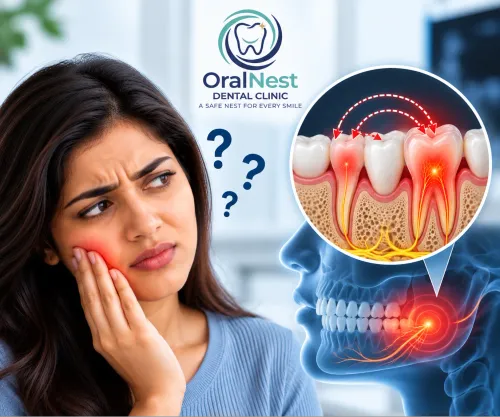
If you are experiencing wisdom tooth pain, swelling, difficulty opening your mouth, food getting trapped around the back tooth or repeated gum infection, it is important to have the area evaluated rather than assuming that removal is always necessary.
What Is a Wisdom Tooth?
A wisdom tooth is the third molar, located at the very back of the upper and lower jaws. Most people can develop up to four wisdom teeth—two upper and two lower.
Because these teeth are the last permanent teeth to erupt, there may not always be sufficient space for them to come into a healthy position. This can result in a tooth becoming tilted, partially erupted, trapped beneath the gum or completely impacted within the jaw.
A wisdom tooth can be completely normal when it has:
* Adequate space to erupt
* A healthy position
* Proper contact with the opposing tooth
* Healthy surrounding gums
* No significant decay or infection
* No damage to neighbouring teeth
* A position that allows effective cleaning
In such situations, removal may not be necessary. Regular dental evaluation can help determine whether the tooth should simply be monitored.
When Does a Wisdom Tooth Need to Be Removed?
Wisdom tooth removal may be considered when the tooth is causing a current problem or has a significant risk of causing damage.
Common situations include:
1. Repeated Wisdom Tooth Infection
A partially erupted wisdom tooth can allow food and bacteria to collect beneath the surrounding gum. This may lead to inflammation or infection around the tooth, commonly called pericoronitis.
Symptoms may include pain, swelling, bad taste, difficulty chewing and discomfort while opening the mouth.
If infections repeatedly return, removal may be recommended after appropriate evaluation.
2. An Impacted Wisdom Tooth
An impacted wisdom tooth is one that cannot erupt normally into the mouth.
It may remain trapped in the jaw or emerge only partially. Lower wisdom teeth are particularly prone to impaction because of limited space at the back of the jaw.
An impacted tooth does not always cause immediate symptoms. However, its position may create problems for the surrounding gum, bone or neighbouring tooth.
3. Damage to the Adjacent Tooth
A wisdom tooth positioned against the second molar may make cleaning difficult and can contribute to decay or other problems affecting the neighbouring tooth.
This is one reason the position of a wisdom tooth matters—not just whether it currently hurts.
4. Severe Decay
Because wisdom teeth are located at the very back of the mouth, they can sometimes be difficult to clean properly.
If a wisdom tooth develops extensive decay and cannot be predictably restored, extraction may be considered.
5. Gum Problems Around the Wisdom Tooth
A partially erupted tooth can create a pocket between the tooth and gum where bacteria and food debris accumulate.
This can result in repeated inflammation, tenderness, swelling or unpleasant taste and odour.
6. Cyst or Other Abnormal Changes
In some cases, an impacted tooth may be associated with a cyst or another abnormal change around the tooth.
Such findings require proper clinical and radiographic assessment to determine the appropriate management.
Does Every Impacted Wisdom Tooth Need Removal?
Not necessarily.
An impacted wisdom tooth may sometimes remain asymptomatic. Whether it should be removed or monitored depends on factors such as its position, relationship with surrounding structures, condition of the tooth and potential for future problems.
This is why “impacted” does not automatically mean “remove.”
A dentist evaluates the individual situation before recommending treatment.
Why Is an X-Ray Important Before Wisdom Tooth Removal?
A clinical examination provides important information, but the position of a wisdom tooth inside the jaw cannot always be understood completely just by looking inside the mouth.
Dental imaging can help evaluate:
* The direction in which the tooth is positioned
* The depth of impaction
* The shape and number of roots
* The relationship with the neighbouring molar
* The surrounding bone
* Important anatomical structures
* Other changes around the tooth
Depending on the clinical situation, the dentist may recommend appropriate dental imaging before deciding on treatment.
For more complex cases, understanding the tooth's three-dimensional position can be particularly important for treatment planning.
What Happens If I Do Not Remove a Problematic Wisdom Tooth?
Ignoring a wisdom tooth problem does not necessarily mean that a serious complication will occur, but persistent or recurring symptoms should not be dismissed.
Depending on the situation, an untreated problematic wisdom tooth may be associated with:
* Recurrent gum infection
* Persistent or intermittent pain
* Food trapping
* Decay
* Gum problems
* Damage to the adjacent tooth
* Swelling
* Difficulty opening the mouth
* Rarely, cystic or other pathological changes
The appropriate decision is therefore not simply “remove or don't remove.” It is evaluate the tooth, understand the risk and choose the appropriate treatment or monitoring plan.
Is Wisdom Tooth Removal Always a Surgical Procedure?
No.
The type of extraction depends largely on the tooth's position and how much of it is accessible.
A normally erupted wisdom tooth may sometimes be removed using a relatively straightforward extraction technique.
A partially erupted or impacted wisdom tooth may require a surgical extraction, depending on its position and surrounding anatomy.
The procedure is planned after examination and imaging rather than based solely on the patient's symptoms.
What If My Wisdom Tooth Hurts but I Don't Want It Removed?
You should still have it evaluated.
Pain can occur for different reasons, including inflammation around a partially erupted tooth, decay, infection or problems involving neighbouring structures.
In some situations, initial management may involve controlling the acute problem and then deciding whether removal or continued monitoring is appropriate.
However, temporary improvement in pain does not necessarily mean that the underlying cause has disappeared.
Can a Wisdom Tooth Be Kept?
Yes, in selected cases.
A healthy wisdom tooth that is properly positioned, functional, maintainable and free from significant disease may not need to be removed.
The key question is not:
“Is it a wisdom tooth?”
The better question is:
“Is this wisdom tooth healthy, functional, maintainable and unlikely to create significant problems?”
That distinction is important because unnecessary extraction should be avoided, while a genuinely problematic tooth should not be ignored.
When Should You See a Dentist for Wisdom Tooth Problems?
Consider a dental evaluation if you notice:
* Pain at the back of the mouth
* Swelling around the last tooth
* Repeated gum infection
* Difficulty opening your mouth
* Pain while chewing
* Food repeatedly getting trapped behind the last molar
* Bad taste or unpleasant odour from the area
* Difficulty cleaning around the wisdom tooth
* Pain extending toward the jaw or ear
* A wisdom tooth that appears partially erupted
Seek prompt professional evaluation when symptoms are significant, rapidly worsening or associated with substantial swelling, difficulty swallowing or difficulty breathing.
Wisdom Tooth Removal in Wakad, Pimpri-Chinchwad
For patients in Wakad and nearby areas such as Hinjawadi, Tathawade, Punawale, Ravet, Baner, Balewadi, Pimple Saudagar, Pimple Gurav and Rahatani, wisdom tooth concerns can be evaluated based on symptoms, clinical findings and appropriate dental imaging.
At OralNest Dental Clinic, Wakad, the focus is on understanding the underlying dental problem before deciding on treatment. Wisdom tooth management may involve observation, preventive care, treatment of an active problem or removal depending on the individual case.
The objective is not to remove every wisdom tooth—it is to determine whether a particular wisdom tooth is healthy, problematic or likely to require intervention.
Frequently Asked Questions
Does every wisdom tooth need to be removed?
No. A healthy, properly positioned and maintainable wisdom tooth may not require extraction. The decision depends on its condition, position, symptoms and potential risks.
At what age should wisdom teeth be removed?
There is no single age at which every person should have wisdom teeth removed. Evaluation is more important than age alone. The condition and position of the tooth determine whether treatment is appropriate.
Can an impacted wisdom tooth be left alone?
Sometimes. An asymptomatic impacted tooth may be monitored in selected cases, but its position and surrounding structures should be evaluated to assess potential risks.
Can wisdom tooth pain go away without removal?
Pain may temporarily improve, particularly if inflammation settles, but this does not necessarily resolve the underlying cause. Recurring pain should be evaluated by a dentist.
Is wisdom tooth removal painful?
The procedure is performed using appropriate local anaesthesia, so patients should not experience the procedure in the same way as untreated dental pain. Some soreness, swelling or discomfort can occur during recovery.
How do I know if my wisdom tooth is impacted?
A dentist can assess the tooth clinically, while dental imaging helps determine its exact position and relationship with surrounding structures.
Is wisdom tooth removal necessary if there is no pain?
Not always. Lack of pain does not automatically mean a wisdom tooth needs removal, and absence of pain does not always mean the tooth is problem-free. Clinical and radiographic evaluation can help determine the appropriate approach.
Final Takeaway
Not every wisdom tooth needs to be removed.
Some wisdom teeth erupt normally and can remain healthy. Others become impacted, repeatedly infected, difficult to clean, severely decayed or associated with problems affecting nearby teeth.
The right approach is to evaluate the tooth before deciding on treatment.
If you are experiencing wisdom tooth pain, swelling, repeated infection or difficulty cleaning the back of your mouth, a dental examination and appropriate imaging can help determine whether your wisdom tooth should be monitored, treated or removed.
The goal is not simply to remove a wisdom tooth—it is to make the right decision for your oral health.
Keywords