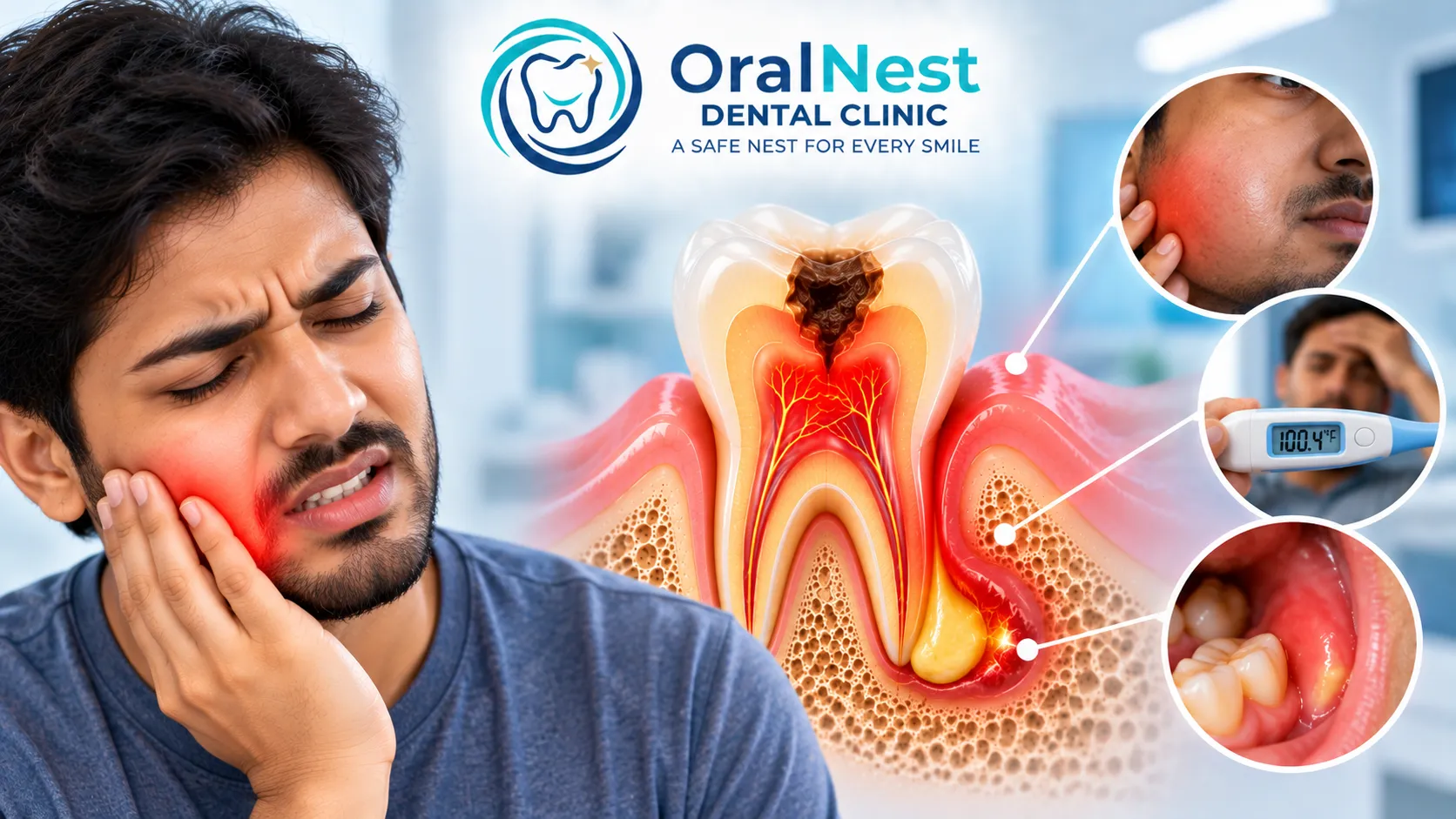
A dental infection does not always begin with dramatic symptoms. It may start with toothache, sensitivity or discomfort while biting and can progress to swelling around the tooth or gum.
When bacteria reach the deeper tissues of a tooth, infection can develop around the root or surrounding tissues. As the condition progresses, some people may develop gum or facial swelling, tenderness, difficulty opening the mouth, fever or a general feeling of being unwell.
Importantly, the absence of swelling or fever does not necessarily mean that there is no infection. Similarly, a reduction in pain does not always mean the underlying problem has resolved.
Facial swelling, fever, difficulty swallowing or breathing, or rapidly increasing swelling require urgent dental or medical attention.
Do not rely solely on painkillers to manage a suspected dental infection. They may reduce discomfort temporarily but do not determine or remove the underlying cause.
The important step is identifying where the infection is coming from, how far it has progressed, and what treatment the tooth and surrounding tissues require.
Content Written & Clinically Reviewed by
Dr. Ashutosh Dighe
BDS | MDS – Oral Medicine & Maxillofacial Radiology | PhD Scholar | Fellowship in Contemporary Endodontics | Certified Endodontist
OralNest DENTAL CLINIC
A SAFE NEST FOR EVERY SMILE
When bacteria reach the deeper tissues of a tooth, infection can develop around the root or surrounding tissues. As the condition progresses, some people may develop gum or facial swelling, tenderness, difficulty opening the mouth, fever or a general feeling of being unwell.
Importantly, the absence of swelling or fever does not necessarily mean that there is no infection. Similarly, a reduction in pain does not always mean the underlying problem has resolved.
Facial swelling, fever, difficulty swallowing or breathing, or rapidly increasing swelling require urgent dental or medical attention.
Do not rely solely on painkillers to manage a suspected dental infection. They may reduce discomfort temporarily but do not determine or remove the underlying cause.
The important step is identifying where the infection is coming from, how far it has progressed, and what treatment the tooth and surrounding tissues require.
Content Written & Clinically Reviewed by
Dr. Ashutosh Dighe
BDS | MDS – Oral Medicine & Maxillofacial Radiology | PhD Scholar | Fellowship in Contemporary Endodontics | Certified Endodontist
OralNest DENTAL CLINIC
A SAFE NEST FOR EVERY SMILE
Keywords