Why Does Jaw Pain Sometimes Feel Like Ear Pain? Understanding the TMJ–Ear Connection in Wakad & Pimple Gurav
Have you ever felt pain near your ear but wondered whether the problem was actually coming from your jaw? Or experienced ear fullness, aching around the ear, or discomfort while chewing—even when there is no obvious ear infection?
The reason can sometimes be the temporomandibular joint (TMJ).
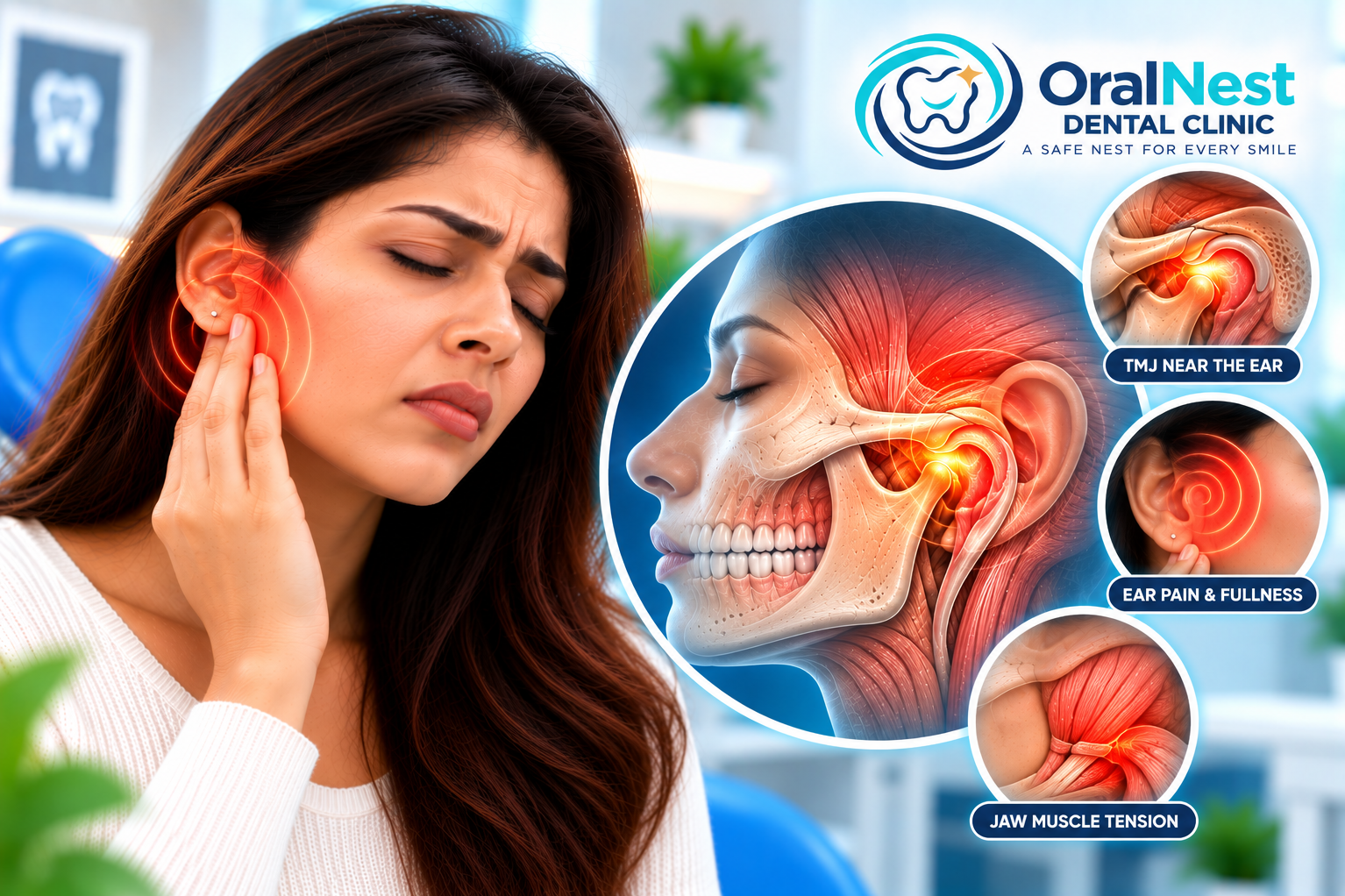
The TMJs are located immediately in front of the ears and connect the lower jaw to the skull. Because of their location and their close relationship with surrounding muscles and nerves, disorders affecting the jaw joint or chewing muscles can sometimes produce symptoms that are felt around the ear. NIDCR lists ear-related symptoms such as ringing, hearing changes and dizziness among possible symptoms associated with TMD, while NHS information also describes earache and a feeling of fullness in the ear.
But does every earache mean TMJ?
No.
Ear pain can have many causes, including conditions originating within the ear itself. Jaw-related pain should therefore not be assumed simply because the ear examination appears normal.
This is where the pattern of symptoms becomes important.
For example, jaw-related discomfort may become more noticeable when:
chewing or opening the mouth
yawning
clenching the teeth
waking after sleep
experiencing prolonged jaw tension
pressing around the jaw joint or chewing muscles
You may also notice jaw stiffness, clicking, restricted opening, facial pain or headaches along with the ear-area discomfort. TMD encompasses multiple conditions involving the jaw joints, chewing muscles and associated pain patterns, so symptoms can vary considerably from person to person.
Why can the pain feel as though it is inside the ear?
Pain is not always perceived exactly where its source begins.
The TMJ lies extremely close to the ear, while the muscles responsible for chewing extend across the side of the face and temple. Irritation or dysfunction in these structures can therefore create pain perceived in nearby regions.
This is one reason location alone is not enough to determine the cause of facial or ear-area pain.
What should you do if your ear hurts but the cause is unclear?
Instead of repeatedly treating the symptom without identifying its source, the more useful question is:
“Where is this pain actually coming from?”
A proper evaluation may involve understanding your pain pattern, jaw movements, chewing habits, clenching or grinding, previous dental or facial problems, and examination of the jaw joints and surrounding muscles. Depending on the findings, further assessment or imaging may sometimes be appropriate. NIDCR notes that pain around the mouth, jaw or face may or may not be related to TMD, making careful assessment important.
The role of Dr. Ashutosh Dighe
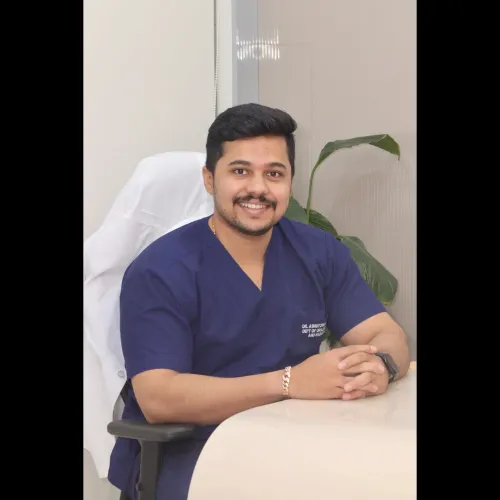
At OralNest Dental Clinic | Wakad, Dr. Ashutosh Dighe, BDS, MDS – Oral Medicine & Maxillofacial Radiology, PhD Scholar, Fellowship in Contemporary Endodontics, Certified Endodontist, approaches unexplained oral, facial and jaw symptoms through clinical assessment and diagnosis rather than assuming that every symptom has a dental origin.
For a patient experiencing ear-area pain, the objective is not simply to label it as “TMJ.” The objective is to understand whether the jaw joint, chewing muscles, teeth, oral structures or another condition could be contributing to the symptoms.
When should you consider an evaluation?
Consider seeking professional assessment when ear-area discomfort is:
persistent or repeatedly returning
associated with jaw pain or stiffness
accompanied by painful clicking or locking
associated with difficulty opening the mouth
triggered or aggravated by chewing
occurring together with unexplained facial pain or headaches
Not every symptom requires treatment. Many TMD symptoms can improve with conservative measures, and NIDCR recommends avoiding unnecessary irreversible procedures unless there is a clear indication.
OralNest Dental Clinic | Wakad
Understand First. Diagnose Carefully. Decide With Clarity.
For patients from Wakad, Kaspate Wasti, Pimple Gurav and surrounding Pune areas, unexplained jaw or facial pain deserves a diagnosis—not an assumption.
Clinic timings:
Monday–Saturday: 5:30 PM–9:00 PM
Sunday: 10:00 AM–1:00 PM
Prior appointment is convenient.
Keywords