
Full-Mouth Rehabilitation & Dental Implants in Wakad, Pune
Explore dental implants and full-mouth rehabilitation in Wakad, Pune, for missing, worn or damaged teeth. Learn about restorative options and personalised treatment planning at OralNest Dental Clinic.
Comprehensive Dental Restoration for Missing, Damaged & Worn Teeth
When several teeth are missing, severely damaged, worn down or affected by failing restorations, the problem may extend beyond individual teeth. Chewing efficiency, bite balance, speech, facial appearance and everyday comfort can all be affected. In such situations, dental care may require a comprehensive plan that considers the mouth as a connected functional system.
At OralNest DENTAL CLINIC | Wakad, Pune, full-mouth rehabilitation and dental implant treatment are approached with careful clinical assessment, individualised planning and attention to both oral function and appearance. The objective is to understand the condition of the existing teeth, gums, bite and supporting structures before determining which treatments may be appropriate.
Whether you have multiple missing teeth, extensively restored teeth, significant tooth wear, broken teeth or several dental concerns occurring together, the first step is to understand the underlying problems and available options. Dental implants may form part of the plan, but they are not automatically necessary for every patient.
Comprehensive dental rehabilitation begins by understanding what needs to be restored, what can be preserved and how the different parts of the treatment plan should work together.
What Is Full-Mouth Rehabilitation?
Full-mouth rehabilitation, also called full-mouth reconstruction in some clinical contexts, involves coordinated dental treatment to address multiple problems affecting the teeth, bite, restorations and, where relevant, supporting structures.
Unlike an isolated filling or crown, comprehensive rehabilitation considers how individual treatments influence the overall function and condition of the mouth.
Depending on the patient's clinical needs, a rehabilitation plan may involve:
Restoring severely damaged or weakened teeth
Replacing missing teeth
Dental crowns and bridges
Dental implants and implant-supported restorations
Root canal treatment for selected teeth
Management of tooth wear
Treatment of gum disease
Assessment of bite and occlusion
Replacement of failing dental restorations
Aesthetic improvements where appropriate
Not every patient requires all these procedures. The treatment plan depends on the number of affected teeth, their restorability, gum health, bone support, bite, existing dental work and individual priorities.
The aim is to establish a coordinated approach rather than perform multiple unrelated procedures without considering the overall result.
When Might Full-Mouth Rehabilitation Be Needed?
Patients may benefit from an assessment for comprehensive dental rehabilitation when several dental problems occur together.
Multiple Missing Teeth
Missing teeth can affect chewing, appearance and the position of neighbouring teeth. Depending on the number and location of missing teeth, replacement options may include dental implants, bridges or removable prostheses.
Severely Damaged or Broken Teeth
Extensive decay, fractures, repeated restorations or structural weakness may compromise a tooth. Each affected tooth should be evaluated to determine whether it can be predictably restored or whether replacement needs to be considered.
Extensive Tooth Wear
Teeth may become worn due to grinding, clenching, erosion or other factors. Treatment planning should consider the cause of wear, remaining tooth structure and bite before restorative procedures are selected.
Multiple Failing Crowns, Bridges or Fillings
Old or damaged restorations may need assessment when they become loose, fractured, uncomfortable or difficult to maintain. A comprehensive review can help establish which restorations need repair or replacement and whether other teeth require attention.
Difficulty Chewing or Changes in Bite
Difficulty chewing, uneven tooth contact or changes in the way the teeth meet may warrant a clinical assessment. These symptoms can have different causes, so treatment should follow an appropriate evaluation rather than an assumption that full-mouth rehabilitation is required.
A Combination of Functional and Aesthetic Concerns
Some patients have missing teeth, worn surfaces, damaged restorations and concerns about smile appearance at the same time. A coordinated treatment plan can consider these concerns together while prioritising oral health and function.
Dental Implants as Part of Comprehensive Rehabilitation
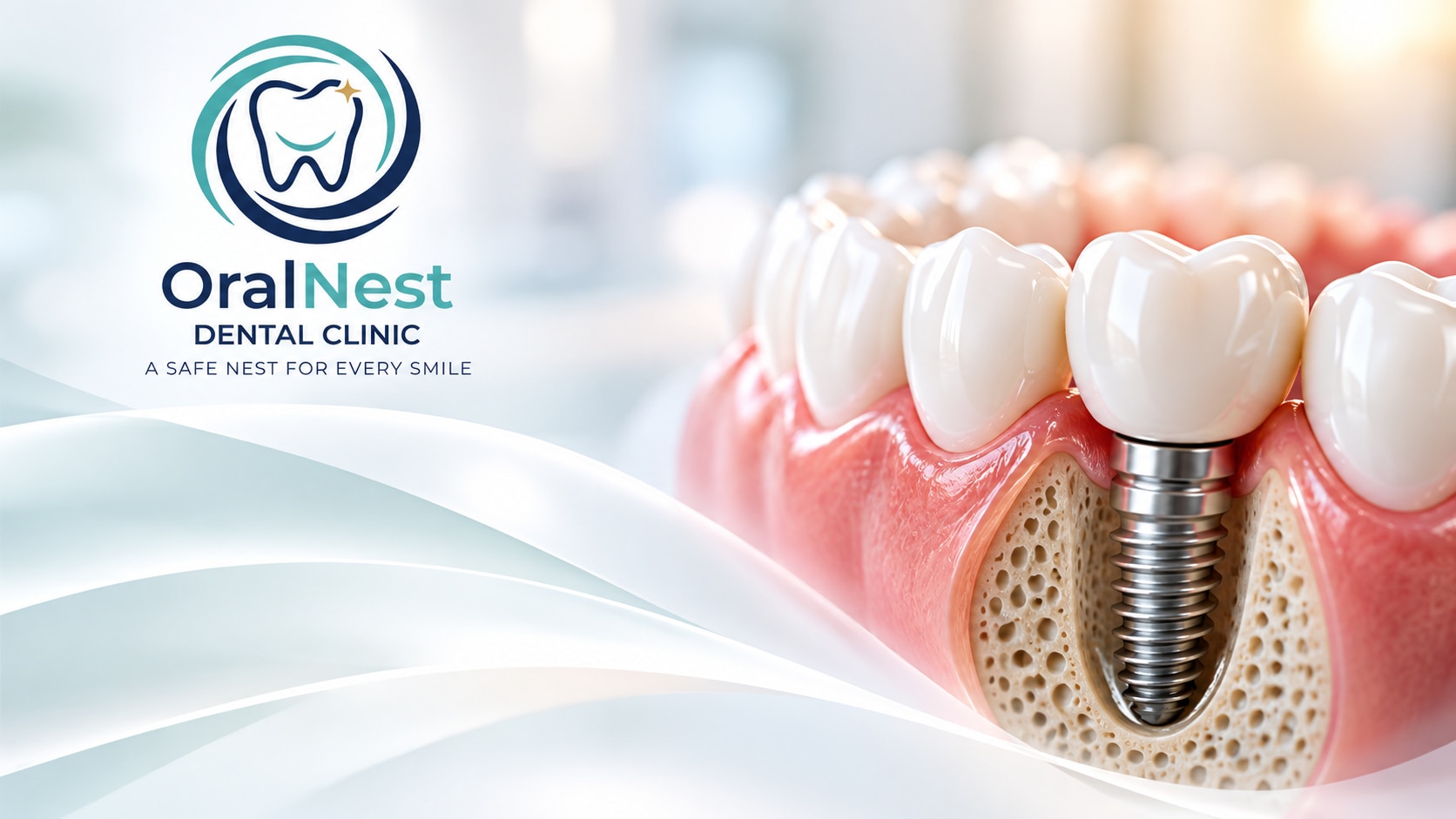
A dental implant is a component placed in the jawbone to support a replacement tooth or dental prosthesis. After appropriate healing and integration with the surrounding bone, it may support a crown, bridge or other implant-supported restoration, depending on the treatment plan.
Dental implants can be considered when one or more teeth are missing, but suitability varies between patients.
Assessment may include the condition of the gums, available bone, adjacent teeth, bite, medical and dental history, oral hygiene and the patient's ability to maintain the restoration over time. Appropriate clinical examination and imaging may be recommended when indicated.
An implant is not simply a replacement for a missing tooth root. It must be considered in relation to the final restoration, the forces acting on it and the health of the surrounding tissues.
When May Dental Implants Be Considered?
Dental implants may be evaluated for:
Replacement of a single missing tooth
Replacement of several missing teeth
Implant-supported bridges
Selected cases involving extensive tooth loss
Certain full-arch tooth-replacement plans
The appropriate option depends on the individual case. Some patients may be better suited to a conventional bridge, removable prosthesis or another treatment approach.
Does Every Missing Tooth Need a Dental Implant?
No. An implant is one of several possible tooth-replacement options.
The decision depends on the condition of adjacent teeth, the location of the missing tooth, bone and gum health, bite, treatment objectives, maintenance requirements and patient preferences. A clinical assessment helps compare the benefits, limitations and practical considerations of the available choices.
Dental Implants vs Bridges vs Removable Teeth
There is no single replacement option that is best for everyone.
Dental implants: May support an individual crown, bridge or other prosthesis without relying on neighbouring natural teeth for support in the same way as a conventional bridge. They require appropriate surgical assessment, healing and long-term maintenance.
Dental bridges: Replace missing teeth using support from suitable adjacent teeth or implants, depending on the design. Their suitability depends on the condition and positioning of the supporting structures.
Removable prostheses: May replace one or more missing teeth and can be appropriate in various clinical situations. Design, stability, comfort and maintenance requirements depend on the individual case.
The right choice should be based on clinical findings, expected function, maintenance, cost considerations and the patient's priorities—not on the assumption that one treatment is always superior.
How Is a Full-Mouth Rehabilitation Plan Developed?
Comprehensive treatment requires a clear understanding of the existing condition before procedures are sequenced.
1. Consultation and Dental History
The process begins with understanding your concerns, previous dental treatments, symptoms, expectations and relevant dental history.
2. Clinical Examination
The teeth, gums, existing restorations, bite and supporting oral structures are evaluated. The assessment helps identify teeth that may be preserved, teeth requiring restoration and areas that need further investigation.
3. Diagnostic Investigations
Dental radiographs or other appropriate investigations may be recommended when clinically indicated. Their purpose is to clarify relevant findings and support treatment decisions.
4. Assessment of Tooth Restorability
A key question is whether each affected tooth can be restored predictably. Treatment planning should distinguish between teeth that may be preserved and those for which replacement may need to be considered.
5. Treatment Priorities and Sequencing
Active disease, pain, infection or other urgent concerns may need attention before elective restorative or aesthetic procedures. The order of treatment depends on the clinical situation.
6. Discussion of Alternatives
Where more than one option is reasonable, the advantages, limitations, likely maintenance and practical considerations should be explained. This allows patients to make informed decisions.
7. Restoration and Maintenance
Treatment is completed according to the agreed plan, followed by suitable review and maintenance. Long-term care may include oral hygiene guidance, professional monitoring and assessment of the restorations and bite.
Why Treatment Sequencing Matters
In complex dental cases, the order of procedures can influence the overall treatment outcome.
For example, a tooth with active infection may require appropriate treatment before definitive restoration. Gum disease may need management before certain restorative procedures. Significant tooth wear may require evaluation of the bite and contributing habits before restorations are planned.
When implants, crowns, bridges and other procedures are involved, the intended final restoration should inform the broader treatment plan.
The objective is to ensure that individual procedures are coordinated rather than selected in isolation. A well-considered sequence can help avoid unnecessary treatment and support a more maintainable result.
Function, Bite and Aesthetics Must Work Together
Full-mouth rehabilitation is not simply a process of placing crowns or replacing missing teeth. The relationship between the teeth, bite, gums, supporting structures and final restorations matters.
A comprehensive plan may need to consider:
Chewing comfort and efficiency
Tooth structure and restorability
Bite relationships and occlusal forces
Gum health and supporting bone
The design and condition of existing restorations
Appearance and smile proportions
Oral hygiene and long-term maintenance
Aesthetic goals remain important, but they should be considered alongside function and oral health. The most extensive treatment is not automatically the most appropriate treatment.
A Diagnosis-Focused Approach at OralNest Dental Clinic
At OralNest DENTAL CLINIC | Wakad, comprehensive dental care is planned around the patient's clinical needs rather than a predetermined set of procedures.
Dr. Ashutosh Dighe — BDS, MDS – Oral Medicine & Maxillofacial Radiology, PhD Scholar, Fellowship in Contemporary Endodontics, Certified Endodontist — contributes to the clinic's diagnosis-focused approach to evaluating oral conditions and planning appropriate care.
For complex restorative needs, the required clinical expertise and treatment sequence depend on the case. Where specialist input or collaboration is indicated, the treatment plan should reflect those requirements.
Patients should understand why a procedure is recommended, what alternatives may exist and what maintenance may be needed after treatment.
Is Full-Mouth Rehabilitation a Single Treatment?
No. Full-mouth rehabilitation is a comprehensive treatment plan, not one standard procedure.
Some patients may require several restorations, while others may need a combination of tooth replacement, management of tooth wear and treatment of existing dental disease. The duration and sequence depend on the complexity of the case, the procedures involved and any healing requirements.
A consultation helps clarify the likely stages, priorities and options. A reliable plan should be individualised rather than based on a fixed timeline for every patient.
Frequently Asked Questions About Dental Implants and Full-Mouth Rehabilitation
What is full-mouth rehabilitation in dentistry?
Full-mouth rehabilitation is coordinated dental treatment intended to address multiple problems affecting teeth, restorations, bite and oral function. The plan is tailored to the patient's clinical condition and may involve restorative treatment, tooth replacement and other indicated procedures.
Who may need full-mouth rehabilitation?
Patients with multiple missing teeth, extensive tooth wear, numerous damaged teeth, failing restorations or a combination of functional and aesthetic concerns may benefit from an assessment. Not everyone with these concerns requires full-mouth reconstruction.
Are dental implants suitable for everyone?
No. Suitability depends on oral health, gum and bone conditions, relevant medical and dental history, bite, oral hygiene and the proposed restoration. An individual assessment is needed to determine whether implants are appropriate.
Can full-mouth rehabilitation include dental implants and crowns?
Yes. Depending on the case, a plan may combine implants, crowns, bridges and other restorative procedures. The exact combination and sequence depend on the clinical findings.
Are dental implants better than dental bridges?
Neither option is universally better. Implants and bridges have different indications, requirements, benefits and limitations. The decision depends on the missing tooth or teeth, the adjacent teeth, supporting structures, maintenance and patient preferences.
How long does full-mouth rehabilitation take?
The timeline varies with the number of teeth involved, the complexity of treatment, preliminary care, laboratory procedures and any required healing. A personalised plan can provide a more meaningful estimate than a general timeline.
Can severely damaged teeth be saved?
Some severely damaged teeth can be restored, while others may not be predictably restorable. The decision depends on factors such as remaining tooth structure, fractures, infection, gum support and the feasibility of a durable restoration.
Is full-mouth rehabilitation only for older patients?
No. The need for comprehensive rehabilitation depends on dental conditions rather than age alone. Patients of different ages may require broader treatment for tooth damage, wear, missing teeth or failing restorations.
Where can I consult for dental implants and full-mouth rehabilitation in Wakad?
OralNest DENTAL CLINIC is located in Wakad, Pune. Patients can seek an assessment to discuss missing teeth, damaged teeth, dental implants and comprehensive restorative treatment options.
Dental Implants & Full-Mouth Rehabilitation in Wakad and Nearby Areas
OralNest DENTAL CLINIC is based in Wakad and welcomes patients from nearby areas of Pune and Pimpri-Chinchwad who are seeking assessment for missing teeth, damaged teeth, implant-supported restorations or comprehensive dental rehabilitation.
Relevant nearby localities include Pimple Gurav, Rahatani, Pimple Saudagar, Hinjawadi, Tathawade, Punawale, Ravet, Baner, Balewadi, Sangvi and other nearby parts of Pimpri-Chinchwad and Pune.
If you are searching for dental implants in Wakad, full-mouth rehabilitation in Wakad, multiple missing teeth treatment near Pimple Gurav, dental implant consultation in Pune, full-mouth reconstruction in Pimpri-Chinchwad, or treatment options for worn and severely damaged teeth, a clinical evaluation can help establish which options may be suitable.
OralNest is located in Wakad; the surrounding localities mentioned are nearby service areas, not separate clinic branches.
Begin With a Comprehensive Dental Assessment
Missing, damaged or worn teeth can raise important questions about what should be preserved, what may need restoration and which replacement options are appropriate.
At OralNest Dental Clinic, the first step is to understand the condition of your teeth and supporting structures, discuss the available choices and develop a plan based on your needs.
OralNest DENTAL CLINIC | Wakad, Pune
Thoughtful Dentistry. Personalised Care.
A SAFE NEST FOR EVERY SMILE.