
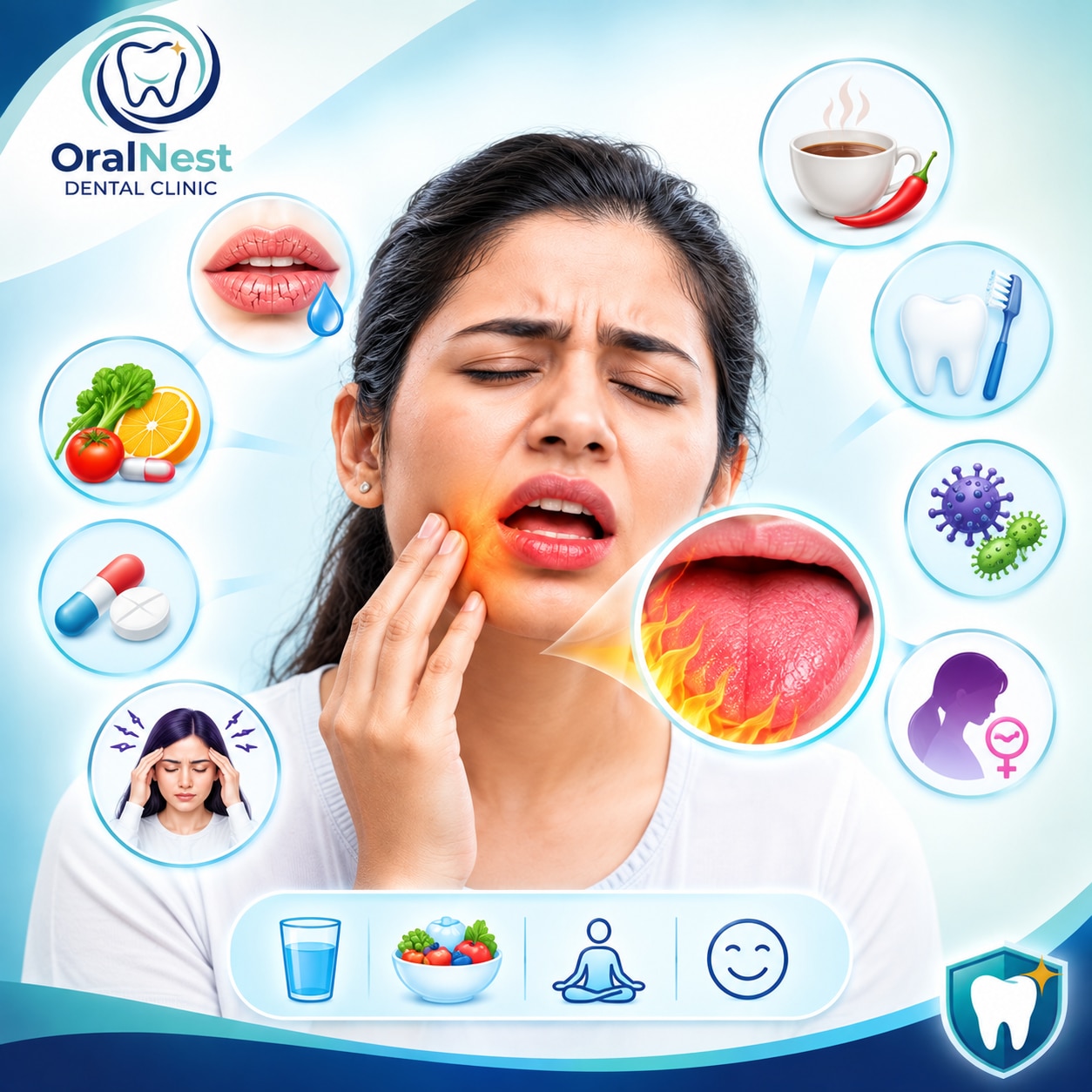
Burning tongue or persistent burning inside your mouth? Explore possible causes and oral medicine assessment at OralNest Dental Clinic in Wakad, Pune.
Burning Mouth and Tongue: Causes & Oral Medicine Assessment in Wakad, Pune
Does your tongue feel as though it has been scalded, even when you have not eaten anything hot? Do your lips, palate or the inside of your mouth burn repeatedly without an obvious sore? Perhaps the discomfort becomes worse as the day progresses, or your mouth feels dry despite drinking water.
A persistent burning sensation inside the mouth can have several possible explanations. It may be associated with dryness, irritation, an oral condition, nutritional factors, medication effects or other health-related causes. Sometimes, burning continues even when the oral tissues appear normal.
At OralNest Dental Clinic in Wakad, Pune, patients can seek consultation for persistent oral burning, tongue discomfort and related symptoms. The aim is to understand the pattern of symptoms, examine the oral tissues and determine whether further investigation or referral is appropriate.
The important distinction is that a burning sensation is a symptom—not a diagnosis.
What Is a Burning Sensation in the Mouth?
Oral burning is a sensation of heat, stinging, soreness or irritation affecting areas such as the tongue, lips, palate, gums or inner cheeks.
Some people experience burning only when eating certain foods. Others notice persistent discomfort throughout the day. The sensation may occur alongside dry mouth, altered taste, tingling or increased sensitivity to spicy foods.
The pattern matters because different conditions can produce similar symptoms. An examination helps determine whether there is an identifiable oral cause or whether a broader assessment may be needed.
What Causes a Burning Tongue or Burning Mouth?
1. Dry Mouth and Reduced Saliva
Saliva lubricates the oral tissues and helps maintain a healthy oral environment. When saliva production decreases, the tongue and other surfaces may feel dry, sticky, sore or irritated.
Dry mouth can be associated with dehydration, mouth breathing, certain medications and various medical conditions. Patients may also notice difficulty swallowing dry foods, a persistent need to sip water or changes in taste.
Management depends on identifying the contributing factors rather than treating the burning sensation alone.
2. Oral Irritation or Inflammation
Certain toothpastes, mouthwashes, dental materials, foods or repeated mechanical irritation may aggravate sensitive oral tissues in some individuals.
A sharp tooth edge, repeated tongue rubbing or another local source of irritation may also contribute to discomfort.
The timing of symptoms, the location of the burning and any recent changes in oral products or dental treatment can help guide assessment.
3. Oral Infections and Mucosal Conditions
Some infections and inflammatory conditions affecting the oral lining can produce burning, soreness or sensitivity.
Depending on the cause, there may also be visible redness, white patches, ulcers or changes in the tongue's surface. However, the absence of obvious visible changes does not automatically establish that the tissues are normal.
Appropriate examination is important before choosing treatment, particularly when symptoms persist or recur.
4. Nutritional Deficiencies
Deficiencies involving nutrients such as iron, vitamin B12 or folate may contribute to tongue discomfort or changes in the oral tissues in some patients.
These deficiencies are not the explanation for every burning sensation. When the history or examination suggests a possible nutritional factor, a clinician may recommend suitable investigations and medical guidance.
Taking high-dose supplements without establishing a need is not a reliable substitute for assessment.
5. Medication-Related Symptoms
Some medications may contribute to dry mouth or other oral symptoms. If burning begins after a medication change, that timing is useful information to share during consultation.
Do not stop prescribed medication independently. A clinician can help determine whether the symptoms may be related and whether discussion with the prescribing doctor is appropriate.
6. Reflux and Other Medical Factors
Gastro-oesophageal reflux and certain other medical conditions may contribute to oral discomfort in some individuals. Their relevance depends on the overall symptom pattern and medical history.
If an oral cause is not identified, further medical assessment may be needed rather than repeatedly treating the mouth in isolation.
7. Burning Mouth Syndrome
Burning mouth syndrome is a condition characterised by persistent or recurrent burning pain affecting the mouth, often without an obvious visible abnormality that explains the symptoms.
It is not simply another name for every burning tongue. Before this diagnosis is considered, clinicians need to assess possible local and systemic causes, including dryness, nutritional factors, medication effects and oral mucosal conditions.
The distinction matters because treatment should reflect the underlying diagnosis and the patient's individual symptoms.
Why Does My Tongue Burn When It Looks Normal?
A normal-looking tongue does not mean that the discomfort is imaginary or unimportant. Some oral conditions produce visible changes, while others may cause burning without an obvious lesion.
When symptoms persist despite a normal-looking oral surface, the assessment may need to consider dry mouth, medication effects, nutritional factors, altered oral sensation and other potential contributors.
Burning mouth syndrome may be considered only after an appropriate evaluation. It should not be diagnosed solely because no visible ulcer or patch can be seen.
Why Does My Mouth Burn After Eating Spicy or Acidic Foods?
Spicy and acidic foods can aggravate already sensitive or irritated oral tissues. The effect may be more noticeable when ulcers, inflammation, dryness or another oral condition is present.
If burning occurs only with particular foods, note which foods trigger it and whether the discomfort resolves after eating. If it occurs frequently, persists after meals or begins affecting a wider range of foods, professional assessment may help identify the cause.
Avoiding known triggers temporarily may improve comfort, but it does not establish the diagnosis.
How Is Burning Mouth Assessed at OralNest Dental Clinic?
A meaningful consultation focuses on the complete symptom pattern rather than treating burning as an isolated complaint.
Depending on the patient's circumstances, assessment may include:
Detailed symptom history: Establishing when the burning started, which areas are affected, whether symptoms are continuous or intermittent, and whether they change during the day or after eating.
Oral examination: Checking the tongue, palate, lips, gums and inner cheeks for ulcers, redness, white patches, dryness, irritation and other changes.
Review of contributing factors: Considering medications, oral hygiene products, dietary triggers, dry-mouth symptoms and relevant medical history.
Further investigations when indicated: Depending on the findings, laboratory tests or medical evaluation may be recommended to investigate possible nutritional or systemic contributors.
Referral when appropriate: If symptoms suggest a condition beyond routine dental care, further evaluation by the relevant healthcare professional may be necessary.
Dr. Ashutosh Dighe holds BDS, MDS – Oral Medicine & Maxillofacial Radiology, is a PhD Scholar, has completed a Fellowship in Contemporary Endodontics, and is a Certified Endodontist. His postgraduate background is relevant to oral medicine and the assessment of oral conditions. The investigations and treatment plan depend on the clinical findings in each case.
What Is the Treatment for Burning Mouth?
There is no single treatment that is appropriate for every person experiencing oral burning. Management depends on the identified cause.
If Dry Mouth Is Contributing
A clinician may recommend appropriate hydration habits, saliva-support measures or a review of contributing medications and conditions. Persistent dry mouth may require further investigation.
If an Oral Condition Is Identified
Treatment is directed towards the diagnosed problem. This may involve addressing local irritation, managing an identified infection or treating an inflammatory oral condition when clinically indicated.
If a Nutritional Deficiency Is Suspected
Appropriate tests may help establish whether a deficiency is present. Treatment should be based on the findings and suitable medical advice.
If Medication Effects Are Suspected
The prescribing clinician may need to review the medication and possible alternatives. Patients should not discontinue prescribed treatment without medical guidance.
If Burning Mouth Syndrome Is Diagnosed
Management may involve an individualised plan focused on symptom relief and quality of life. Depending on the patient, this may require coordinated dental and medical care. Improvement varies, and a guaranteed cure should not be promised.
The goal is to identify treatable contributors, manage symptoms responsibly and help the patient understand the available options.
What Can You Do at Home to Reduce Oral Burning?
While arranging an assessment, consider these practical measures if they are comfortable for you:
Drink water regularly, especially if your mouth feels dry.
Temporarily avoid foods or drinks that reliably trigger burning.
Avoid tobacco and areca nut products.
Use a gentle oral hygiene routine and avoid aggressive tongue scraping.
Avoid introducing multiple new mouthwashes, whitening products or strongly flavoured oral products while symptoms are unexplained.
Record when symptoms occur and whether they are associated with food, medication changes or dryness.
Avoid self-prescribing antibiotics, antifungal medicines or high-dose supplements.
These measures may reduce irritation in some cases, but persistent symptoms require evaluation to establish the cause.
When Should You Seek a Consultation?
Arrange an assessment if burning continues, repeatedly returns, interferes with eating or drinking, or is accompanied by dry mouth or altered taste.
Seek prompt evaluation if you notice a persistent ulcer, unexplained red or white patch, lump, bleeding, numbness or difficulty swallowing. Such changes should not be attributed to burning mouth syndrome without examination.
Swelling accompanied by difficulty breathing or swallowing requires emergency medical care.
Burning Mouth and Tongue Consultation in Wakad & Pimple Gurav, Pune
If you are searching for a burning tongue consultation or oral medicine assessment in Wakad, Pune, OralNest Dental Clinic provides consultation for persistent oral discomfort and related concerns.
Patients from Wakad, Pimple Gurav, Rahatani, Pimple Saudagar, Hinjawadi, Tathawade, Punawale, Ravet, Baner, Balewadi and nearby parts of Pimpri-Chinchwad may visit the Wakad clinic.
The clinic is physically located in Wakad; the nearby localities are service areas, not separate clinic branches.
A consultation can help determine whether the symptoms may be related to an identifiable oral condition, dryness or another factor requiring further evaluation.
Frequently Asked Questions About Burning Mouth and Tongue
Why does my tongue burn even when there is no ulcer?
Burning can occur without a visible ulcer. Possible contributors include dry mouth, medication effects, irritation, nutritional factors and other oral or medical conditions. Persistent symptoms warrant assessment.
Is burning tongue a vitamin deficiency?
Some nutritional deficiencies can contribute to tongue discomfort, but burning does not automatically indicate a vitamin deficiency. Testing may be appropriate when supported by the clinical history and examination.
What is the difference between burning mouth and burning mouth syndrome?
Burning mouth describes a symptom. Burning mouth syndrome is a specific clinical condition considered when persistent or recurrent burning cannot be adequately explained by another identifiable cause after appropriate evaluation.
Can dry mouth cause a burning sensation?
Yes. Reduced saliva can contribute to dryness, irritation and discomfort of the tongue or other oral tissues. The underlying cause of the dryness may also need assessment.
Should I use a mouthwash for a burning tongue?
Not necessarily. Some products may aggravate irritation in certain patients. The appropriate choice depends on the cause, so persistent burning should be assessed before repeatedly changing oral products.
Can stress cause burning in the mouth?
Stress may influence symptom experience and can be associated with some oral discomfort patterns, but it should not automatically be assumed to be the cause. Other potential contributors need appropriate consideration.
Where can I get a burning mouth consultation in Wakad?
OralNest Dental Clinic is located in Wakad, Pune, and serves patients from nearby areas including Pimple Gurav and Rahatani. A consultation can help assess symptoms and determine suitable next steps.
Understand Persistent Oral Burning Before Choosing Treatment
A burning tongue or persistent oral discomfort can arise from several different conditions. The absence of an obvious lesion does not eliminate the need for assessment, and the symptom alone does not establish a diagnosis.
At OralNest Dental Clinic, Wakad, Pune, the focus is on examining the oral tissues, considering relevant contributing factors and guiding appropriate treatment or further evaluation based on the clinical findings.
OralNest Dental Clinic — A SAFE NEST FOR EVERY SMILE.