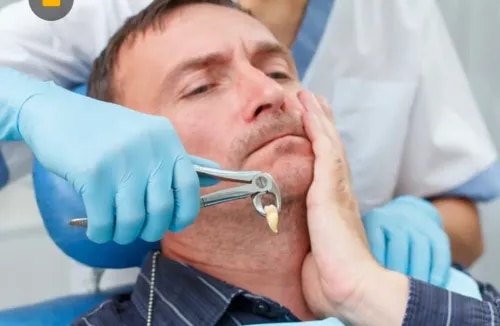
Broken or Chipped Tooth Consultation
Description
Broken or Chipped Tooth Consultation in Wakad & Pimple Gurav, Pune | OralNest Dental Clinic
Have you noticed a chipped tooth while eating, a tooth that has fractured after an injury, a broken filling, or a crack accompanied by pain or sensitivity? A broken or chipped tooth should not be assessed by appearance alone. The appropriate treatment depends on how much tooth structure has been damaged, whether the fracture extends deeper into the tooth, and whether the inner pulp or surrounding tissues are affected.
At OralNest Dental Clinic, patients seeking a broken or chipped tooth consultation in Wakad and Pimple Gurav, Pune, can receive an assessment to understand the extent of damage and the treatment options suitable for their condition. Dr. Ashutosh Dighe (BDS, MDS – Oral Medicine & Maxillofacial Radiology, PhD Scholar, Fellowship in Contemporary Endodontics, Certified Endodontist) evaluates relevant clinical findings to help determine the appropriate next steps, with attention to tooth preservation, function and long-term prognosis.
1) When Should You Consider a Broken or Chipped Tooth Consultation?
A dental assessment is advisable if a tooth has chipped, cracked, fractured or broken following an accident, biting on something hard, or damage to an existing filling or restoration. Sensitivity to cold, discomfort while chewing, sharp edges irritating the tongue or cheek, and persistent tooth pain may indicate that the damage needs closer evaluation.
Even when a chipped tooth does not hurt, the underlying damage may be greater than it appears. A prompt examination can help determine whether the tooth needs a simple restoration or more extensive treatment. If the fracture follows an injury, the tooth becomes loose, or pain is significant, seek prompt dental attention.
2) What Happens During a Broken or Chipped Tooth Consultation?
The assessment may include a review of how the injury occurred, your symptoms, the condition of the affected tooth, the extent of visible damage, bite-related factors and the surrounding gums. Depending on the clinical findings, dental X-rays or other appropriate investigations may be recommended to assess the tooth's internal structures and supporting tissues.
Treatment depends on the type and depth of the fracture. Minor chips may be managed with smoothing or tooth-coloured bonding, while larger fractures may require a dental filling, crown or other restorative procedure. If the pulp is affected, root canal treatment may be considered before restoring the tooth. A severely fractured tooth may have a less favourable prognosis and, in some cases, extraction may be necessary.
3) Can a Broken or Chipped Tooth Be Saved?
Many chipped and fractured teeth can be restored, but the outcome depends on the location and depth of the damage, the remaining healthy tooth structure, the condition of the pulp and the integrity of the tooth root. A small chip does not automatically require a crown, and a visible crack does not always mean the tooth must be extracted.
The objective is to identify the extent of the damage and select a treatment that provides appropriate strength, comfort and function without removing more natural tooth structure than necessary. Early assessment may help prevent further damage and improve the opportunity to preserve a restorable tooth.
Broken or Chipped Tooth Consultation in Wakad & Pimple Gurav
OralNest Dental Clinic welcomes patients from Wakad, Pimple Gurav, Rahatani, Pimple Saudagar, Hinjawadi, Baner, Balewadi, Tathawade and nearby Pimpri-Chinchwad areas who need an assessment for a broken, chipped or fractured tooth.
Whether the damage is a small chip, a visible crack, a fracture following an accident or a broken tooth causing pain, a personalised consultation can help establish the extent of the problem and identify the appropriate treatment pathway. If you have a broken tooth with severe pain, facial swelling or significant bleeding, seek urgent professional care. Difficulty breathing or swallowing requires immediate emergency medical attention.
Frequently Asked Questions
1) Should I visit a dentist if my chipped tooth does not hurt?
Yes. A painless chip may involve only the outer enamel, but the depth of damage cannot always be determined by appearance alone. An examination can help establish whether treatment is needed.
2) Does a broken tooth always require a dental crown?
No. Small chips may be managed with bonding or other conservative restorations. A crown may be appropriate when a larger portion of the tooth is damaged or additional protection is required. The choice depends on the clinical findings.
3) Can a cracked tooth cause sensitivity or pain while chewing?
Yes. A crack may cause sensitivity to temperature, discomfort when biting or pain that comes and goes. These symptoms can have other causes as well, so clinical assessment is necessary to determine the underlying problem.
4) What should I do immediately after breaking a tooth?
Avoid chewing on the affected side, rinse your mouth gently with clean water and save any broken fragment in a clean container if possible. If there is bleeding, apply gentle pressure with clean gauze. Arrange a dental assessment promptly, particularly after an injury or when pain is present.
5) Can a severely broken tooth be saved with root canal treatment?
Sometimes. Root canal treatment may help retain a tooth when the pulp is affected but the remaining tooth structure and root are suitable for restoration. If the fracture extends too deeply or the tooth cannot be predictably restored, another treatment may be necessary.
At OralNest Dental Clinic, a broken or chipped tooth consultation focuses on understanding the extent of damage before deciding how the tooth should be treated. Early evaluation can help clarify whether a conservative restoration, a crown, root canal treatment or another approach is appropriate. The aim is to protect your oral health, preserve natural tooth structure wherever clinically feasible and restore comfortable dental function.